










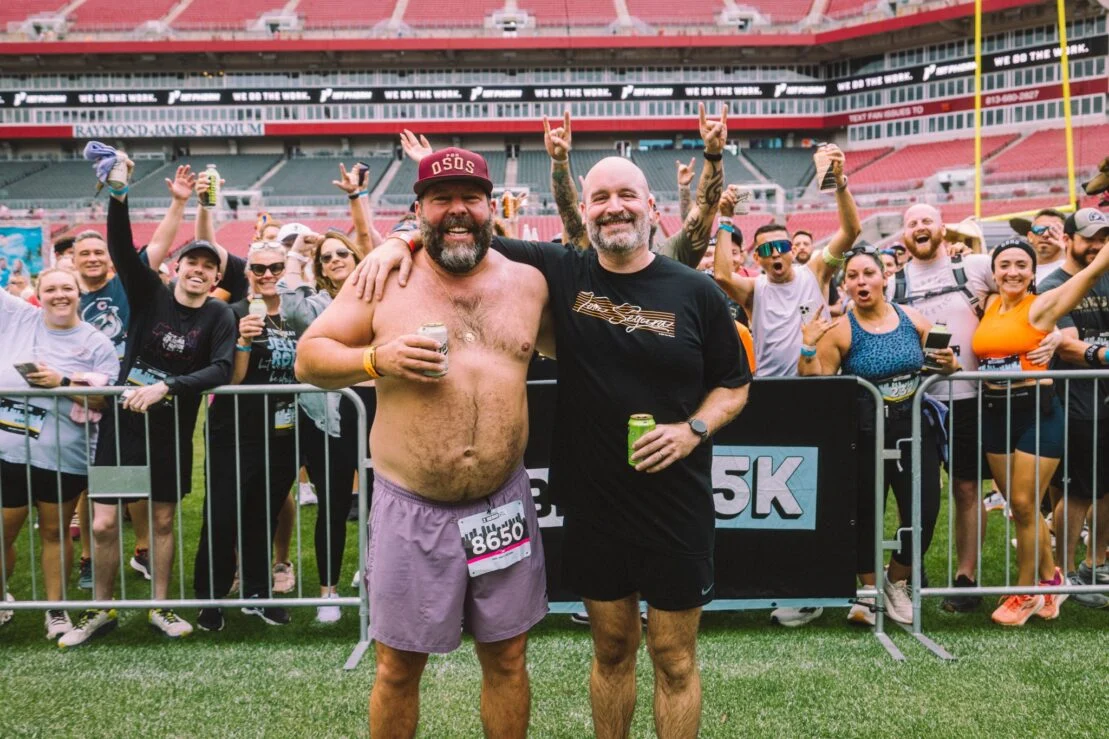
For years, the public image of comedian Bert Kreischer was inextricably linked to a singular, chaotic aesthetic: a perpetually shirtless, party-loving raconteur whose endurance was measured in late-night tales rather than miles run. As the mastermind behind the "Machine" persona, Kreischer built a global comedy empire on the back of excess. However, as the annual 2 Bears 5K—the fitness event he co-founded with fellow comedian and collaborator Tom Segura—approaches, it is clear that the man at the center of the chaos has fundamentally shifted his orbit.
This year’s event serves as a public milestone for a private journey. Kreischer is not merely showing up; he is showing up as a different athlete, a different performer, and a different person. Having shed 50 pounds and embraced a newfound sobriety, Kreischer’s evolution provides a fascinating case study in how a high-demand lifestyle can be reclaimed through disciplined, albeit unconventional, health protocols.
The Origins: A Joke That Became a Movement
The inception of the 2 Bears 5K was, by all accounts, an accident born of podcast banter. "To be honest with you, the funniest part is we had nothing to talk about that day," Kreischer says with a laugh. "Tom decided to run a 5K back in his hometown, and I’d already done marathons, Tough Mudders, you name it."
What began as a fleeting topic on their hit podcast, 2 Bears, 1 Cave, quickly gained momentum as fans latched onto the idea of a community-driven fitness challenge. The duo realized they had a unique opportunity to mobilize a demographic that often feels alienated by traditional fitness culture.
"Tom and I were getting healthier, and we wanted our fans to get healthier too," Kreischer explains. He notes, with his signature blend of self-deprecation and honesty, that his audience often mirrored his former lifestyle: "Our fans were all big guys with beards married to chicks they didn’t deserve. We thought, ‘We need these guys healthy so we still have fans in our 60s.’"
Chronology of a Health Awakening
The transformation did not occur in a vacuum. While the 2 Bears 5K provided the public incentive, the private catalyst was a harrowing medical event. Recently, Kreischer faced a severe health scare involving blood clots in both his legs and lungs. The diagnosis served as an undeniable wake-up call, forcing him to confront the long-term consequences of his "party-first" lifestyle.
"I’ve changed everything," Kreischer admits. The transition has been comprehensive:
- The Early Phase: A period of radical lifestyle modification, incorporating medical interventions including Mounjaro and testosterone replacement therapy, under professional guidance.
- The Habit Integration: Moving from sporadic exercise to a consistent, daily regimen of movement.
- The Sobriety Milestone: For the first time since the inception of the 5K, Kreischer will participate entirely sober, marking a total departure from the "beer-fueled" race-day atmosphere of previous years.
This shift has resulted in a 50-pound weight loss, a feat that has not only improved his physical markers but has also fundamentally altered his psychological approach to his craft.
The Anatomy of the Routine: Structure vs. Flexibility
Kreischer’s training philosophy is dictated by the reality of his touring schedule. Unlike professional athletes with dedicated staff and facilities, Kreischer has learned that "flexibility is the structure."
Road Training: The Minimalist Approach
When on the road, Kreischer avoids the trap of perfectionism. "Most days it’s something quick," he says. "I’ll run, hit 30 minutes on the StairMaster, or get a lift in if there’s a gym." He emphasizes that the goal during tours is functional maintenance rather than aesthetic transformation. It is not about glamour; it is about ensuring he has the stamina to sustain his high-energy stage performances.
Home Training: The Strategic Surge
When he returns home, the intensity spikes. "That’s when I really go in," he notes. His home routine is highly regimented: one hour on the basketball court followed by an hour of weightlifting, five days a week. This duality—minimalist on the road, strategic at home—prevents the burnout and stagnation that often plague those attempting to overhaul their health while maintaining a grueling travel schedule.
The Impact of Sobriety on Performance
The most significant variable in Kreischer’s current performance is his commitment to sobriety. In previous iterations of the 2 Bears 5K, the race was framed by the same permissive, alcohol-centric humor that defined his comedy.
"Every other Two Bears 5K I’d been drinking right up to it," he says. "This is the first one I won’t."
The impact of this decision has been profound. Beyond the physiological benefits of improved sleep (he now averages 10 hours a night) and hydration (he consumes 160 ounces of water daily), the mental clarity has changed his relationship with endurance. He reports that he is currently running faster than he ever has in his life.
"I would be shocked if I don’t break 30 minutes," Kreischer says, noting that he is experiencing physical milestones—such as the emergence of abdominal definition—that he previously thought were impossible. "Once you notice differences in your body, working out gets fun. You want to keep going."
Supporting Data: The "Soft Batch" Conflict
Despite the rigorous discipline, Kreischer remains refreshingly human. When asked about his biggest obstacle, he points not to a complex medical issue or a lack of time, but to a specific, nostalgic weakness: cookies.
His enthusiasm for the "soft batch" cookie—which he argues revolutionized the snack industry in 1983—is a reminder that for all his talk of blood panels and VO2 max, he is still the same man who finds joy in the absurd. This balance between high-level health discipline and the ability to laugh at his own cravings is perhaps the most relatable aspect of his journey. It signals to his fans that one can pursue a better version of themselves without losing their personality or their humor.
The Psychological Edge: Mental Superiority
When discussing the upcoming race against Tom Segura, Kreischer leans into the competitive banter. He views the race through a lens of psychological fortitude. "Tom is the most likely to start strong and dramatically fall off," Kreischer jokes. "Running is entirely mental. Mentally, I am superior."
While he enjoys the "preamble"—the jokes, the trash talk, and the camaraderie before the starting gun—he is equally focused on the finish line. He acknowledges that the race represents a rare intersection where his comedy audience and his health journey converge.
Implications: A Blueprint for the "Average Guy"
The 2 Bears 5K is more than a race; it is a proof-of-concept for thousands of fans who have watched Kreischer’s transformation. By being transparent about the use of medication, the necessity of sobriety, and the struggle against late-night snack cravings, Kreischer has stripped away the myth of the "perfect fitness influencer."
The implications of his journey are clear:
- Sustainability over Intensity: By adapting his workout style to his environment (road vs. home), he has made health a lifestyle rather than a chore.
- Health as a Safety Net: His wake-up call regarding blood clots serves as a stark reminder that even those who seem to have "boundless energy" are susceptible to the biological toll of prolonged excess.
- Community as Accountability: By turning his personal health journey into a public event, he has created a feedback loop of accountability. He isn’t just running for himself; he is running to set a standard for the community he built.
Conclusion: Crossing the Finish Line
As the 2 Bears 5K draws near, the narrative has shifted from one of a "party animal" to that of a man in control of his physical destiny. When asked what he intends to do the moment he crosses the finish line, he offers a poignant, grounded answer.
"The first thing I’m doing is looking for my wife," he says. "I want to give her a hug and thank her for all the years of support."
After that? A cigar.
Bert Kreischer’s story is not one of a total conversion to monastic living. It is a story of moderation, adjustment, and the realization that the best way to keep the party going for the next thirty years is to ensure that the "Machine" itself remains in working order. For his fans, the message is simple: get off the couch, get into the sunshine, and realize that it is never too late to trade a temporary buzz for a permanent gain.