











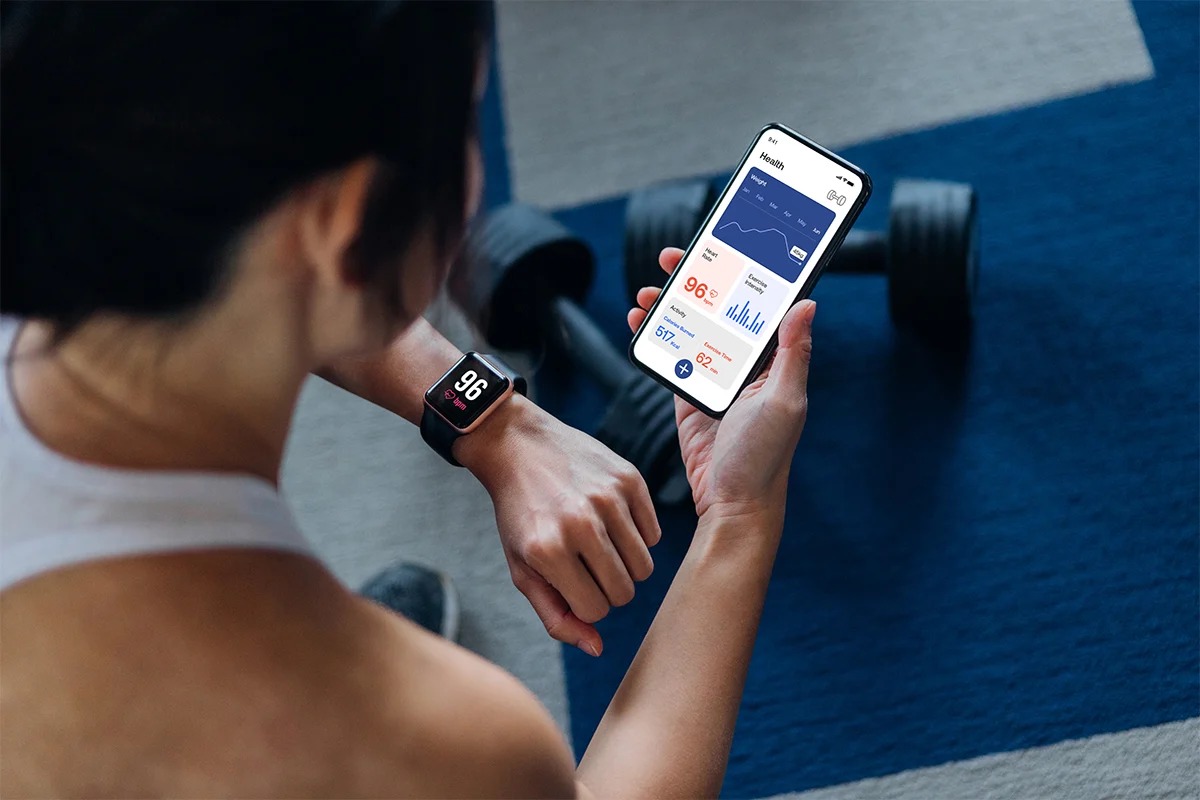
The integration of wearable technology into the daily lives of millions has catalyzed a revolution in personal health management. From smartwatches that track heart rate variability (HRV) to rings that monitor sleep architecture, the data deluge is unprecedented. However, as the market for consumer-grade fitness trackers continues to expand, a significant scientific consensus is emerging: while these devices are marvels of miniaturization, they are not clinical-grade medical instruments.
As users increasingly rely on these metrics to inform high-stakes decisions regarding physical training, nutritional intake, and sleep hygiene, the discrepancy between "directional data" and "absolute accuracy" has become a critical point of concern for health professionals, physiologists, and data scientists alike.
The Main Facts: Why Consumer Tech Falls Short
At the heart of the current debate is the distinction between consumer-grade sensors and clinical-grade equipment. Consumer wearables—such as those produced by Apple, Garmin, Oura, and Whoop—rely primarily on photoplethysmography (PPG) to measure heart rate. While PPG is highly effective for casual monitoring, it is susceptible to motion artifacts, skin tone variations, and improper device fit, all of which can skew results.
The Accuracy Discrepancy
Research published in journals such as The Lancet and the Journal of Applied Physiology consistently highlights that while consumer devices are generally reliable for tracking heart rate during resting states, their accuracy diminishes significantly during high-intensity interval training (HIIT) or activities involving rapid wrist movement.
The primary areas of divergence include:
- Calorie Expenditure: Most algorithms use proprietary formulas based on age, weight, and heart rate. However, they often fail to account for individual metabolic efficiency, leading to overestimations of energy burn by as much as 20–30%.
- Sleep Staging: Clinical sleep studies (polysomnography) use brain wave activity (EEG) to determine sleep stages. Wearables use movement (actigraphy) and heart rate changes, which are often poor proxies for deep sleep and REM cycles.
- Recovery Metrics: HRV is increasingly used as a proxy for nervous system recovery, but because it is influenced by factors ranging from hydration to stress and alcohol consumption, interpreting a single day’s score as a directive for "rest" can be misleading.
Chronology: The Evolution of Wearable Limitations
To understand the current state of the industry, one must look at the rapid, yet uneven, progression of the technology over the last decade.
2012–2015: The Pedometry Era
Early wearables were essentially sophisticated step counters. Accuracy was poor, but the primary goal was behavioral modification—simply getting people to move more. The limitations were accepted because the devices were marketed as "lifestyle motivators" rather than health diagnostic tools.
2016–2019: The Rise of Biometric Sensing
As optical sensors became cheaper and more efficient, the industry shifted toward continuous heart rate monitoring. This era saw the introduction of VO2 max estimations and basic sleep tracking. It was during this period that researchers began publishing peer-reviewed studies pointing out that while these devices were "good enough for the gym," they were not "good enough for the lab."
2020–2023: The Pandemic Pivot
The COVID-19 pandemic accelerated the push for health-tracking. Wearables were suddenly touted as early warning systems for illness (detecting elevated resting heart rate). This created a "medicalization" of the category, where consumers began expecting clinical-level precision from devices that were never intended to diagnose disease.
2024–Present: The Contextual Shift
Current discourse has moved from "how accurate is the device?" to "how should we interpret the data?" There is now a growing movement among health professionals to treat wearable data as a "longitudinal trend" rather than a daily metric.
Supporting Data: The Science of Error
The gap between clinical and consumer data is not merely anecdotal; it is mathematically demonstrable.
The Calorie Conundrum
A study conducted at the Stanford University School of Medicine examined seven different fitness trackers and found that while heart rate readings were generally accurate, the energy expenditure measurements were significantly flawed. In some instances, the best-performing device had an error rate of 27%, while the worst-performing device had an error rate of 93%. This variance suggests that using these numbers to calculate a "caloric deficit" for weight loss is inherently flawed.
The Sleep Stage Fallacy
Validation studies comparing wearables to gold-standard Polysomnography (PSG) show that while wearables are excellent at determining "total sleep time" (when the user is asleep vs. awake), they struggle significantly with the nuances of sleep architecture. When a device tells a user they had "zero deep sleep," it is often a failure of the sensor’s ability to detect the subtle physiological changes of the N3 sleep stage, rather than a reflection of actual sleep quality.
Official Responses: What the Industry Says
Industry leaders have responded to these findings with a mix of defensive posture and strategic pivots.
The Manufacturer Perspective
Most major manufacturers include fine-print disclaimers stating that their devices are "not intended for medical diagnosis." Companies like Garmin and Apple have shifted their marketing language to emphasize "wellness" and "lifestyle" rather than clinical health. Their argument is that the utility of the device lies in its ability to influence habit formation. As one industry spokesperson noted: "The perfect is the enemy of the good. If a device provides a slightly inaccurate metric that encourages a user to walk an extra mile, it has succeeded in its primary goal of health promotion."
The Clinical Perspective
The medical community remains cautious. Cardiologists, for instance, have warned that "wearable anxiety"—the phenomenon where patients become obsessed with minor fluctuations in HRV or heart rate—is a growing clinical issue. The consensus among medical professionals is that wearables are useful for identifying deviations from a baseline (e.g., a sudden, unexplained spike in resting heart rate) but should never replace professional medical assessment.
Implications: The Role of the Fitness Professional
For fitness coaches, personal trainers, and performance nutritionists, the proliferation of wearable data has created a unique challenge: managing the "Data-Obsessed Client."
Moving from Numbers to Narratives
The most effective professionals are those who teach their clients to look at the "Big Picture." If a client’s wearable indicates they are "unrecovered" but they feel energized, strong, and motivated, the professional must empower the client to trust their internal feedback over the screen on their wrist.
Strategies for Data Interpretation
- Look for Trends, Not Daily Snapshots: One day of poor sleep data is noise; a consistent downward trend over two weeks is a signal that something in the recovery protocol needs to change.
- Contextualize the Metrics: A high heart rate on a watch might indicate fitness fatigue, or it might just be the result of a stressful morning meeting. Coaches must help clients differentiate between physiological strain and psychological stress.
- The "Subjective-Objective" Balance: The most successful training programs combine objective wearable data with subjective reports (RPE – Rate of Perceived Exertion). When the two conflict, the subjective experience of the athlete should carry significant weight.
The Risk of Over-Optimization
The danger of over-relying on imperfect data is the "optimization trap." If a user adjusts their training intensity or nutritional intake based on a 15% error in calorie calculation, they risk under-fueling or over-training. This can lead to decreased performance, injury, and a dysfunctional relationship with health metrics.
Conclusion: Toward a Smarter Relationship with Technology
The future of fitness technology is not about achieving clinical-grade accuracy in a consumer device; it is about better literacy in how we interpret the data we are given. We are currently in a transition period where the technology has outpaced our ability to use it wisely.
As we move forward, the goal should be to shift the narrative from "chasing the numbers" to "listening to the body." Fitness wearables should function as a compass—providing a general sense of direction—rather than a GPS coordinate that dictates every turn.
For the average consumer, the lesson is clear: your wearable is a tool, not a truth. It is a secondary source of information that should serve as a supplement to, not a replacement for, your own internal physiological awareness. By treating these metrics as directional trends rather than absolute facts, users can harness the benefits of wearable technology while avoiding the pitfalls of digital over-analysis. In the quest for health, the most sophisticated measurement tool we possess remains our own ability to perceive how we feel, move, and recover.