The conventional wisdom surrounding fitness after 60 often leans toward complex machines, high-tech gym memberships, or expensive home equipment. However, the most effective tool for regaining functional strength and metabolic health may be sitting in the corner of your garage or local gym, gathering dust: a single, modest dumbbell.
For adults over 60, the goal of exercise shifts from simple aesthetics to longevity, mobility, and the preservation of independence. A one-dumbbell training regimen is not a "lesser" workout; it is a masterclass in efficiency and biomechanical control. By requiring the user to stabilize the weight through every plane of motion, this method engages the entire kinetic chain, fostering the kind of robust, real-world strength that translates directly into a higher quality of life.
Main Facts: The Philosophy of Unilateral Training
The core premise of one-dumbbell training is unilateral engagement. When you hold a weight in one hand or position it off-center, your body is forced to recruit stabilizing muscles—particularly the obliques, deep core, and stabilizing muscles of the shoulders and hips—to prevent you from tipping over.
This approach serves several vital functions for the aging athlete:
- Correction of Imbalances: Everyone has a dominant side. A single-arm or single-leg movement exposes these discrepancies, forcing the weaker side to "catch up" rather than allowing the dominant side to compensate.
- Reduced Joint Stress: Because you are limited to one weight, you are forced to focus on the quality of the movement—the "time under tension"—rather than ego-lifting.
- Accessibility: Whether at home or traveling, a single dumbbell removes the barriers to entry, making consistency—the primary driver of long-term results—much easier to achieve.
Chronology of Progress: How to Implement the Plan
To safely rebuild muscle mass after 60, one must approach training with a focus on progressive overload. The following timeline provides a roadmap for those looking to start.
Phase 1: The Foundation (Weeks 1–4)
Focus entirely on "technique acquisition." Use a weight that feels light enough to move slowly. Your goal is not fatigue; it is coordination. Practice the five key movements: Goblet Squat, Half-Kneeling Press, Single-Arm Row, Staggered Romanian Deadlift, and Suitcase Carry.
Phase 2: Building Consistency (Weeks 5–8)
Once form is cemented, introduce a "tempo" component. For every repetition, take three seconds to lower the weight and one second to lift it. This "eccentric" control is critical for tendon health and muscle fiber recruitment in older populations.
Phase 3: Progressive Overload (Weeks 9+)
Now that your movement patterns are reliable, begin to increase the load. If you cannot get a heavier dumbbell, increase the number of repetitions (moving from 8 to 12) or decrease the rest period between sets from 90 seconds to 60 seconds.
Supporting Data: Why Full-Body Engagement Matters
According to research from the National Institutes of Health (NIH), sarcopenia—the age-related loss of muscle mass—begins to accelerate significantly after age 60. This muscle loss is closely linked to a decrease in metabolic rate, increased risk of falls, and a decline in bone mineral density.
Studies have consistently shown that "whole-body" compound movements, such as the goblet squat and the single-arm row, trigger a higher endocrine response compared to isolation exercises like bicep curls. By moving the weight through space rather than along a fixed machine path, you are training your central nervous system to communicate more effectively with your muscles. This neural adaptation is exactly what is required to maintain the balance and coordination necessary to navigate stairs, carry groceries, or play with grandchildren without fear of injury.
Expert Insights: The Trainer’s Perspective
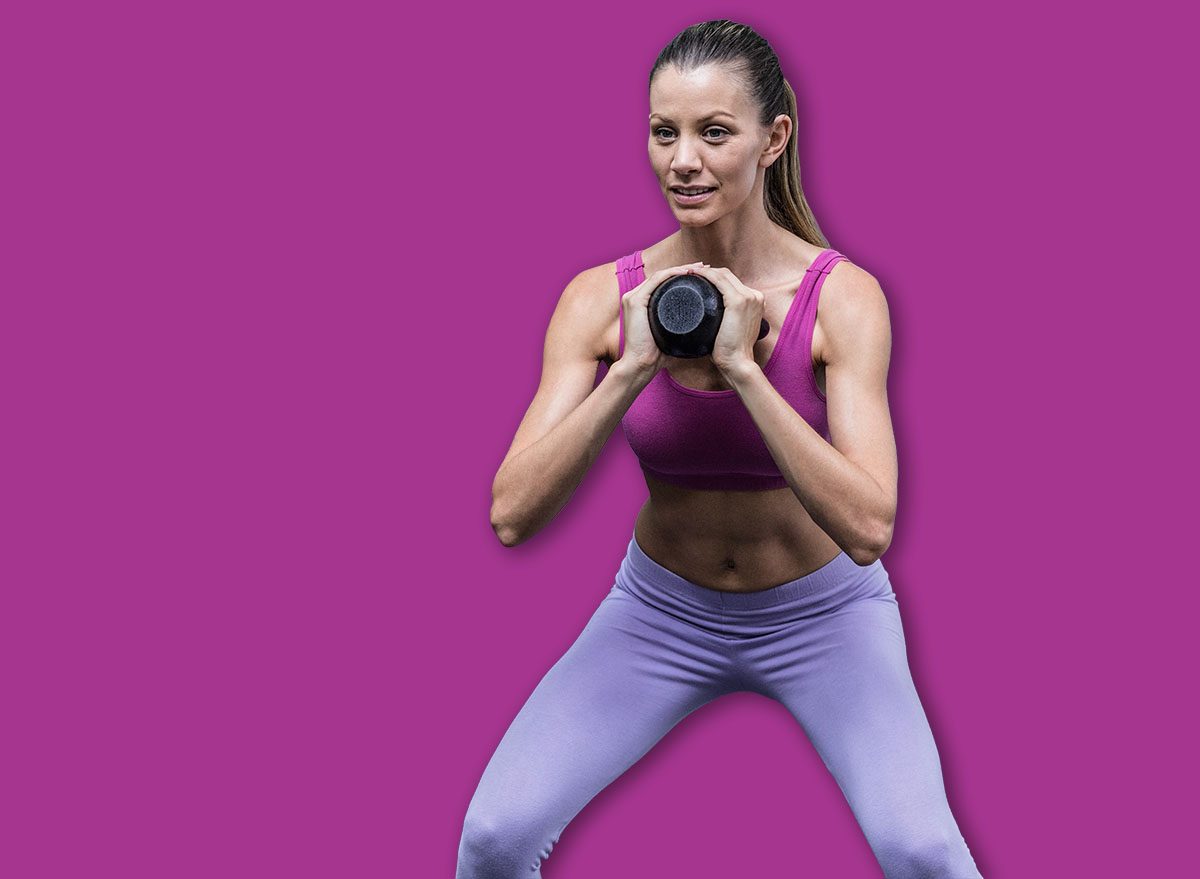
The efficacy of the one-dumbbell approach lies in the "bracing" requirement. When performing a goblet squat, for example, the weight held at the chest acts as a counterweight. This encourages a more upright torso, which reduces the shear force on the lumbar spine.
"When I coach clients in this age group," says one fitness professional, "I want them to own the movement. A machine does the stabilizing for you, which effectively ‘turns off’ the smaller muscles that are responsible for preventing injuries in everyday life. With a single dumbbell, you have to create the path, control the weight, and stay steady. That extra control is a massive investment in your physical future."
The Five-Move Protocol
1. The Goblet Squat
The king of leg exercises for the aging population. By holding the dumbbell against your sternum, you prevent the common "lean-forward" error seen in back squats.
- Form Tip: Imagine you are sitting back into a chair that is slightly behind you. Keep your heels glued to the floor.
2. The Half-Kneeling Shoulder Press
By kneeling, you remove the legs from the equation, isolating the shoulder and forcing the core to stabilize the spine against the vertical force of the press.
- Form Tip: Keep your ribs "stacked" over your hips. If your lower back arches, the weight is too heavy or your core is disengaged.
3. The Single-Arm Bent-Over Row
Most older adults have tight chest muscles and weak upper backs. This move pulls the shoulders back into a healthier, more neutral alignment.
- Form Tip: Use your non-working hand to support yourself on a chair or the dumbbell rack. Focus on driving your elbow back, not just pulling with your hand.
4. The Staggered-Stance Romanian Deadlift
This is the ultimate posterior chain builder. The staggered stance (one foot slightly behind the other) provides the stability of two feet while forcing the front leg to do the heavy lifting.
- Form Tip: Keep the weight as close to your shin as possible. Think of it as a "hinge" at the hips, not a bend at the waist.
5. The Dumbbell Suitcase Carry
This is the "real-world" finisher. By holding a weight in one hand while walking, you are forcing your obliques to fire to keep you vertical. It is essentially a moving plank.
- Form Tip: Walk tall. Do not let the weight pull your shoulder down or your torso sideways.
Implications for Long-Term Health
The decision to adopt a minimalist, one-dumbbell routine is an admission that health is a lifelong project, not a short-term goal. The implications of this training are profound:
- Fall Prevention: By strengthening the glutes and core through unilateral work, you improve your "dynamic balance," making you significantly less prone to trips and falls.
- Bone Density: Resistance training is the only effective way to combat osteopenia. The load placed on the bones through these compound movements signals the body to maintain, and in some cases increase, bone density.
- Autonomy: The psychological benefit of knowing you can safely lift, carry, and move objects is perhaps the most significant result. It provides a sense of self-efficacy that is often lost in later years.
Conclusion: Starting Your Journey
You do not need a gym membership or a room full of equipment to rebuild your body after 60. You need a plan, a single weight, and the discipline to execute these five movements with precision. Start with 2 to 3 sets of 8 to 12 repetitions. Focus on the tempo, feel the muscles working, and honor your body by giving it the stimulus it needs to stay strong for the decades to come.
Remember: progress is measured in the small, consistent victories of every rep, every set, and every workout. Start today, start small, and build the strength that will support your life for years to come.