











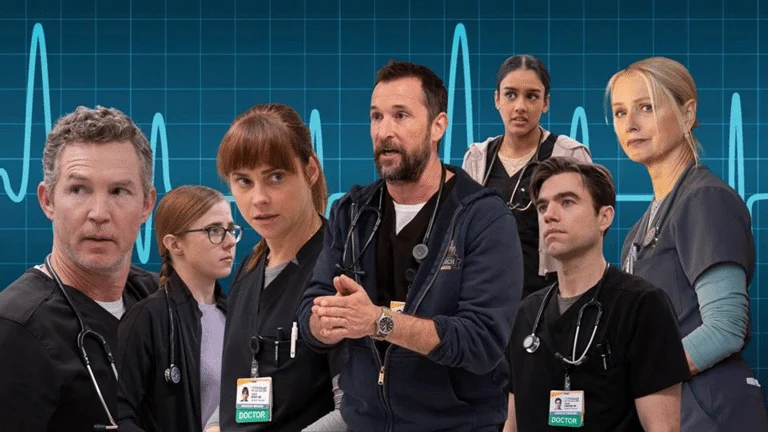
If you have not yet immersed yourself in the gritty, pulse-pounding corridors of HBO Max’s medical drama The Pitt, you are missing what is arguably the most unflinching portrayal of the American healthcare system currently on television. While the series functions as a high-octane procedural, its true genius lies not in the "clamshell" thoracic surgeries or the ticking-clock emergencies, but in its quiet, devastating commitment to depicting the systemic collapse of care for older adults.
As we navigate an era where the "silver tsunami" of the baby boomer generation is crashing against the shores of an ill-prepared medical infrastructure, The Pitt serves as a sobering mirror. By contrasting its narrative arcs with the cold, hard statistics of the healthcare sector, the show transcends entertainment to become a potent critique of how we value—or fail to value—our aging population.
The Reality Behind the Drama: A System in Flux
The Pitt centers on the frantic, under-resourced environment of a Pittsburgh emergency department. In its second season, the show leans heavily into the administrative and social failures that define modern medicine. Rather than relying on melodramatic tropes, the show highlights the daily struggles of patients and providers alike.
Caregiver Burden: The Invisible Workforce
One of the show’s most poignant through-lines is the relentless pressure of caregiver burden. We see it in the exhausted adult daughter trying to balance her own life with the escalating needs of an aging mother, and in the husband struggling to hold his family together amidst a terminal cancer diagnosis.
In a standout Season 1 episode, the show depicts a daughter who vanishes for several hours—not due to malice, but due to a desperate, physical need for sleep in her car. This is not a "filler" plot point; it is a clinical observation of caregiver burnout. According to the Caregiver Action Network, over 63 million U.S. adults are currently serving as unpaid caregivers for elderly parents or relatives. One in five of these individuals is juggling this monumental responsibility alongside a full-time job. This, as the show correctly identifies, leads to a vicious cycle of depression, anxiety, and physical decline in the caregivers themselves, who often sacrifice their own health to sustain their loved ones.
The Geriatrician Shortage: A Crisis of Supply
Perhaps the most biting critique in The Pitt occurs during a contentious dialogue between Dr. Robby and Dr. Mohan. When Dr. Mohan is encouraged to pursue a geriatrics fellowship, the suggestion is framed as a slight—an implication that geriatrics is a "slower" or "easier" path.
This moment of scripted friction highlights a critical, systemic failure: the severe under-representation of geriatric medicine in the hierarchy of American healthcare. By 2030, every single baby boomer—representing roughly 20% of the U.S. population—will be aged 65 or older. Despite this demographic shift, the U.S. currently hosts only about 7,000 board-certified geriatricians. To put this in perspective, there are over 60,000 pediatricians in the country. The U.S. Department of Health and Human Services has projected a shortfall of nearly 27,000 geriatric providers—a crisis point that is effectively already here. Even more alarming is the fact that only one in ten U.S. medical schools requires a clinical rotation in geriatrics, leaving a vast majority of doctors ill-equipped to treat the complex, multi-morbid conditions of older patients.
Chronology of Systemic Failure
To understand why The Pitt resonates so deeply with healthcare professionals, one must look at the progression of the patient experience within the show’s emergency department:
- The Intake Bottleneck: The show depicts a waiting room in a perpetual state of gridlock. Physicians are forced to "triage" not just by acuity, but by throughput. Dr. Langdon’s admission of seeing 16 patients in a single morning—resulting in him failing to recognize a patient he treated just four hours earlier—illustrates the erosion of the physician-patient relationship.
- The Discharge Gap: In one episode, an older patient named Vera is medically cleared for discharge but has no physical means of returning home. Her social network is fragile; her neighbor cannot drive at night, and she lacks the funds for a taxi. The result? A medical student must intervene, paying out-of-pocket for a ride-share. This "off-the-books" care is a common, if rarely discussed, reality in modern emergency departments.
- The Financial Cliff: The series culminates in the heart-wrenching reality of "medical debt avoidance." Patients leave against medical advice simply to avoid saddling their families with the crushing costs of inpatient care, only to return in worse condition. The emergence of the "GoFundMe" as a standard component of medical financial planning is a damning indictment of current coverage gaps.
Supporting Data: The Statistics of Burnout
The American Medical Association (AMA) has repeatedly identified emergency medicine as the specialty most prone to physician burnout. When an ER is overwhelmed, the most vulnerable patients are the elderly. The data confirms the show’s narrative:
- Readmission Risks: Older adults in crowded, high-turnover environments face higher rates of "boomeranging"—being readmitted within days of discharge due to inadequate transition-of-care planning.
- Transportation Barriers: Approximately 3.6 million Americans report missing or delaying medical care annually due to lack of reliable transportation. Studies suggest that 50% of older adults fear they will be forced to miss future appointments for this exact reason, creating a landscape where access to care is dictated by geography and socio-economic status rather than medical necessity.
Official Responses and Industry Implications
The medical community has begun to take notice of these portrayals. Advocacy groups, including the Alliance for Aging Research, have pointed to The Pitt as a rare example of "narrative medicine" that accurately reflects the legislative and clinical failures of the 21st century.
While there have been no formal policy shifts directly spurred by the show, it has galvanized discourse within medical education circles. Leaders in the field are using the show’s scenarios to argue for:
- Increased Funding for Fellowships: A push to incentivize geriatric specialization through federal loan forgiveness programs.
- Integrated Social Support: Moving toward "Social Determinants of Health" (SDOH) models, where hospitals provide resources for transportation and post-discharge housing as a standard part of the treatment protocol.
- Policy Reform: Reassessing Medicaid and Medicare coverage caps that force families into the "debt or discharge" trap depicted in the show’s second season.
Conclusion: Shaping the Future of Aging
The Pitt is more than a drama; it is a diagnostic tool. By exposing the fissures in our healthcare system—the lack of geriatric specialists, the burnout of emergency physicians, and the crippling financial burden on families—it forces the viewer to confront a future that is rapidly approaching.
The demographic shift of the baby boomer generation is not a surprise; it is a calculated reality. The decisions we make today—in Congress, within the curricula of medical schools, and through the lens of insurance coverage—will dictate the quality of life for millions of older adults.
If we continue to view geriatrics as a secondary concern or leave the burden of care entirely on the shoulders of exhausted family members, we are failing the very generation that built the modern world. The Pitt has done its part by bringing these issues into our living rooms. Now, the burden of action lies with the policymakers and the public to ensure that when our turn comes to enter that emergency department, the system is equipped to treat us with the dignity and precision we deserve.
Katrin Werner-Perez is the Director of Health Programs at the Alliance for Aging Research.