










The traditional dichotomy of the fitness industry—the stark choice between the localized brick-and-mortar gym and the solitary home workout—has officially collapsed. In its place, a sophisticated, fluid ecosystem has emerged. Modern consumers are no longer tethered to a single mode of exercise; instead, they are curating bespoke fitness regimens that shift dynamically based on their professional obligations, geographic location, and personal lifestyle demands.
This shift, often described as the "Hybrid Fitness Revolution," represents the most significant behavioral change in the wellness sector in decades. According to the Global fitness consumer report: Hybrid participation trends and member preferences (IHRSA, 2025), the modern exerciser is a multi-modal participant, seamlessly integrating gym memberships, digital streaming platforms, specialized fitness apps, and spontaneous outdoor activity into a singular, cohesive routine.
The Evolution of the Fitness Ecosystem: Main Facts
The fundamental driver of this transformation is the decoupling of fitness from a specific physical location. For the better part of the 20th century, the "third place" model—where individuals traveled to a facility to exercise—was the industry standard. Today, that model has been augmented, not replaced, by the "anywhere, anytime" paradigm.
Key pillars of this shift include:
- Integrated Membership Models: Consumers are increasingly opting for "ecosystem" subscriptions that grant access to physical facilities while providing premium tiers for on-demand digital content.
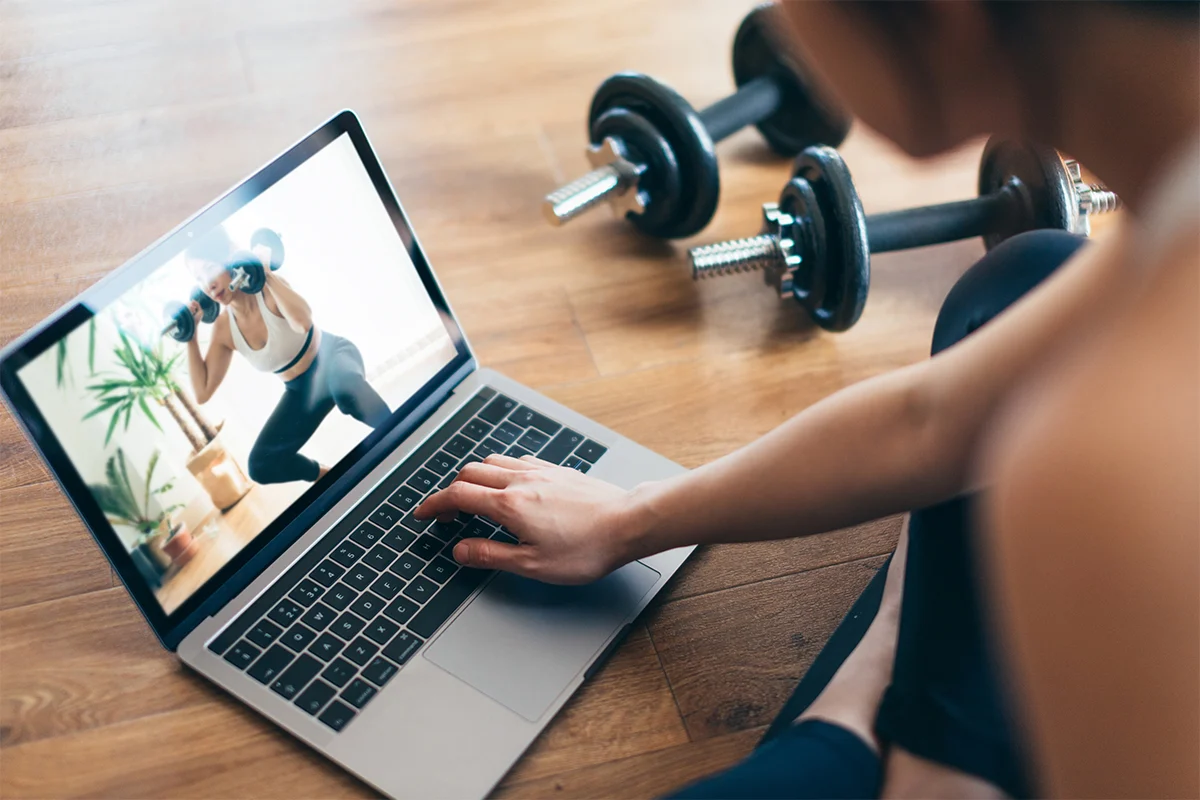
- The Data-Driven Personalization Loop: Wearable technology now acts as the connective tissue between disparate exercise formats. A user might track a morning run on a smartwatch, participate in a live-streamed HIIT class at lunch, and attend a weightlifting session at a local gym in the evening.
- Flexibility as a Prerequisite: In a post-pandemic work environment, where remote and hybrid work are common, the static gym-only model often fails to accommodate the volatility of a modern schedule.
A Chronological Perspective: The Road to Hybridization
The journey toward the current hybrid model did not happen overnight; it was a process of rapid acceleration triggered by global necessity and fueled by technological maturity.
The Pre-2020 Foundation
Before 2020, the industry was bifurcated. Gyms focused on community and high-end equipment, while the digital fitness space was largely relegated to niche "at-home" DVD programs or early-stage streaming platforms. Participation in both was considered redundant for the average consumer.
The 2020–2022 Pivot
The global pandemic served as a forced experiment in digital-only fitness. During this period, the industry saw an unprecedented investment in user experience (UX) for digital workouts. When physical facilities were shuttered, consumers became accustomed to the convenience of "fitness on demand," which permanently altered their expectations regarding accessibility and time-efficiency.
The 2023–2024 Consolidation
As facilities reopened, industry analysts anticipated a return to the status quo. Instead, a "sticky" behavior emerged. Consumers who had invested in home equipment or digital subscriptions were unwilling to abandon the convenience they had discovered. Simultaneously, the hunger for social interaction and specialized equipment brought them back to gyms. The result was the emergence of the hybrid consumer.
The 2025–2026 Normalization
As noted in the Worldwide survey of fitness trends for 2025 (Thompson, 2025), the hybrid model has now moved from a trend to the dominant industry standard. We are currently in a phase of institutionalization, where gym chains are actively redesigning their business models to cater to members who may only physically appear on-site two or three times a week.
Supporting Data: Quantifying the Shift
The metrics provided by industry leaders and academic researchers highlight the depth of this transition. The IHRSA’s 2025 research indicates that over 65% of gym members now identify as "hybrid participants."
- Frequency and Diversity: The average hybrid user engages with at least 2.4 different modes of fitness per week. This diversity is linked to higher long-term retention rates compared to single-mode users.
- The Economic Impact: Spending has shifted from a single monthly gym fee to a fragmented expenditure covering app subscriptions, wearable tech, and tiered gym access. The "total share of wallet" for fitness has increased, even as the cost of individual components has become more competitive.
- Demographic Drivers: Younger demographics (Gen Z and Millennials) are the primary drivers of this trend, showing a 40% higher propensity for hybrid exercise compared to Boomers. However, usage across all age groups has increased by at least 15% since 2022.
Official Responses and Industry Sentiment
Industry leaders have responded with a mix of optimism and strategic recalibration. Fitness facility operators, who once viewed digital apps as a threat, have largely pivoted to becoming "hybrid hubs."
"The goal is no longer to keep the member in the gym for four hours a week," says an industry consultant specializing in member retention. "The goal is to remain the primary fitness partner, whether the member is using our facility or streaming our instructors from their living room while traveling for business. We are selling a lifestyle, not just square footage."
Conversely, developers of fitness technology are focusing on interoperability. The "walled garden" approach—where a fitness app only works with its proprietary hardware—is losing favor. The current industry consensus favors open ecosystems where data flows freely between devices, allowing the user to maintain a consistent health profile regardless of the hardware they are using at that moment.
Implications for the Future of Wellness
The shift to a hybrid fitness model carries profound implications for society, urban planning, and the future of public health.
The Reimagining of Gym Spaces
Physical gyms are evolving into community centers. Since members no longer rely on the gym for every workout, facilities are shifting their floor plans. There is an increased focus on recovery zones, social areas, and specialized equipment that is difficult to replicate at home, such as heavy lifting platforms or hydrotherapy pools. The "weight room" is becoming an "experience center."
The Democratization of Coaching
Digital platforms have democratized access to elite-level coaching. A user in a rural area can now access the same high-intensity training programs as a user in a major metropolitan center. This reduces the "fitness inequality" gap, provided that digital infrastructure remains robust.
Challenges of Sustained Engagement
While hybrid fitness offers flexibility, it also introduces "choice fatigue." With an endless array of apps, classes, and outdoor options, the burden of decision-making falls on the individual. The next wave of industry innovation is expected to focus on AI-driven personalization, where apps will suggest the "best" workout for the user based on their calendar, their recent recovery data, and their specific goals.
The Sustainability of the Hybrid Lifestyle
For the hybrid model to remain sustainable, it must address the issue of physical burnout. As consumers optimize every hour of their day, there is a risk of over-training. Future fitness integration will likely focus heavily on "wellness" rather than just "exercise"—incorporating sleep tracking, nutritional guidance, and mental health resources into the hybrid dashboard.
Conclusion
The evolution from the rigid gym-membership model to the fluid, hybrid fitness ecosystem is more than a temporary reaction to technological or global events. It is a fundamental shift in how human beings manage their physical capital. As we look toward the latter half of the decade, the winners in the fitness industry will be those who facilitate, rather than dictate, the user’s journey.
Whether it is a morning jog tracked by a watch, a lunch-break yoga session via a streaming app, or a weekend weightlifting session at a local facility, the future of fitness is defined by a single, powerful word: choice. The hybrid model has provided the framework for this autonomy, and in doing so, it has made fitness a more permanent, adaptable, and essential part of the modern human experience.
References
- International Health, Racquet & Sportsclub Association (IHRSA). (2025). Global fitness consumer report: Hybrid participation trends and member preferences. Boston, MA: IHRSA.
- Thompson, W. R. (2025). Worldwide survey of fitness trends for 2025. ACSM’s Health & Fitness Journal, 29(1), 12–24.
- Fitness Journal – 2026, Issue 7. (2026). Industry Review and Longitudinal Analysis of Consumer Engagement.