











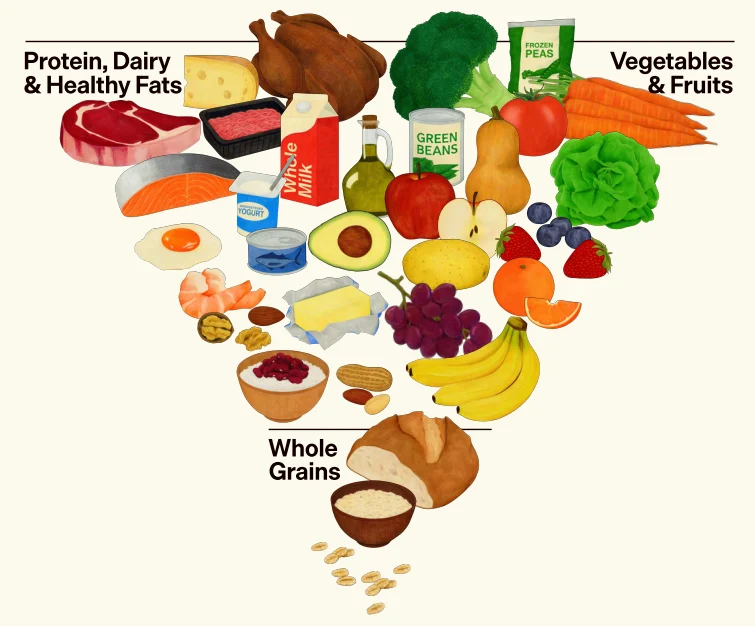
The release of the 2025–2030 Dietary Guidelines for Americans (DGAs) has ignited a firestorm within the public health community. While the federal government has touted the new edition as a streamlined, "consumer-friendly" roadmap for health—centered on the rallying cry of "eat real food"—critics argue that the document is marred by internal contradictions, opaque development processes, and a visual presentation that seems to defy the very science it purports to uphold.
As federal nutrition programs and millions of American households prepare to align their intake with these new standards, nutrition experts are raising alarms. The divergence between the written text, which maintains a cautionary stance on saturated fats, and the prominent "New Food Pyramid" graphic, which elevates meat and dairy, threatens to confuse the public and undermine decades of cardiovascular health advocacy.
The Evolution of Federal Nutrition Policy
For decades, the DGAs have served as the cornerstone of American nutrition policy, influencing everything from school lunch programs to hospital menus and military rations. Every five years, the U.S. Department of Agriculture (USDA) and the Department of Health and Human Services (HHS) undergo a rigorous update process. Traditionally, this involves an independent Dietary Guidelines Advisory Committee (DGAC)—a panel of preeminent scientists—who review the latest evidence to produce a comprehensive scientific report.
The 2025–2030 cycle, however, took a controversial turn. Following the submission of the independent Committee’s report, the administration took the unprecedented step of rejecting the findings. Instead, a supplemental scientific analysis was commissioned via a federal contracting process. This shift has drawn sharp criticism from researchers who argue that the new guidelines lack the transparency and rigorous peer-review standards that have historically defined the DGAs.
"There is no transparency in the methodology and rigor that was employed, or why certain topics were selected to be relitigated," notes Deirdre Tobias, assistant professor in the Department of Nutrition at Harvard T.H. Chan School of Public Health, who served on the original advisory committee. "The reviews themselves… deviate significantly from the rigorous process that the HHS developed to ensure the evidence base was replicable, unbiased, and free from non-scientific influences."
Key Policy Shifts: Progress and Pitfalls
Despite the procedural controversies, the new DGAs do incorporate several long-awaited updates that align with modern nutritional science.
The War on "Highly Processed" Foods
In a significant departure from previous editions, the 2025–2030 guidelines explicitly target the broad category of "highly processed" foods. While the definition remains fluid—as processing exists on a spectrum—the guidance provides clear warnings against sugar-sweetened beverages, ready-to-eat salty snacks, and refined, low-fiber carbohydrates like white bread. By steering consumers toward whole, fiber-rich grains and unprocessed alternatives, the DGAs take a commendable step toward addressing the rising tide of metabolic disease in the United States.
A Hard Line on Added Sugars
The new guidelines have also adopted a more aggressive stance on added sugars. The DGAs now explicitly state that no amount of added sugar or non-nutritive sweetener is considered part of a healthy, nutritious diet. Most notably, the guidance for children has been tightened significantly; the previous threshold for avoiding added sugars—age 2—has been pushed to age 10. While these recommendations are scientifically sound, they lack practical implementation strategies, leaving consumers to navigate a food environment where added sugars are hidden in everything from pasta sauces to salad dressings.
The Saturated Fat Conundrum: A Visual Contradiction
Perhaps the most contentious aspect of the new guidelines is the return of a pyramid-style graphic. Unlike the iconic food pyramid of the 1990s or the current "MyPlate" model, this iteration is inverted. It visually emphasizes animal-based products, including steak, full-fat milk, butter, and beef tallow.
This visual hierarchy stands in direct contrast to the document’s written text, which maintains the long-standing scientific consensus: saturated fat intake should not exceed 10% of total daily calories.
The Math of Saturated Fat
For a standard 2,000-calorie diet, the 10% limit equates to approximately 22 grams of saturated fat. When one considers the DGA’s recommended daily intake of three servings of dairy, the math becomes precarious. A combination of one cup of whole milk (5g), three-quarters of a cup of full-fat Greek yogurt (6g), and one ounce of cheddar cheese (6g) immediately totals 17 grams of saturated fat. Adding a single tablespoon of butter or beef tallow—both of which are highlighted as recommended cooking fats in the guide—pushes the consumer over the daily limit before they have even consumed their primary protein or carbohydrate sources for the day.
Frank Hu, professor of nutrition and epidemiology and chair of the Department of Nutrition at the Harvard T.H. Chan School of Public Health, warns of the consequences. "The mixed messages surrounding saturated-fat-rich foods may lead to confusion and potentially higher intake of saturated fat and increased LDL cholesterol and cardiovascular risk," Hu explains. He points out that while the pyramid includes olive oil, it fails to distinguish between the cardiovascular benefits of unsaturated plant fats and the risks associated with excessive animal fats.
Protein Overload and the "Protein Package"
The 2025–2030 DGAs have significantly raised the recommended daily protein intake, suggesting between 1.2 and 1.6 grams per kilogram of body weight—a 50% to 100% increase over previous minimums.
Nutrition experts are wary of this pivot. While protein is essential for muscle maintenance and satiety, the guidelines fail to emphasize the importance of the "protein package." When an individual consumes protein, they are also consuming the fats, sodium, and fiber that accompany it. A piece of salmon offers a vastly different health profile than a portion of processed red meat, yet the guidelines treat them as interchangeable sources of protein.
"Substantially raising overall protein intake without distinguishing between different protein sources may have unintended long-term health implications," Dr. Hu adds. Evidence consistently demonstrates that diets centered on plant-based proteins and fish are associated with superior health outcomes compared to those heavy in red meat.
Omissions and Broader Implications
The new DGAs are notably silent on two critical fronts: environmental sustainability and socioeconomic barriers.
- Environmental Impact: The omission of climate-related considerations is a glaring blind spot. Food production is a primary driver of environmental degradation, and the scientific community has long argued that the DGAs should account for the sustainability of dietary patterns.
- Socioeconomic Realities: Nutritional advice is only as effective as the consumer’s ability to access the recommended foods. By failing to address how food deserts and rising costs affect the average American’s ability to follow these guidelines, the document risks becoming an abstract set of ideals rather than a practical tool for public health.
Moving Forward: Where Do We Go From Here?
The 2025–2030 DGAs arrive at a time of profound skepticism toward federal institutions. The revelation that several members of the review panel possess financial ties to the beef and dairy industries has only exacerbated concerns regarding the document’s objectivity.
For the average American, the result is a landscape of conflicting information. When official federal graphics prioritize foods that medical experts urge us to limit, the foundation of public trust is eroded.
As we look toward the next five years, the effectiveness of these guidelines will be measured not by their visual design or their catchy taglines, but by their real-world impact on health outcomes. Until the government reconciles its visual messaging with the underlying science, the best path for consumers may be to rely on independent, evidence-based resources, such as the Harvard "Healthy Eating Plate," and to seek personalized advice from registered dietitians who can navigate the nuances of these new, and often confusing, recommendations.
The battle for the American diet is far from over; if anything, the 2025–2030 guidelines serve as a poignant reminder that in the world of nutrition, the most important message is often the one left between the lines.