Reviewed by Brian St. Pierre, MS, RD
In the halls of fitness centers and the private offices of nutritionists, a quiet anxiety permeated the industry back in 2017. As GLP-1 receptor agonists—the class of drugs including semaglutide (Ozempic) and tirzepatide (Mounjaro)—first entered the public consciousness, many health and fitness professionals asked a singular, existential question: "Is this drug going to steal my job?"
At the time, the threat felt theoretical. Prescription rates were modest, and the medication felt like a niche medical intervention. Fast forward to 2026, and the landscape has shifted seismically. With over 1 in 10 U.S. adults now utilizing GLP-1 medications, the drugs have moved from the fringe to the forefront of the weight-loss conversation. For coaches, the initial fear has evolved into a more nuanced realization: GLP-1 medications are not a replacement for coaching, but rather a catalyst for a new, specialized branch of the wellness industry.
The Paradigm Shift: From Gatekeepers to Partners
The prevailing wisdom in the coaching community has matured. Most professionals no longer view these medications as a "band-aid" solution that bypasses hard work. Instead, they are increasingly seen as a powerful, albeit complex, tool that requires the structural support of habit-based coaching to be effective—and safe—in the long term.
Kate Solovieva, Super Coach and Director of Community at Precision Nutrition, offers a framing that has become a mantra for modern practitioners: "As a coach, you’re not in the GLP-1 world; you’re in the GLP-1 support world."
This distinction is vital. Coaches must recognize that their target market is not simply "everyone on a GLP-1," but rather the specific subgroup of individuals who are ready, willing, and able to engage in the behavioral work that ensures the medication works in harmony with their physiology. Attempting to coach those who are not ready for behavioral change is a drain on professional energy. Identifying the right clients, however, is where the industry’s future growth lies.
The Taxonomy of the GLP-1 Client
Readiness for coaching is dynamic, not fixed. A client who enters a program feeling self-sufficient may, three months later, find themselves struggling with side effects or the complexities of tapering off the drug. Coaches must remain agile, listening for shifts in their client’s narrative.
Generally, a client is ready for coaching when they demonstrate a desire for sustainable health—rather than just quick weight loss—and a willingness to engage in objective data tracking. Based on years of coaching over 175,000 clients, seven distinct "types" of GLP-1 users have emerged, each requiring a tailored approach.
1. The Honeymooner (Low Readiness)
These individuals are in the "golden phase" of their treatment. They are losing weight effortlessly, experiencing minimal side effects, and are generally resistant to adding structured exercise or complex nutritional planning.
- The Coaching Move: Avoid the "righting reflex." Pushing them to add resistance training or protein tracking now will likely feel like an unnecessary burden. Instead, offer genuine celebration of their success and plant the seed for future support. Let them know your door is open when they are ready to layer in long-term health habits.
2. The Ambivalent Candidate (Low-to-Moderate Readiness)
This person is standing at the precipice of starting the medication, paralyzed by fear—not just of side effects, but of personal failure. They worry that using a drug makes them "weak" or "lazy."
- The Coaching Move: Acknowledge that this is a medical decision, not a coaching one. Use the "4 Crazy Questions" exercise to help them explore the risks of both starting and not starting. Frame the medication as a tool for a disease (obesity), just as one would use medication for high cholesterol, to help remove the stigma.
3. The Ready-to-Quitter (Moderate Readiness)
This individual is experiencing the harsh reality of GLP-1s: severe nausea, fatigue, and GI distress. They are often demoralized because they feel their experience is unique or that they are "broken."

- The Coaching Move: Offer empathy and normalization. Educate them on the prevalence of side effects. Suggest experiments—not prescriptions—such as eating smaller, more frequent, nutrient-dense meals or adjusting the timing of their medication in consultation with their doctor.
4. The Muscle-Loss Risk (Moderate Readiness)
The scale is dropping, but the body composition is shifting in the wrong direction. This client is often sedentary and under-fueling, losing precious lean muscle mass alongside body fat.
- The Coaching Move: Use objective data. A DEXA scan can provide the "wake-up call" needed to shift their focus from the scale to their body composition. Prioritize protein intake at every meal and introduce low-threshold strength training—starting with movements they are 90% confident they can complete consistently.
5. The Under-Fueler (Moderate-to-High Readiness)
The medication has suppressed their appetite so effectively that they are consuming dangerously low calories. They often do not realize they are starving themselves until the data shows it.
- The Coaching Move: Safety is paramount. If disordered eating is present, refer to a specialist immediately. If not, establish a rigid, schedule-based eating routine. Use the "show me" approach: have them track food for a short period to see the objective data of their intake.
6. The Graduate (High Readiness)
They have reached their goal and are now looking to transition off the medication. They are often vulnerable to the high risk of weight regain.
- The Coaching Move: Temper expectations. Explain that coming off the drug is not the finish line, but the start of a new, different endurance course. Focus on solidifying the habits that were built while the drug was active. Data shows that those who maintain rigorous habits during the transition are four times more likely to hold their weight loss.
7. The Priced-Out (High Readiness)
These individuals are being forced off the medication due to insurance changes or financial constraints. They often feel betrayed by the system.
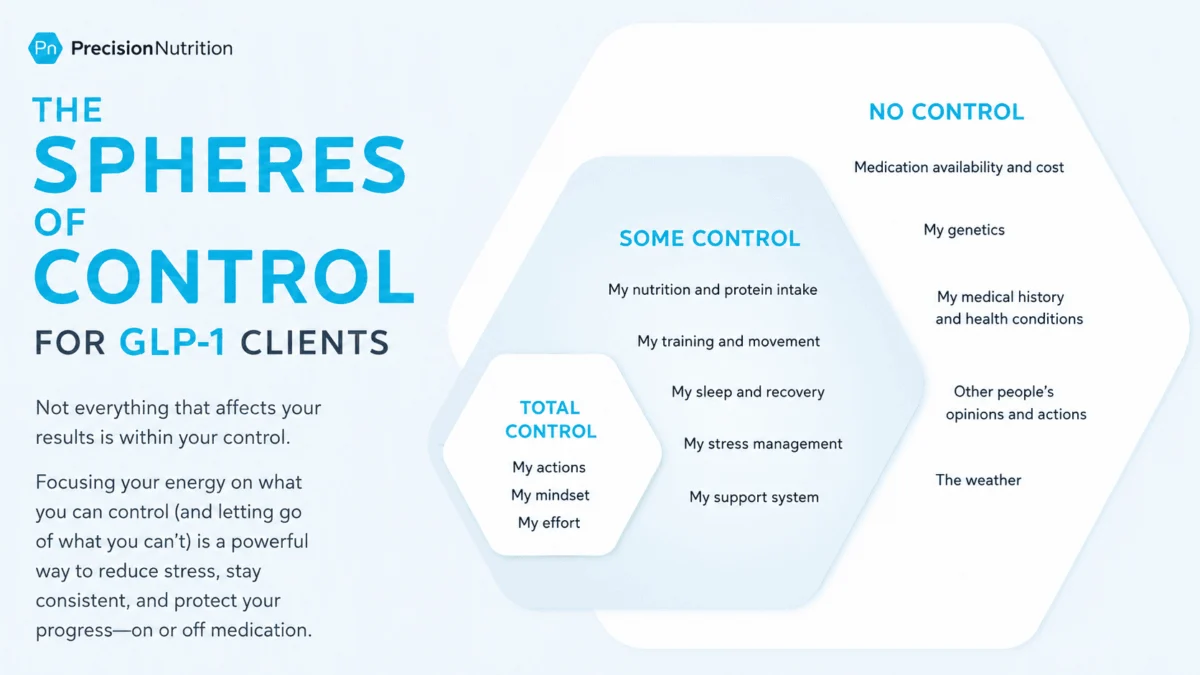
- The Coaching Move: Validate their frustration—this is a systemic failure, not a personal one. Shift their focus to the "Spheres of Control." While they cannot control the price of medication, they can master their sleep, protein intake, and training.
The Scientific and Professional Consensus
The data surrounding GLP-1s is stark. Up to 40% of weight lost on these medications can come from lean mass, which is why resistance training is non-negotiable. Furthermore, research consistently shows that when people stop the medication without having built deep, neural "ruts" of healthy habit—what we call the Oregon Trail analogy—the weight regain is almost inevitable.
Official responses from medical organizations are increasingly mirroring this perspective. While the drugs are being viewed as long-term therapy for chronic obesity, the medical community is acknowledging that the drug is only as good as the lifestyle that sustains it.
Implications for the Future of Fitness
The role of the coach is evolving from "task-master" to "system-architect." The most successful coaches of the future will be those who can expertly bridge the gap between medical intervention and sustainable behavior change.
If you are a coach, the emergence of GLP-1s is not a threat to your livelihood; it is a signal to upgrade your skillset. The clients of the future need someone to help them navigate the complexities of appetite, body composition, and identity in a world where biology is increasingly being assisted by technology.
By focusing on the "ruts"—the deep, ingrained neural pathways formed through consistent resistance training and strategic nutrition—coaches can provide something that no medication can: a sustainable, resilient identity that remains long after the prescription runs out. As we look toward the latter half of the decade, the industry is poised to become more professional, more evidence-based, and more essential than ever before.
For those ready to step into this role, the opportunity to make a profound, long-term impact on client health has never been greater. Whether through professional certifications or deepening one’s knowledge of metabolic health, the path forward is clear: integrate, support, and coach.