






Reviewed by Brian St. Pierre, MS, RD
In 2017, when semaglutide (Ozempic) first received FDA approval, many health and fitness coaches viewed the emerging class of GLP-1 receptor agonists with skepticism—or, more accurately, existential dread. The prevailing sentiment across the coaching industry was clear: "Is this drug going to steal my job?"
Back then, the threat felt theoretical. Prescription rates were nominal, and for the average trainer, the medication was a clinical curiosity rather than a workplace reality. Fast forward to 2026, and the landscape has shifted seismically. Today, over one in ten U.S. adults are actively taking a GLP-1 medication. For the modern health professional, the question has evolved from "Will this replace me?" to "How do I effectively support clients navigating this complex medical journey?"
The industry consensus has softened. Most coaches no longer view these medications as a threat to their business; instead, they recognize them as powerful, albeit complex, tools that require a specialized layer of coaching to ensure long-term success.
A New Paradigm: The "Support World"
To thrive in the current climate, coaches must undergo a fundamental mindset shift. As Kate Solovieva, Super Coach and Director of Community at Precision Nutrition, astutely observes: "As a coach, you’re not in the GLP-1 world; you’re in the GLP-1 support world."
This distinction is critical. Trying to coach every individual on a GLP-1 medication is both logistically impossible and strategically unsound. Many users are not interested in behavioral coaching, and attempting to "fix" their approach against their will is a recipe for professional frustration. The actual opportunity lies in identifying the specific subgroup of users who are "ready, willing, and able" to integrate lifestyle support alongside their medical treatment.
The Seven Faces of the GLP-1 Journey
Readiness for coaching is not a static trait. It is a fluid state that shifts as a client moves through their medical journey. Based on extensive data from over 175,000 coached clients, we have identified seven distinct archetypes, each requiring a tailored approach.
1. The Honeymooner (Readiness: Very Low)
These clients are in the initial phase of their medication journey. They are seeing results on the scale with minimal effort, and they feel no need for additional lifestyle interventions.
- The Coaching Move: Resist the "righting reflex." Do not push for resistance training or strict nutrition protocols while they are experiencing early success. Instead, celebrate their wins and remain a supportive presence, planting seeds for when their progress inevitably plateaus.
2. The Ambivalent Candidate (Readiness: Low-to-Moderate)
These individuals are on the fence, terrified by the prospect of lifelong medication, side effects, or a perceived loss of "moral character" for seeking medical help.
- The Coaching Move: Help them navigate the "4 Crazy Questions" to explore the consequences of both starting and not starting the medication. Your role is not to dictate a medical choice, but to help them articulate the values and fears driving their hesitation.
3. The Ready-to-Quitter (Readiness: Moderate)
These clients are seeing weight loss results but are suffering from severe nausea, fatigue, and the feeling that the medication is a "plague."
- The Coaching Move: Offer neutral education to normalize their experience. Encourage them to consult their physician regarding dose adjustments, and facilitate small, manageable experiments—such as smaller, more frequent meals—to mitigate symptoms.
4. The Muscle-Loss Risk (Readiness: Moderate)
The scale is dropping, but the body composition is shifting in the wrong direction. These clients are often sedentary and fail to consume adequate protein, leading to significant lean mass loss.

- The Coaching Move: Shift the focus from the scale to body composition. Encourage a DEXA scan or functional strength testing to provide objective data. Prioritize protein intake (25–40g per meal) and scalable strength training to protect muscle tissue.
5. The Under-Fueler (Readiness: Moderate-to-High)
For these individuals, the medication works "too well." Appetite has vanished, leading to caloric deficits that threaten long-term metabolic health and energy.
- The Coaching Move: This requires a "show me" approach. If the client resists tracking, use a gentle, honest conversation to highlight the physical symptoms of under-fueling. Establish a strict eating schedule to ensure they are getting essential nutrients regardless of appetite cues.
6. The Graduate (Readiness: High)
These clients have reached their goal and are tapering off the medication. They are often vulnerable to weight regain as the "medicated appetite" returns.
- The Coaching Move: Temper their expectations. Success is no longer defined by the scale, but by the consistency of their habits. Focus on reinforcing the "ruts" of their daily routine so that when the chemical support is removed, the behavioral pathways remain.
7. The Priced-Out (Readiness: High)
These individuals are forced to stop medication due to insurance changes or cost. They are often grieving the loss of a tool that finally worked for them.
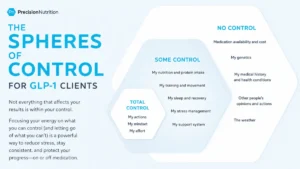
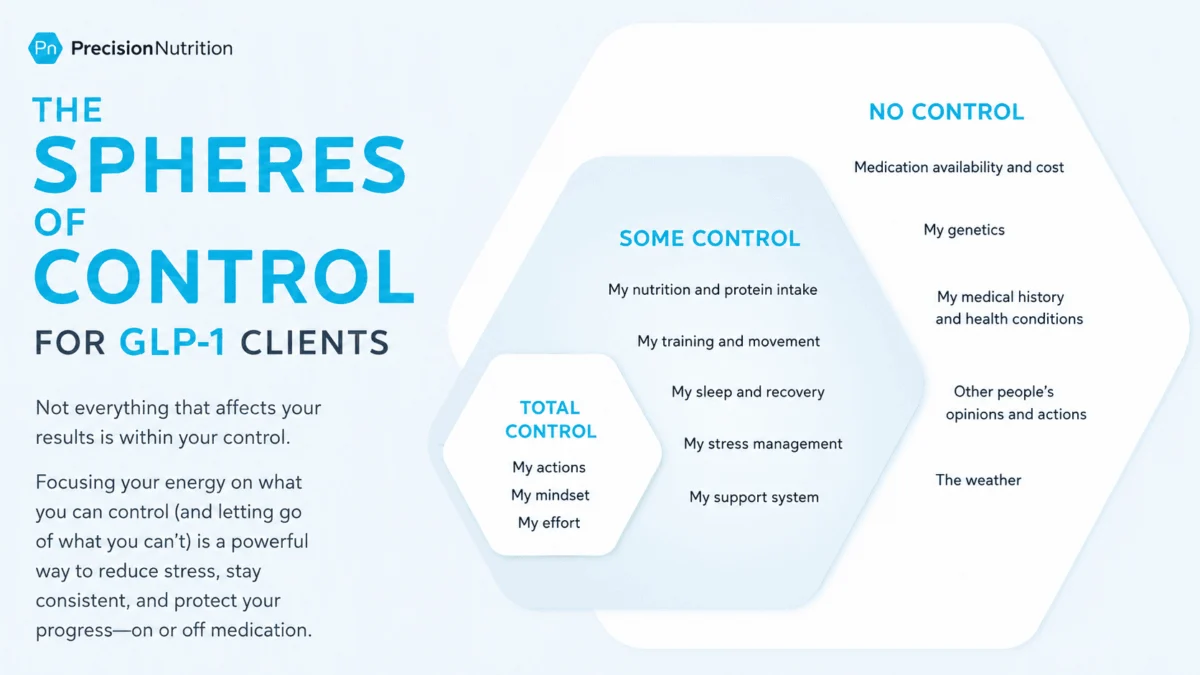
- The Coaching Move: Validate their frustration as a systemic failure, not a personal one. Utilize the "Spheres of Control" exercise to refocus their energy on what they can influence: their sleep, protein intake, movement, and stress management.
The Data Behind the Strategy
The medical reality of GLP-1 usage is stark. Studies indicate that up to 40 percent of weight lost via these medications can come from lean mass, specifically muscle tissue. Furthermore, approximately 50 percent of users discontinue the medication within the first year.
However, the data also provides a roadmap for success. Clients who integrate consistent resistance training and high-protein nutrition while on the medication are four times more likely to maintain a 10 percent or greater weight loss once they cease treatment. These "habits of maintenance" are the true value-add of the professional coach.
Official Perspectives and Ethical Boundaries
It is essential to distinguish between coaching and medical intervention. Coaches must be diligent about their scope of practice. When a client reports severe side effects—such as persistent vomiting, signs of pancreatitis, or gallbladder issues—the coach must immediately direct the client to their primary care provider.
According to Coach Toni Bauer, Director of Coaching and Education Operations at Precision Nutrition, the goal is to build deep neural pathways—"ruts in the trail"—so that when the medication is removed, the client has a behavioral foundation to fall back on. "I can’t promise anyone they’ll never regain weight," says Bauer, "but I can promise that the habits we build while the medication is doing its work are the ones that will stand when it isn’t."
Implications for the Future of Fitness
The integration of GLP-1 medications into the fitness industry is not a passing trend; it is a permanent evolution. As obesity is increasingly treated as a chronic, manageable condition, the role of the fitness professional must evolve into that of a "lifestyle architect."
This requires a departure from the "one-size-fits-all" workout plan. Coaches must become adept at:
- Nutritional Periodization: Adjusting protein and caloric density based on the ebb and flow of a client’s appetite.
- Psychological Resilience Training: Helping clients navigate the emotional complexities of body image and identity as they undergo rapid physical changes.
- Dynamic Programming: Scaling exercise intensity in real-time to match the client’s current energy and recovery levels.
The future of the fitness industry belongs to those who can synthesize the clinical efficacy of modern medicine with the time-tested principles of behavioral change. By meeting clients where they are—whether they are a "Honeymooner" or a "Graduate"—coaches can provide the essential support that medication alone cannot offer.
As we look toward 2026 and beyond, the most successful practitioners will be those who view these medications not as an adversary, but as a bridge to a more sustainable, habit-driven lifestyle for their clients. The "ruts" we dig today will define the health outcomes of tomorrow.