The landscape of sleep technology is undergoing a quiet, yet profound, transformation. For the better part of a decade, the market has been flooded with consumer-grade wearables—smartwatches and rings that promise to decode the mysteries of our nightly rest. Yet, for sleep physicians and researchers, these devices have long been viewed with skepticism, largely due to a lack of rigorous, transparent clinical validation.
However, the crowdfunding launch of the Sleepal AI Lamp in May 2026 marks a significant pivot. The conversation is no longer about whether radar-based sensing can monitor sleep; the discussion has shifted toward a more rigorous inquiry: Can these contactless systems achieve the level of reliability required for clinical environments? By launching with a massive, publicly accessible validation dataset, Sleepal is challenging the status quo of the consumer sleep-tracking industry.
Main Facts: A New Benchmark for Validation
Unlike the typical consumer electronic launch—which often relies on proprietary, "black box" algorithms and small, internal test groups—the Sleepal AI Lamp arrives with a substantial scientific pedigree. The development team, led by Dian Fan, a former leader of an IoT platform at a Fortune 500 smart home company, has prioritized data transparency over marketing obfuscation.
The core of their offering is backed by a 1,022-night validation study, alongside over 2,000 total nights of simultaneous polysomnography (PSG) and millimeter-wave radar monitoring. These studies were conducted in multiple hospital sleep laboratories, providing a level of evidence that far exceeds the industry standard. The full validation preprint is currently available on arXiv (2604.16442), inviting scrutiny from the global sleep research community.
Chronology of Development: From Concept to Clinical Benchmarking
The development of the Sleepal AI Lamp was not an overnight success but the result of a deliberate, multi-year engineering trajectory.

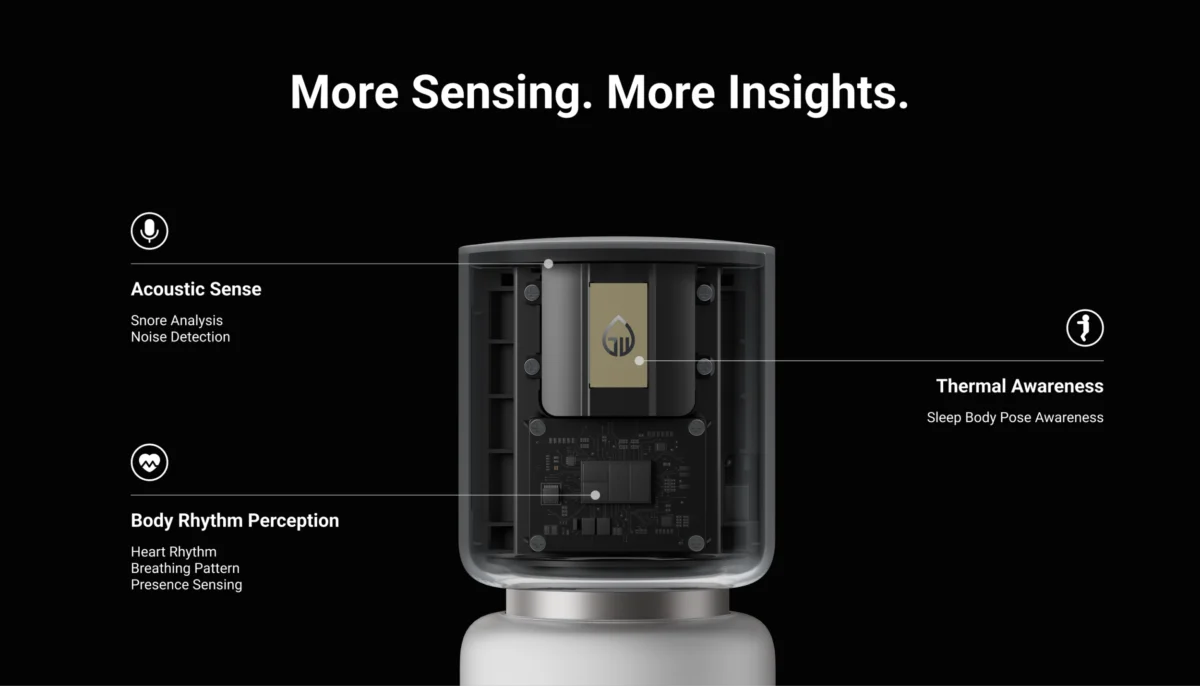
- Phase I: Research & Development: The team focused on overcoming the limitations of traditional ballistocardiography. By integrating 60 GHz millimeter-wave radar with modern digital beam-forming, the developers sought to capture submillimeter chest wall displacements—cardiac and respiratory signals—without the need for physical contact.
- Phase II: Clinical Partnership: Recognizing that most algorithms are trained on "ideal" sleepers, the team partnered with clinical sleep laboratories to recruit participants with real-world complexities. Unlike previous studies, this population included individuals with mild-to-moderate obstructive sleep apnea (OSA), periodic limb movement disorder (PLMD), and fragmented sleep architecture.
- Phase III: Validation: The team conducted extensive simultaneous recordings using both the Sleepal radar system and gold-standard PSG. This phase aimed to stress-test the machine learning models against the noise and irregularities inherent in disordered sleep.
- Phase IV: Public Disclosure: In May 2026, coinciding with its crowdfunding launch, the team released their findings on arXiv, effectively inviting the scientific community to audit their methodology and results.
Supporting Data: Performance Under Pressure
The data emerging from the Sleepal validation study suggests that contactless sensing is becoming significantly more sophisticated. The findings reported in the preprint indicate:
- Sleep-Wake Discrimination: The device achieved 92.77% correct assignment of sleep-wake states.
- Sleep Staging: The system correctly identified four sleep stages with 77.2% accuracy.
- Resilience to Pathology: Notably, performance remained stable even among participants experiencing disrupted breathing. In patients with severe obstructive sleep apnea (AHI > 30), the model maintained 74.3% accuracy, a remarkable feat for a device that does not physically touch the user.
These metrics were derived from simultaneous PSG comparison, confirming that the data reflects performance under clinically relevant conditions rather than idealized laboratory setups.
Environmental Sensing: The Missing Link in Sleep Hygiene
While physiological monitoring has dominated the conversation, the Sleepal AI Lamp introduces a vital, often overlooked component: environmental awareness. Wrist-worn wearables track the body as an isolated system; the Sleepal system treats the bedroom as an integrated environment.
The Role of Context
By monitoring ambient temperature, humidity, light levels, and acoustics, the device can correlate environmental fluctuations with sleep fragmentation. For example, a patient experiencing sleep maintenance insomnia might, through the device’s data, discover that their bedroom temperature rises by 3–4°C after midnight, leading to documented arousals.
This moves the conversation from vague "sleep hygiene" advice to actionable, evidence-based behavioral intervention. The ability to link specific room conditions to physiological responses provides a level of insight that wearables—blind to the environment—simply cannot replicate.

Official Stance and Regulatory Positioning
It is critical to note that the Sleepal AI Lamp is marketed strictly as a consumer wellness product. The manufacturer has been transparent, stating that the device is not FDA-cleared for diagnosing or detecting disease. Its primary function is to help users learn their patterns and foster healthier habits.
However, the efficacy of the device creates a "grey zone" in modern medicine. When a consumer device produces data comparable to Type III home sleep apnea tests, the distinction between "wellness" and "clinical utility" becomes increasingly porous. This mirrors the trajectory of the Apple Watch’s irregular rhythm notification feature, which—despite not being a primary diagnostic tool—has alerted countless users to undiagnosed atrial fibrillation.
Implications for the Future of Sleep Medicine
For the Physician
The rise of such high-accuracy, contactless technology forces a change in clinical practice. Sleep medicine professionals are no longer just interpreting PSG data; they are increasingly asked to help patients interpret data from home-based systems. The Sleepal study provides a template for how clinicians should evaluate these tools: Demand public validation data.
For the Patient
Patients who find wearables uncomfortable—due to claustrophobia, skin sensitivity, or simple annoyance—now have a legitimate alternative. While these devices cannot replace clinical polysomnography for diagnosing severe pathology, they offer a low-barrier, passive way to track trends, sleep positions, and environmental factors.
For the Industry
The American Academy of Sleep Medicine (AASM) has historically maintained a cautious stance on consumer sleep trackers. However, the trajectory of technology suggests that the gap between wellness marketing and clinical-grade utility will continue to narrow. The industry’s role is not to ignore this advancement, but to establish clear guidelines on where the line of "clinical relevance" is drawn.

Conclusion: A New Standard of Transparency
The Sleepal AI Lamp may or may not become a staple of the bedroom, but its launch strategy has undoubtedly shifted the goalposts for the entire industry. By choosing to publish their validation data openly and subjecting their methodology to the rigors of hospital-based testing, the developers have provided the sleep community with something it has long lacked: a concrete, evidence-based example of what a contactless system is actually capable of.
For sleep medicine professionals, the message is clear. When a company approaches with the promise of "medical-grade" accuracy, the response should no longer be a shrug, but a pointed, professional question: "Where is your validation data, and can we see it?"
As we look toward the future, the integration of contactless sensing into the sleep medicine ecosystem seems inevitable. Whether this represents a genuine revolution in patient care or merely a sophisticated marketing milestone will be determined by how these systems hold up under independent, peer-reviewed scrutiny in the months and years to come.
For more information regarding the research, methodology, and the device itself, visit sleepal.ai.