









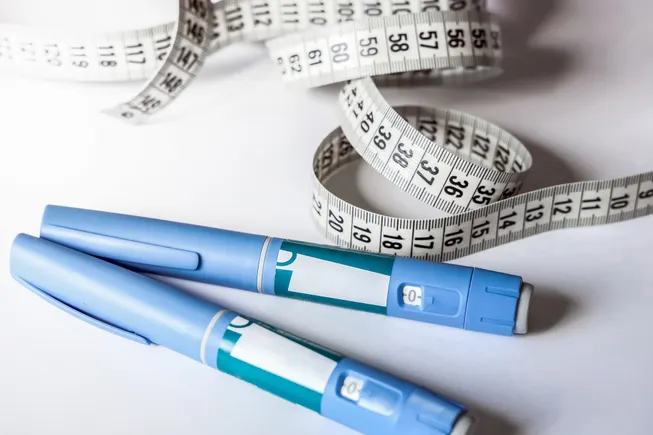
The global pharmaceutical landscape is currently undergoing its most significant transformation in decades, driven by the meteoric rise of incretin-based therapies. This week, the epicenter of this shift moved to Milan, Italy, as the European Association for the Study of Diabetes (EASD) hosted its annual meeting. For the world’s leading drugmakers, the conference served as a critical high-stakes arena to unveil data from experimental pipelines, attempting to capture the attention of clinicians and investors alike.
As the industry moves beyond the initial "gold rush" of Zepbound and Wegovy—which continue to generate billions in monthly revenue—the focus has shifted toward the "next generation" of treatments. The objective is no longer merely to induce weight loss, but to refine the patient experience through greater efficacy, improved gastrointestinal tolerability, and enhanced convenience, such as extended dosing intervals.
The Main Facts: A Competitive Evolution
The market for obesity and metabolic disease treatments is currently dominated by the "big two": Eli Lilly and Novo Nordisk. However, the data presented in Milan signals that the playing field is expanding. Emerging competitors, including Boehringer Ingelheim, AbbVie, and their respective partners, are aggressively positioning themselves to disrupt the status quo.
The core narrative of this year’s EASD meeting was twofold: first, the pursuit of "combo-therapies" that leverage multiple hormonal pathways to maximize weight reduction; and second, the move toward "real-world" evidence to justify the transition from injectable treatments to more convenient oral formulations.
Chronology: The Road to Milan
The urgency displayed in Milan is the result of years of rapid development. To understand the current climate, one must look at the recent timeline:
- Mid-2023: Eli Lilly’s Zepbound (tirzepatide) and Novo Nordisk’s Wegovy (semaglutide) solidified their hold on the obesity market, setting a high bar for weight loss efficacy.
- May 2024: Lilly stunned the market with Phase 3 data for retatrutide, a "triple-G" agonist (targeting GLP-1, GIP, and glucagon receptors), which demonstrated record-breaking weight loss potential.
- Q3 2024: Industry attention turned toward amylin-based therapies, viewed as a secondary "hormonal lever" to enhance weight loss while potentially mitigating the nausea associated with GLP-1 drugs.
- September 2024: AbbVie moved deeper into the space, licensing the amylin analog ABBV-295 from Gubra for $350 million.
- EASD Milan (Current): Major manufacturers converged to showcase data for these experimental assets, moving from early-stage proof-of-concept to more robust Phase 2 results.
Supporting Data: The Quest for Superior Efficacy
Eli Lilly’s Amylin-Zepbound Synergy
Lilly’s strategy for long-term dominance appears to be "stacking" metabolic targets. At EASD, the company presented findings from a Phase 2 trial of a novel combination therapy: Zepbound paired with eloralintide, an investigational amylin receptor agonist.
The results were compelling. Patients receiving the highest doses of the combination over a 48-week period achieved an average weight loss of 23%—approximately 54 pounds. For context, the trial arm receiving Zepbound alone reached 15% weight loss, while eloralintide alone hit 12%. This "additive" effect suggests that combining these mechanisms could push the ceiling of weight loss significantly higher than current monotherapies.
Novo Nordisk’s Oral Strategy
While Lilly leans into complex injections, Novo Nordisk is doubling down on the "pill" transition. Presenting data in collaboration with digital health partner Ro, Novo shared "real-world" insights from patients transitioning from the Wegovy or Zepbound injections to the oral semaglutide formulation.
The data indicated that patients who successfully switched and maintained the pill for at least three months lost an additional 4.1% of their body weight. Perhaps more significantly, the prevalence of obesity within the study cohort dropped from 87% to 66%. This evidence is a crucial strategic play for Novo, aiming to capture patients who may be "needle-fatigued" but remain committed to weight management.
Boehringer Ingelheim and AbbVie’s Emerging Footprints
Boehringer Ingelheim, which previously tasted success with the diabetes blockbuster Jardiance, is leveraging its partnership with Zealand Pharma. Their candidate, survodutide, addresses both GLP-1 and glucagon receptors. At EASD, the company highlighted a trial involving patients with both obesity and type 2 diabetes—a demographic often resistant to weight loss. These patients achieved an average 13% weight reduction, compared to just 3% in the placebo group.
AbbVie’s entry into the space is equally aggressive. Their data for ABBV-295, a long-acting amylin analog, emphasized the potential for flexible dosing. In Phase 1 testing, patients saw 10% weight loss with weekly or bi-weekly shots, and 8% with monthly shots. While nausea remains a side effect for one-third of participants, the prospect of monthly administration could be a significant differentiator in patient compliance.
Official Responses and Analyst Perspectives
The medical community and financial analysts are parsing this data with extreme scrutiny.
David Risinger of Leerink Research has been particularly bullish on the amylin class, forecasting that eloralintide could generate $23 billion in annual sales by 2035. This optimism is echoed by William Blair’s Andy Hsieh, who describes amylin-targeting drugs as a "softer" alternative. Hsieh suggests these drugs could redefine the treatment paradigm, potentially offering a more tolerable experience with fewer of the gastrointestinal side effects that currently plague GLP-1 users.
From the manufacturer side, the sentiment is one of cautious, scientific optimism. Louis Aronne, director of the Comprehensive Weight Control Center at Weill Cornell Medicine and an investigator for the Novo Nordisk study, stated, "These are exciting early insights on how the pill can individualize obesity care. We look forward to seeing longer-term outcomes."
Implications: The Future of Metabolic Healthcare
The implications of the data presented in Milan are profound, suggesting a shift from a "one-size-fits-all" GLP-1 approach to a more nuanced, tiered system of weight management.
- The "Softer" Tier: If amylin-based therapies prove to be as effective as projected with lower side-effect profiles, they may move to the front of the line for new patients or those who cannot tolerate the intensity of current injectables.
- The "Customized" Tier: Novo Nordisk’s focus on the oral transition suggests a future where weight management is managed like chronic blood pressure treatment—simple, daily, and less invasive—once the initial heavy lifting of weight loss is achieved through stronger injections.
- The "High-Efficacy" Tier: For patients with severe obesity or metabolic comorbidities, combinations like Lilly’s triple-acting retatrutide or amylin-Zepbound pairings offer a level of weight loss that rivals bariatric surgery, effectively narrowing the gap between medical and surgical interventions.
As the industry moves forward, the primary hurdle will remain supply chain management and accessibility. With global demand far outstripping production capacity, the race is not just for the best drug, but for the most scalable manufacturing process.
The EASD meeting in Milan confirmed that the era of "monotherapy dominance" is ending. We are entering an era of sophisticated poly-pharmacy, where the ability to titrate hormones precisely—and offer patients a choice between shots and pills, or weekly and monthly intervals—will determine the next leaders of the multi-billion-dollar weight loss market. The data is in, the competition is intensifying, and for millions of patients worldwide, the promise of more effective, personalized care has never been closer to reality.