





In an era where "biohacking" has transitioned from niche forums to mainstream wellness culture, the quest for longevity has never been more fervent. Everywhere we turn—from social media feeds saturated with cold-plunge statistics to podcasts detailing the latest in supplement stacks—the promise of extending our healthspan is being sold to us with clinical precision. But as the industry promises to help us reverse chronic disease, maintain a youthful glow, and potentially push the human lifespan into triple digits, a critical question emerges: Are these ultra-specific, high-effort protocols truly the keys to a longer life, or are they simply an expensive, time-consuming distraction from the fundamentals?
The Main Facts: Defining "Optimal" Health
The modern health-optimization movement is built on a foundation of "biohacking"—the practice of using science, biology, and self-experimentation to take control of one’s own physiology. Proponents argue that by tracking everything from continuous glucose levels to heart rate variability and blood biomarkers, we can "optimize" our bodies like high-performance machines.
However, there is a fundamental distinction between health and optimization. Health, in a clinical sense, refers to the absence of disease and the presence of physical, mental, and social well-being. Optimization, by contrast, implies pushing biological markers to the edge of what is humanly possible. While the former is a universal goal, the latter often requires a level of resource allocation—time, money, and mental bandwidth—that is inaccessible to the vast majority of the population and, perhaps more importantly, unnecessary for the average person to achieve a high quality of life.
A Chronology of the Wellness Explosion
The obsession with longevity did not happen overnight. Its trajectory can be traced through several distinct phases:
- The Early 2000s: The Rise of Preventative Wellness. This era marked a shift away from purely reactive medicine (treating sickness) to preventative health. The focus was on "eating your vegetables" and "moving your body," grounded in basic nutritional guidelines.
- The 2010s: The Quantified Self. The advent of wearable technology—Fitbits, Oura rings, and smart scales—brought data collection to the consumer level. Suddenly, individuals could track their sleep cycles and step counts, turning the "self" into a data set.
- The 2020s: The Optimization Era. Influenced by high-profile longevity researchers and "super-agers," the focus shifted from general fitness to longevity-specific protocols. This introduced the era of advanced supplementation, intermittent fasting, hyper-specific diets (keto, carnivore, paleo), and invasive testing, all aimed at "slowing the clock."
Supporting Data: The Law of Diminishing Returns
When analyzing the efficacy of these protocols, one must consider the "Law of Diminishing Returns." The first 20 percent of effort—getting enough sleep, eating whole foods, and engaging in regular, moderate movement—yields roughly 80 percent of the health benefits. The remaining 20 percent of potential health gains, however, often requires 80 percent of one’s resources.
Data from the longevity sector indicates that while extreme protocols can influence certain biomarkers, they rarely lead to a linear increase in lifespan. For instance, while strict calorie restriction has shown promise in animal models, the human implementation of such a lifestyle can lead to social isolation, hormonal disruptions, and an obsession with food that arguably detracts from one’s "healthspan"—the number of years lived in good health.
Furthermore, a study by the Centers for Disease Control and Prevention (CDC) suggests that the vast majority of chronic diseases are linked to lifestyle factors that are already well-understood and accessible, such as smoking cessation, moderate exercise, and nutritional quality. These "boring" basics often get lost in the noise of the next big supplement trend.
Official Responses: The Scientific Perspective
The medical and scientific community remains largely cautious regarding the "optimization" trend. Many experts argue that while the pursuit of longevity is noble, the lack of long-term, peer-reviewed data on many "biohacking" trends is concerning.
"We are seeing a trend where individuals are focusing on the minutiae of their health—such as specific ketone levels or intricate supplement stacks—while ignoring the broader lifestyle habits that have decades of evidence behind them," says Dr. Julianne Reed, a specialist in preventative medicine. "The danger is that these protocols can create a ‘halo effect,’ where the individual believes they are ‘optimized’ simply because they are following a rigorous routine, even if they are neglecting foundational mental health or stress management."
Official health bodies, including the World Health Organization (WHO), emphasize the "Social Determinants of Health." These factors—access to clean air, community engagement, and financial stability—are often far more predictive of longevity than any specific "biohack."
The Implications: Is the Trade-off Worth It?
The most pressing question for the average person is the "cost of optimization." This is not just a financial cost, though for many, it is significant. It is an emotional and cognitive cost.

1. The Financial Burden
Many longevity protocols require a monthly budget comparable to a car payment, covering continuous glucose monitors, specialized lab work, organic nutrient-dense foods, and high-quality supplements. For the average household, this is not sustainable, and there is little evidence that the ROI justifies the expense.
2. The Mental Load
Orthorexia—an unhealthy obsession with eating "pure" or "perfect" food—is a growing concern among the wellness-focused community. When every meal must be measured, and every hour of sleep tracked, the stress of "optimization" can lead to cortisol spikes that may, in fact, be counterproductive to the goal of living longer.
3. Sustainability
True longevity is not a sprint or a temporary "protocol"; it is a lifelong habit. If a program is so restrictive that it makes social gatherings difficult or induces high levels of stress, it is unlikely to be maintained for the decades required to see the benefits.
A Path Forward: Finding the "Sweet Spot"
So, where does this leave the individual who wants to live a long, healthy life?
The research suggests a pivot from optimization to sustainability. The most effective strategies for longevity are almost universally characterized by simplicity and consistency. These include:
- Prioritizing sleep hygiene: Sleep is the ultimate performance enhancer, and it is free.
- Strength training: Maintaining muscle mass is one of the strongest predictors of longevity and independence in later life.
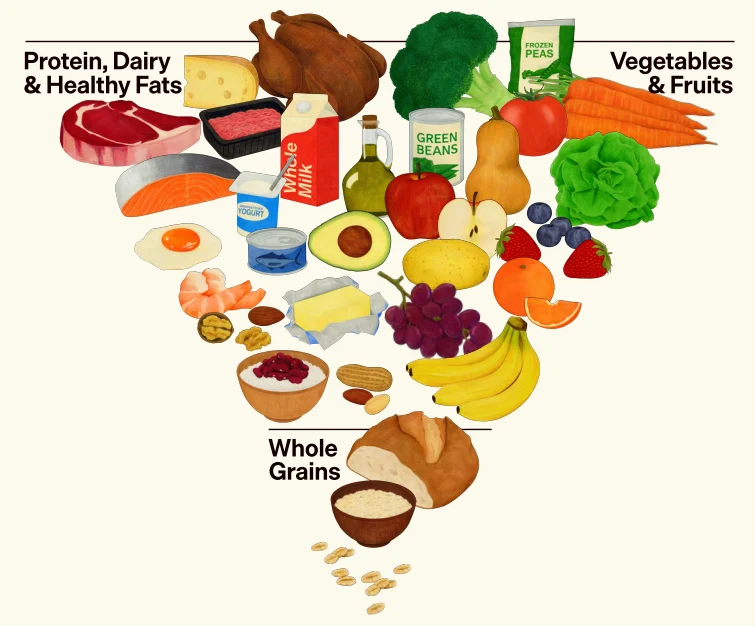
- Whole-food nutrition: Focusing on a diet rich in plants, lean proteins, and healthy fats, without the need for complex tracking.
- Community and Purpose: Longitudinal studies, such as the Harvard Study of Adult Development, have consistently shown that strong social relationships are the single biggest predictor of long-term health and happiness.
Empowering Others: The Role of Coaching
For health and fitness professionals, the challenge lies in guiding clients through this noise. As a coach, the goal is not to sell the latest "biohack," but to help clients build sustainable habits that they can maintain for a lifetime.
The PN Level 1 Nutrition Coaching Certification is designed precisely for this purpose. It focuses on the psychology of behavior change, helping coaches move beyond the "what" of nutrition to the "how." By mastering these fundamental habits, coaches can help their clients achieve real, measurable health improvements without the burnout associated with the extreme optimization culture.
Conclusion: Reframing the Goal
We all want to live longer and healthier lives. But we must be careful not to sacrifice the joy of living in the pursuit of more years. When we view health as an "optimization" project, we risk losing the humanity that makes life worth living.
True longevity is not found in a pill or a niche protocol; it is found in the quiet, consistent application of fundamental lifestyle habits. It is found in the time we spend with our families, the movement we enjoy, and the food we eat with pleasure. Before you invest in the next "advanced" longevity protocol, ask yourself: Is this adding to my life, or is it just taking up space?
If you are ready to take a balanced, evidence-based approach to your own health, consider starting with the Longevity Assessment. It is time to stop guessing and start focusing on what truly makes a difference.
For those looking to deepen their understanding of this topic, please visit our comprehensive guide on the true cost of health optimization for a full review of the latest research and practical steps for healthy aging.