In a discovery that reshapes our understanding of tumor evolution, researchers have identified a self-destructive feedback loop at the heart of cancer’s growth strategy. New findings published in Science Advances suggest that the very mechanisms cancer cells use to accelerate their division—known as "super-enhancers"—may be responsible for fracturing the cell’s own genetic architecture. This relentless cycle of damage and imperfect repair creates a fertile ground for mutations, potentially explaining how tumors adapt, metastasize, and develop resistance to life-saving therapies.
The study, led by PhD student Osama Hidmi under the guidance of Professor Rami Aqeilan at the Hebrew University of Jerusalem, characterizes this phenomenon as a "double-edged sword" for malignant cells: the machinery they rely on for rapid expansion simultaneously destabilizes their genome.
The Mechanics of Malignancy: Super-Enhancers and DNA Strain
To understand the gravity of this discovery, one must first look at the "control panels" of the cell. In healthy biology, genes are tightly regulated to ensure cells divide only when necessary. Cancer cells, however, bypass these checkpoints. They utilize large, highly active clusters of non-coding DNA known as super-enhancers to force growth-promoting genes into overdrive.
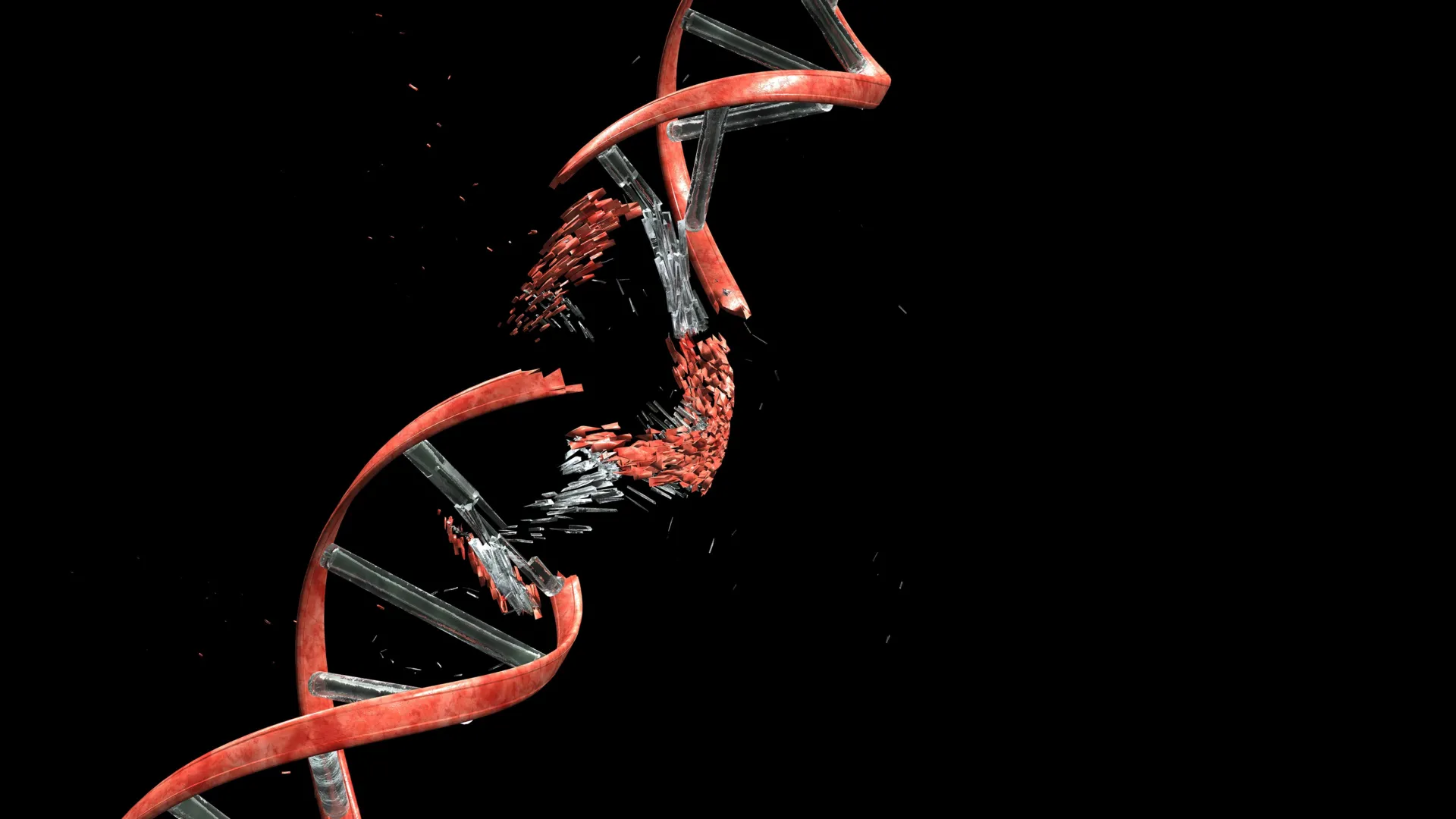
While these super-enhancers successfully turn a cell into a prolific "growth machine," the researchers discovered that this hyper-activity comes at a significant physical cost. Operating at such extreme levels places mechanical and chemical strain on the DNA double helix. When the cellular machinery transcribes these genes at breakneck speeds, the DNA structure becomes physically taxed, leading to frequent double-strand breaks—the most lethal form of DNA damage.
The Geography of Genetic Failure
Using advanced, high-resolution genome-mapping techniques, the research team identified that these double-strand breaks do not occur randomly across the genome. Instead, they cluster specifically within the regions controlled by super-enhancers. By tracking a natural cellular "alarm" signal—a biological marker that alerts repair enzymes to the site of trauma—the team observed that cancer cells are in a state of constant, desperate repair.
This discovery clarifies a long-standing question in oncology: Why is genetic instability so pervasive in cancer? While previous theories suggested that instability was a random byproduct of cellular chaos, this research posits that it is a direct, systematic consequence of the tumor’s own hyper-active growth program.
A Chronology of Discovery: From Observation to Insight
The path to these findings began with a shift in focus from the "what" to the "where" of genetic instability.
- Initial Hypothesis: The team at the Hebrew University began by questioning whether the high-output transcription of oncogenes—genes that have the potential to cause cancer—might create physical friction within the nucleus.
- Methodological Innovation: Leveraging sensitive genome-mapping, the researchers were able to create a high-fidelity map of double-strand breaks. Unlike earlier methods that provided a blurry view, this approach allowed for a "bird’s-eye view" of how DNA breaks correlate with specific transcriptional control regions.
- The Identification Phase: By comparing these maps with data on super-enhancer activity, the researchers noted a statistically significant overlap. The hotspots of damage were not randomly distributed; they were functionally linked to the most active "growth engines" of the cancer cell.
- The Repair Cycle: Through real-time tracking of repair proteins, the researchers documented a recurring cycle: the super-enhancer forces the gene to work, the DNA breaks under the strain, and the cell initiates an emergency repair process. This process repeats, potentially introducing "typos" or mutations into the DNA code every time the repair machinery is called upon to fix the same site.
Supporting Data: The Cost of Perpetual Growth
The data presented by Hidmi and Aqeilan provides a compelling case for the link between transcriptional stress and genomic evolution. The team found that the DNA within super-enhancer regions is in a state of perpetual "wear and tear."
Key data points from the study include:
- Spatial Correlation: A high density of double-strand breaks was observed exclusively in genomic domains occupied by super-enhancers.
- Frequency of Repair: Cells showed constant recruitment of repair factors to these sites, suggesting that these areas are the most frequently damaged regions in the entire cancer genome.
- Mutational Enrichment: Over time, these hotspots of frequent breakage showed a higher accumulation of mutations compared to other parts of the genome, confirming that the "repair-and-break" cycle is a primary engine for genetic diversity within the tumor.
This evidence suggests that cancer is not merely a static entity, but a dynamic, evolving ecosystem that inadvertently creates its own diversity through the very act of growing.
Official Responses: Insights from the Lab
Professor Rami Aqeilan, who oversaw the study, highlighted the paradoxical nature of these findings during a recent briefing. "Cancer cells rely on super-enhancers to keep growth genes running at high speed," Aqeilan stated. "What we found is that this same high-output activity can put real strain on the DNA, creating break hotspots that the cell has to repair again and again. That cycle may help tumors survive in the short term, but it also increases the risk of mutations that can fuel cancer’s evolution."
Osama Hidmi, the lead PhD student, expressed optimism regarding the clinical potential of the study. "What is especially exciting," Hidmi noted, "is that because cancer cells depend on these high-stress DNA regions to keep growing, they may also be more vulnerable there. This opens the door to treatments that target the very processes tumors rely on to survive."
The researchers emphasize that this is a "vulnerability" that has remained largely overlooked. By focusing on the machinery that maintains this high-stress state, rather than just the growth genes themselves, clinicians might find a new way to "choke" the tumor’s ability to adapt.
Implications for Future Cancer Therapy
The implications of this research are vast, offering a new conceptual framework for drug development and precision medicine. If the "broken" nature of these super-enhancer regions is the tumor’s "Achilles’ heel," then treatments could be tailored to exploit it.
Targeting the Repair Machinery
If a tumor is already struggling to repair its own DNA at super-enhancer sites, inhibiting the cell’s repair pathways could be devastating. By combining existing therapies with drugs that disrupt DNA repair, researchers could potentially push cancer cells over the edge, causing them to accumulate so many mutations that they can no longer function—a strategy known as "synthetic lethality."
Disrupting Super-Enhancer Function
Alternatively, therapies that specifically dampen the activity of super-enhancers could achieve a dual effect: they would stop the growth signal while simultaneously relieving the physical strain on the DNA. By reducing the "transcriptional load," these treatments could effectively stabilize the cancer’s genome, making it less likely for the tumor to evolve and develop resistance to treatment.
Predicting Tumor Evolution
Beyond direct therapy, the study suggests that mapping these break hotspots could help clinicians predict how a specific tumor will evolve. By identifying which regions are most prone to instability, oncologists might be able to anticipate the types of mutations a tumor is likely to acquire, allowing for more proactive treatment strategies.
Conclusion: Turning Strength into Weakness
The findings from the Hebrew University of Jerusalem represent a significant leap in our understanding of the "aggressive" nature of cancer. It highlights that the traits which make cancer formidable—its speed, its tenacity, and its ability to change—are inherently linked to a fundamental physical weakness.
Cancer’s reliance on super-enhancers to fuel its expansion is a strategy that requires a constant, high-energy investment. By revealing that this investment forces the tumor to live in a state of continuous genetic crisis, the research provides a roadmap for future interventions. We are moving toward a future where we do not just fight cancer by trying to kill it directly, but by weaponizing its own growth processes against it. As the cycle of damage and repair becomes the tumor’s undoing, the possibility of limiting cancer’s ability to adapt becomes a reality, bringing us one step closer to transforming lethal malignancies into manageable conditions.