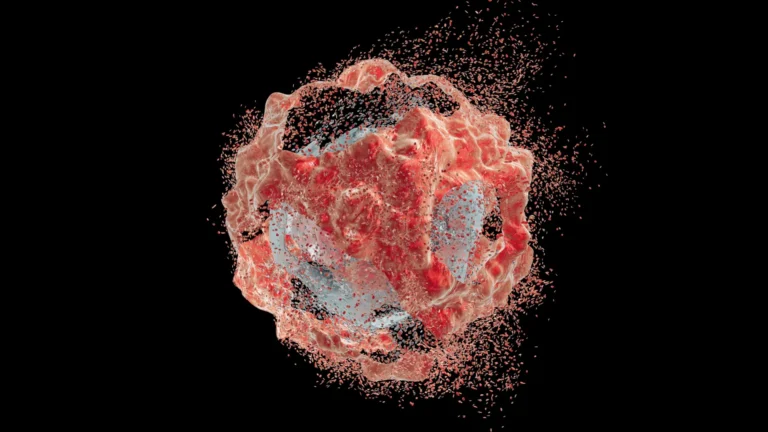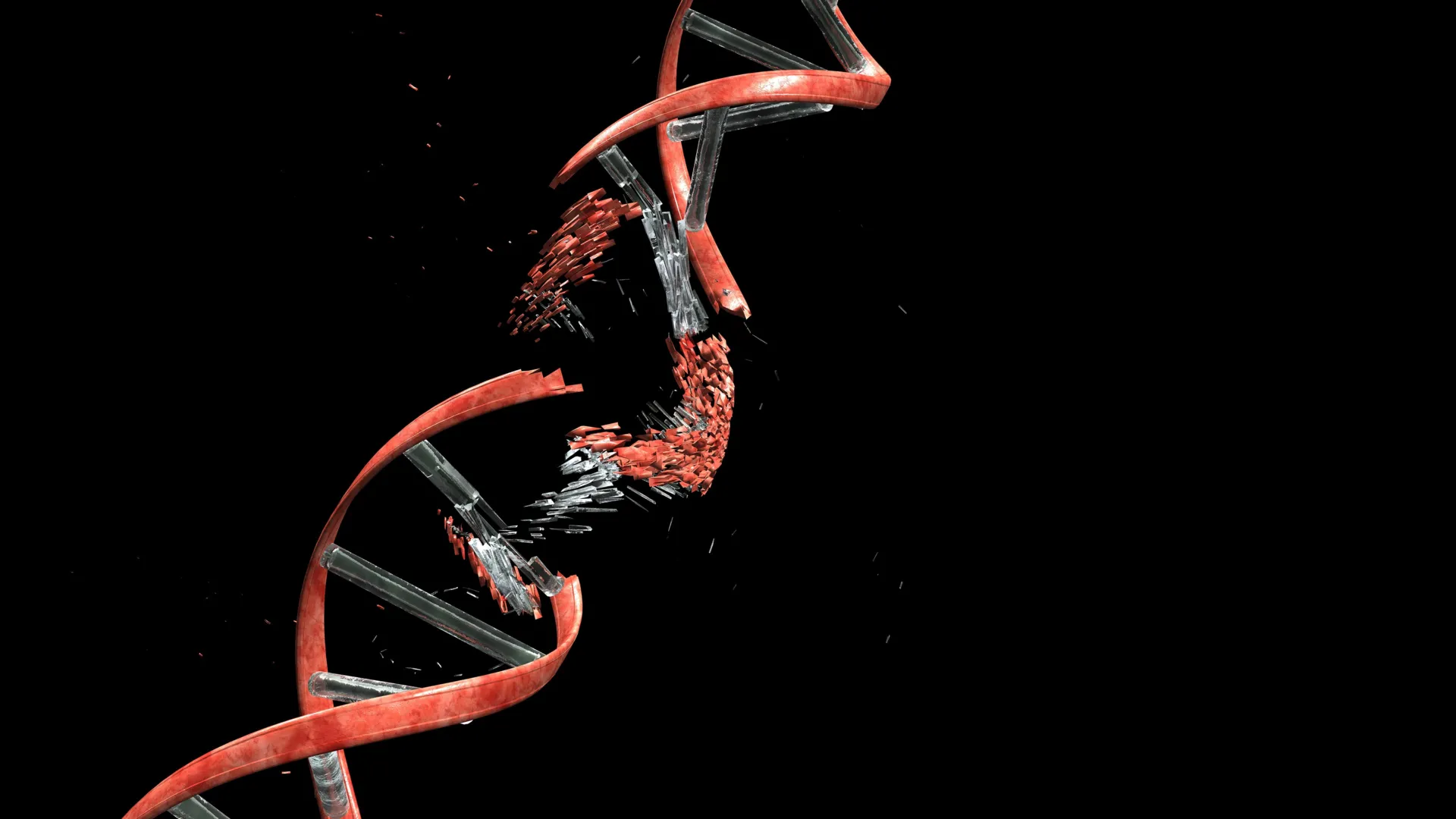
In the relentless pursuit of rapid proliferation, cancer cells push their biological machinery to the breaking point. A groundbreaking study, recently published in the journal Science Advances, has uncovered a startling paradox: the very mechanisms that allow tumors to grow with such unchecked ferocity are simultaneously shattering their own genetic blueprints.
By forcing critical genes to operate at extreme, unsustainable levels, cancer cells inadvertently induce severe structural damage to their own DNA. This discovery, led by researchers at the Hebrew University of Jerusalem, suggests that the "engine" of tumor growth is also the source of its most profound vulnerability.
The Mechanism: Super-Enhancers as Drivers of Instability
To understand this phenomenon, one must look at the regulatory architecture of the cell. Within our DNA, specific regions known as "super-enhancers" act as high-octane control panels. In a healthy cell, these regions precisely regulate the expression of genes essential for cellular function. However, in malignant cells, super-enhancers are hijacked to drive the expression of oncogenes—genes that promote cell division, survival, and the maintenance of aggressive growth programs—to levels far exceeding normal physiological limits.
The research team, led by PhD student Osama Hidmi under the guidance of Professor Rami Aqeilan, discovered that this hyper-activity is not without a physical cost. As these genes are forced to work at maximum capacity, the sheer mechanical and biochemical strain on the DNA helix becomes immense. This pressure creates "hotspots" of instability, leading to frequent double-strand breaks (DSBs), a catastrophic form of DNA damage where both strands of the double helix are severed.
Chronology of Discovery: Mapping the Fractures
The journey to this discovery began with a shift in perspective. Rather than viewing genetic instability as a random byproduct of cancer, the team hypothesized that it was a predictable, localized consequence of the tumor’s own growth requirements.
Phase I: Identifying the Hotspots
Using advanced genome-mapping technologies, the researchers began by identifying the precise locations of double-strand breaks across the cancer genome. Contrary to the assumption that DNA damage occurs stochastically, the mapping revealed a striking pattern: the breaks were not random. They were, almost exclusively, clustered within the genes regulated by super-enhancers.
Phase II: The Repair Loop
The team then monitored the cellular "alarm" signals—proteins that migrate to sites of DNA damage to initiate repair. They observed that these regions were in a constant state of flux. The cancer cells were effectively trapped in a cycle: the super-enhancer would push the gene to extreme activity, the DNA would snap under the strain, and the cell’s repair machinery would rush to bridge the gap.
Phase III: The Evolutionary Consequence
The final phase of the study analyzed the long-term impact of this "break-and-repair" cycle. While the repair machinery is essential for the cell’s survival, it is not infallible. Each time the DNA is reconnected, there is a statistical probability of introducing errors. Over time, these small errors accumulate, manifesting as mutations. This mechanism provides a clear pathway for how cancer cells evolve, adapt, and eventually develop resistance to therapies.
Supporting Data: Why "More" is Not Always "Better"
The findings provide a sobering look at the limitations of cellular biology. The study demonstrated that the density of DNA breaks correlates directly with the level of gene expression driven by super-enhancers. In essence, the more a cancer cell relies on a specific super-enhancer to keep it alive, the more damage it sustains at that specific genetic locus.
This is a departure from previous models of carcinogenesis, which often emphasized external mutagens (like UV radiation or chemical carcinogens) or internal errors in DNA replication. While those factors remain critical, the Hebrew University study highlights a form of "intrinsic" genetic instability. The cell is, in effect, creating its own mutation-generating factory to sustain its rapid expansion.
Official Responses and Perspectives
"Cancer cells rely on super-enhancers to keep growth genes running at high speed," explained Professor Rami Aqeilan. "What we found is that this same high-output activity can put real strain on the DNA, creating break hotspots that the cell has to repair again and again. That cycle may help tumors survive in the short term, but it also increases the risk of mutations that can fuel cancer’s evolution."
For the research team, the most compelling takeaway is the potential for therapeutic intervention. Osama Hidmi, who spearheaded the experimental work, emphasized the duality of this discovery: "Because cancer cells depend on these high-stress DNA regions to keep growing, they may also be more vulnerable there. This opens the door to treatments that target the very processes tumors rely on to survive."
Implications for Future Cancer Therapeutics
The realization that super-enhancer-driven growth is inherently destructive opens up new, creative avenues for oncology. If the Achilles’ heel of a cancer cell is its reliance on these fragile, high-stress regions, then the strategy for treatment changes significantly.
1. Disrupting the Repair Machinery
If tumors are constantly repairing DNA breaks to survive, they become hypersensitive to drugs that inhibit DNA repair pathways. By administering compounds that prevent the cell from fixing the double-strand breaks caused by super-enhancer activity, clinicians could theoretically push the tumor toward "genomic catastrophe"—a state where the DNA damage is so extensive that the cancer cell is forced into programmed cell death (apoptosis).
2. Targeting the Control Panels
The study also suggests that interfering with the super-enhancer regions themselves could be a viable therapeutic strategy. By using epigenetic inhibitors or targeted gene-editing tools, scientists might be able to dial back the activity of these "control panels." This would not only slow down the cancer’s growth but also reduce the physical strain on the DNA, preventing the very mutations that allow the cancer to evolve and develop drug resistance.
3. Exploiting the Evolutionary Bottleneck
The "break-and-repair" cycle creates an evolutionary bottleneck. While it allows for rapid adaptation, it also makes the cell fragile. Future therapies might leverage this by inducing additional stress on these specific regions, essentially forcing the cancer cell to choose between slowing its growth or succumbing to lethal levels of genetic damage.
The Broader Context: Rethinking Genetic Instability
This research invites a paradigm shift in how we view the biology of malignancy. For decades, the focus has been on how cancer cells "escape" the rules of the genome. Now, we see that cancer is a prisoner of its own design. The findings underscore that genetic instability is not merely a side effect; it is a fundamental, and perhaps inevitable, cost of the tumor’s "growth-at-all-costs" philosophy.
As we look toward the next generation of cancer treatment, the focus will likely shift from broad-spectrum chemotherapy to precision medicine that exploits these intrinsic vulnerabilities. By mapping the "hotspots" of a patient’s specific tumor, clinicians may eventually be able to craft treatments that turn a cancer’s greatest strength—its drive to multiply—into the instrument of its own destruction.
Conclusion
The work of Professor Aqeilan and Osama Hidmi serves as a reminder that even the most aggressive biological systems have limits. The DNA double helix is a remarkably resilient structure, but it is not invincible. By pushing the boundaries of gene expression, cancer cells inadvertently leave their genetic flanks exposed. This study not only provides a deeper understanding of the "why" behind tumor evolution but also offers a glimmer of hope: by identifying the precise points of tension within the cancer genome, we may finally be able to tip the scales against some of the most stubborn and aggressive diseases known to medicine.
As researchers continue to map the landscape of these super-enhancer breaks, the path forward becomes clearer. The goal is no longer just to stop the growth of the tumor, but to dismantle the unsustainable cycle that sustains it. In the high-stakes game of cancer progression, the tumor’s own relentless activity may, at long last, be its downfall.