










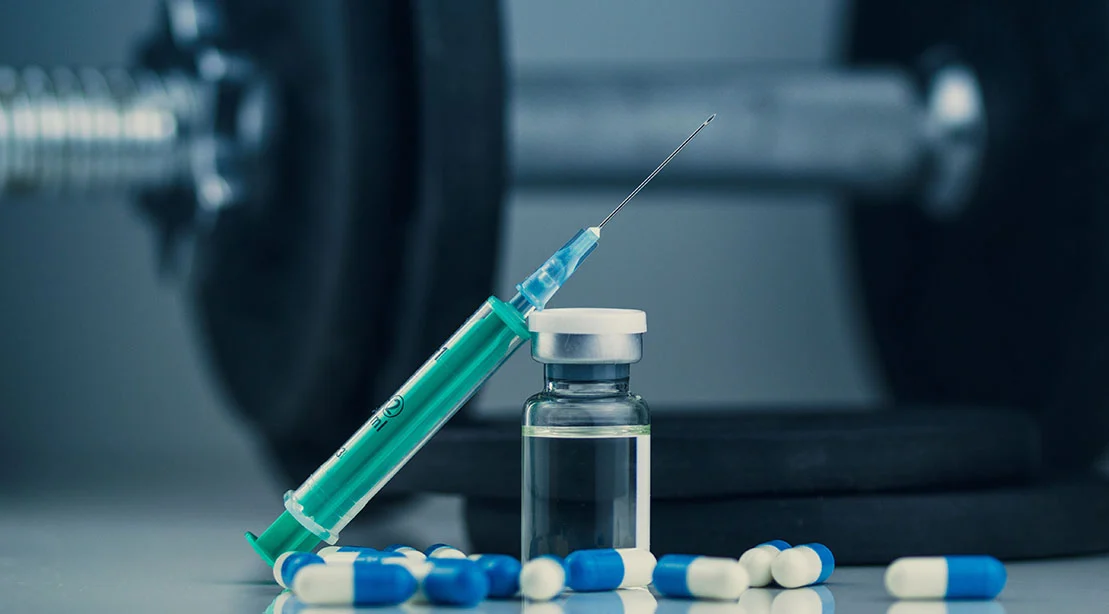
For a certain class of elite athlete, the World Anti-Doping Agency’s (WADA) Prohibited List has long been treated less like a set of rules and more like a treasure map for the fringe. These individuals operate in a high-stakes ecosystem where “research use only” is not a warning label, but a green light. Armed with complex molecular names that read like encrypted Wi-Fi passwords and bolstered by the unverified promises of niche health podcasts, these athletes seek the next edge—a compound to repair shredded tendons, incinerate body fat, or provide the aerobic capacity of a gazelle.
For years, the strategy was simple: find a substance not yet explicitly named on the list, assume it is legal, and proceed. However, WADA’s recently unveiled 2027 Prohibited List, which takes effect on January 1, 2027, has fundamentally altered this calculus. By explicitly classifying certain peptides under the category for non-approved substances, the agency is signaling the end of the “loophole era.”
The Main Facts: Closing the "Alphabet Soup" Loophole
The core of the 2027 update is a strategic clarification regarding peptides—chains of amino acids that serve as the building blocks for proteins. While many peptides are vital, FDA-approved medications (such as insulin), others exist in a legal and medical purgatory.
WADA’s S0 category, which covers pharmacological substances not approved for human therapeutic use by any government health authority, now features an explicit mention of “peptides.” This serves as a warning shot to athletes who previously argued that because a specific experimental compound was not individually listed, it remained permissible.
“The U.S. Anti-Doping Agency (USADA) has made it clear: if it isn’t approved for human use, it is effectively off-limits,” says the agency in its latest advisory. The distinction is critical. Athletes can no longer hide behind the defense that their chosen performance enhancer—a substance that may have never seen a human clinical trial—was missing from the prohibited list’s index. The message is blunt: ignorance of the molecular classification is no longer an excuse.
Chronology of the Anti-Doping Evolution
The path to the 2027 list reflects a decades-long game of cat-and-mouse between regulators and those seeking to skirt the rules.
- The Era of Specificity (1999–2010): WADA’s early lists were reactive. If a drug became popular, it was added. This allowed "first-movers" to experiment with newer drugs before the agency could catch up.
- The Rise of Research Chemicals (2010–2020): With the explosion of online supplement marketplaces, peptides like BPC-157 and various growth-hormone-releasing peptides (GHRPs) became widely available. Athletes treated the gray market as a laboratory.
- The Regulatory Pivot (2021–2026): WADA began shifting from a “list-by-name” approach to a “list-by-category” approach. By broadening the definitions of prohibited classes, they began to catch substances that hadn’t even been named yet.
- The 2027 Prohibited List: This represents the most aggressive integration of language to date, effectively categorizing experimental peptides as prohibited by default under the S0 classification, regardless of whether the specific compound has been synthesized or discovered yet.
Supporting Data: Understanding the Landscape of Risk
The peptide market is a sprawling, often dangerous landscape. It includes legitimate medical research, illicit underground manufacturing, and a vast array of compounds with unknown long-term side effects.
The S0 Classification
The S0 category is the “catch-all” for non-approved substances. It is important to clarify: WADA has not banned all peptides. Insulin, for instance, remains permitted for athletes with Type 1 diabetes, provided they have a Therapeutic Use Exemption (TUE). The 2027 change is a clarification that experimental, non-approved peptides fall under the same prohibition as performance-enhancing drugs that have been around for decades.
Metabolic Modulators and Diuretics
The 2027 list also highlights specific experimental metabolic modulators, such as SLU-PP-332 and SLU-PP-915. These compounds, currently being studied for their potential to mimic the effects of exercise on metabolism, are explicitly identified to ensure athletes understand that even drugs still in the “animal study” phase are prohibited in competition.
Furthermore, the addition of drugs like eplerenone and finerenone—medications used for hypertension and heart failure—serves as a reminder that the list is not solely for “cheating” drugs. These are legitimate medicines that can be used as masking agents or performance enhancers, and their presence on the list reminds athletes that a doctor’s prescription does not automatically grant immunity from anti-doping regulations.
Official Responses and the Monitoring Program
WADA’s decision-making process is a meticulous, ongoing effort to distinguish between legitimate medical innovation and performance manipulation.
The Weight-Loss Revolution
The drugs semaglutide and tirzepatide—the active ingredients in Ozempic, Wegovy, and Mounjaro—remain on the WADA monitoring program for 2027. This is a vital distinction: monitoring is not the same as banning. WADA is currently collecting data to determine if these substances provide a performance advantage in specific sports. If the data suggests they are being used to manipulate weight categories or endurance metrics unfairly, they may be added to the prohibited list in future cycles.
Cannabis and Synthetic Cannabinoids
WADA has also refined its stance on cannabinoids. While CBD remains permitted, the agency has strengthened language regarding synthetic and semi-synthetic THC-related compounds. The risk here is one of contamination; athletes are warned that using unregulated CBD products—which may contain undeclared THC—can lead to a positive test and a subsequent suspension.
The Implications: A Shift in Athlete Responsibility
The implications for the global sporting community are profound. The doctrine of Strict Liability remains the cornerstone of anti-doping policy: the athlete is solely responsible for every substance found in their body.
The End of the "Alibi" Era
The defense of "I couldn’t find it on Google" or "my coach told me it was a supplement" will no longer hold weight. As the prohibited list becomes more comprehensive and the analytical testing technology more sensitive, the window for accidental or intentional doping is closing.
The Gray Area of Performance Enhancement
For those in the fitness industry, the gray area is narrowing. Many athletes have relied on anecdotal evidence, trusting forums and social media influencers who claim that a specific peptide is “undetectable.” However, as the 2027 list clarifies, legality is not determined by the existence of a test. A substance can be prohibited even if a standardized test has not yet been deployed globally. The administrative consequence of a positive test is often immediate, regardless of the testing complexity.
Conclusion: Playing the Game Wisely
The tension between the advancement of pharmacological science and the preservation of fair play has never been higher. While some argue that WADA should focus on discovering and integrating beneficial performance enhancers, the reality is that the agency’s primary mandate is the protection of clean sport and athlete health.
For the competitor, the advice for 2027 is simple: vet everything. If a substance is not an FDA-approved medication prescribed for a legitimate health condition, it carries an inherent risk to both your health and your career.
As we approach 2027, the gap between the "researcher" and the "regulator" remains, but the landscape is fundamentally changed. The era of the loophole is ending, and the era of total accountability is here. In the high-stakes world of elite athletics, the only way to ensure your legacy remains intact is to recognize that when it comes to experimental chemistry, the price of being "ahead of the curve" is often the permanent loss of the sport you love.