











UNITED NATIONS, NEW YORK — The delicate architecture of the U.S.-brokered Gaza ceasefire plan is teetering on the edge of total collapse. Nikolay Mladenov, the Board of Peace high representative tasked with overseeing the implementation of President Donald Trump’s 20-point roadmap, issued a grave warning to the UN Security Council on Wednesday. His message was stark: the persistent Israeli airstrikes in Gaza are not merely operational tactical decisions, but are actively pushing the region toward a "point of no return" that threatens to permanently invalidate the possibility of a negotiated peace.
While the Trump administration’s plan—which mandates the disarmament of Hamas and the transition of Gaza to a civilian-led administration—has technically moved from the negotiating table to the "engineering table," the reality on the ground paints a different picture. As diplomatic machinery grinds forward in New York, the daily toll of casualties in Gaza continues to mount, raising questions about the viability of a framework that exists on paper but is being systematically undermined by ongoing military kinetic action.
Chronology of the Conflict and the Current Standoff
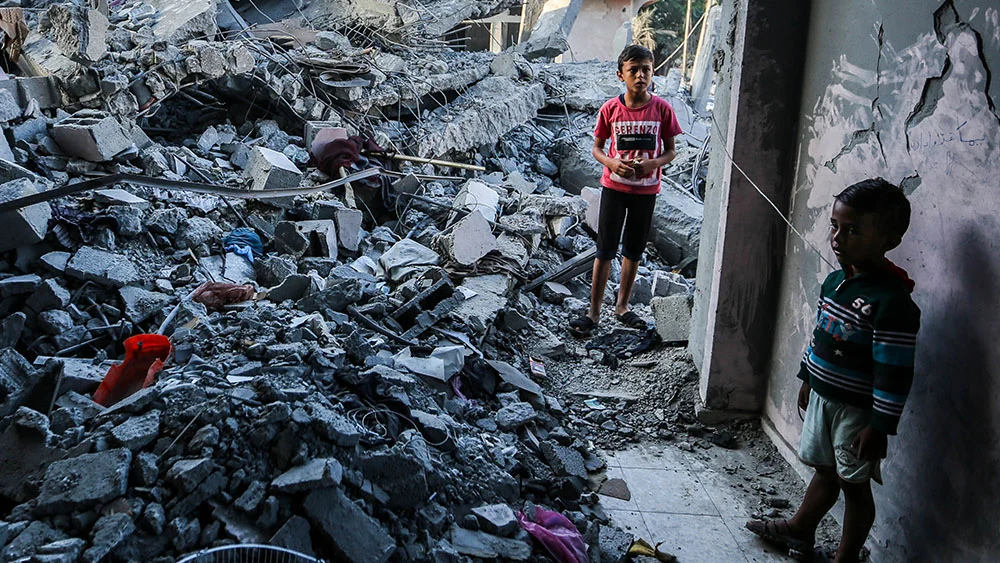
The current crisis traces its lineage back to the harrowing events of October 7, 2023, when Hamas militants launched a massive, multi-pronged attack on southern Israel, resulting in the deaths of approximately 1,200 people. The ensuing military campaign launched by Israel has resulted in an unprecedented level of destruction. According to the Gaza Ministry of Health, the death toll has surged past 73,422 Palestinians.
Despite a tenuous ceasefire that officially took hold in October 2025, the cessation of hostilities has remained incomplete. In the months following that agreement, Israel has continued to conduct what it describes as "targeted operations." However, these operations have resulted in the deaths of at least 1,288 additional Palestinians.
The timeline of the current diplomatic deadlock is punctuated by high-level meetings that have yet to translate into a lull in violence. Last week, Israeli Prime Minister Benjamin Netanyahu met with Jared Kushner, a key adviser to President Trump, to discuss the implementation of the roadmap. During these talks, the U.S. delegation reportedly urged the Israeli government to significantly draw down military operations to create the space necessary for the disarmament phase to begin. Yet, in the seven days following that meeting, Israel conducted airstrikes on six of those days, signaling a profound disconnect between U.S. diplomatic intent and Israeli military strategy.
The Disarmament Dilemma: A Battle of Definitions
At the heart of the current impasse is the core requirement of the Trump plan: the full disarmament of Hamas. Mladenov confirmed to the Security Council that Hamas has signaled its acceptance of the provision to surrender its weapons and cede control to a civilian-led administration. This represents a monumental shift in the group’s posture, yet the practical application of this surrender remains a sticking point.
Prime Minister Netanyahu has remained adamant, insisting that Israeli forces will not withdraw from their current defensive and offensive positions until every weapon is accounted for and handed over. This "all or nothing" approach has created a paralyzing cycle.
"After three years of war and 20 years of military operations, I ask, will another strike on a munitions depot stop Hamas from rearming or tightening its grip on Gaza?" Mladenov asked the council, challenging the logic of the current military strategy. "It will not. It only delays the demilitarization that would happen and obstructs the transfer to a civilian government."
For the Israeli government, the skepticism is deep-seated. Israel’s deputy UN ambassador, Noa Furman, reiterated that while the state remains committed to the Trump plan, it is fundamentally incompatible with the continued existence of an armed Hamas. "The plan cannot succeed while Hamas remains armed," Furman stated, emphasizing that Israel is coordinating closely with Washington to ensure that disarmament is not merely a verbal promise but a verifiable reality. U.S. Ambassador Mike Waltz added a layer of pragmatic caution, noting that the international community will judge Hamas exclusively "on its actions" rather than its rhetoric.
Supporting Data: The Human Cost of Strategic Persistence
The dissonance between diplomatic discourse and the reality on the ground is perhaps best illustrated by the events of early this week. On Monday, an Israeli airstrike hit a building in the Bureij refugee camp, resulting in the death of a 4-year-old child, according to reports from the Awda Hospital. Concurrently, Nasser Hospital reported that a 10-year-old girl was killed in a separate strike in Khan Younis.
The Israel Defense Forces (IDF) have maintained that these strikes are precision operations aimed at destroying illicit infrastructure. The military reported targeting Hamas weapons storage facilities located within mosques in the Shati refugee camp and Deir al-Balah, asserting that these sites were being used to stockpile Kalashnikov rifles and ammunition.
While the IDF maintains these are necessary tactical strikes, the international community views the persistence of such attacks—regardless of their stated targets—as a direct impediment to the transition toward a civilian government. The continued bombardment of urban centers where civilians are densely concentrated has effectively rendered the "civilian-led administration" phase of the Trump plan a theoretical exercise, as the very infrastructure required for such an administration continues to be degraded.
Official Responses and Diplomatic Friction
The diplomatic friction is not limited to the Israeli-Palestinian dynamic; it is also straining the relationship between the United States and its regional allies. The Trump administration finds itself in a paradoxical position: it is the primary architect of the peace plan and the primary supplier of arms to the Israeli military, while simultaneously acting as a lead provider of humanitarian aid to the people of Gaza.
Mladenov’s address underscored the danger of this "dual-track" policy. By continuing to provide the military hardware that facilitates the strikes while simultaneously pushing for a ceasefire, the U.S. risks eroding its credibility as a neutral broker.
During the security council meeting, Mladenov noted that while the technical gaps in the 20-point plan are being narrowed through intensive dialogue, the political will required to close those gaps is missing. The U.S. delegation, led by Ambassador Waltz, insists that the plan remains the only viable path forward, but observers note that the lack of clear enforcement mechanisms for the "ceasefire" portion of the plan has left Israel with a wide latitude to continue its operations under the guise of security.
Implications: The Looming "Point of No Return"
The implications of the current trajectory are dire. Mladenov framed the situation as a binary choice for the international community. On one side lies a vision of a Gaza that is disarmed, reconstructed, and successfully integrated into the global economy. On the other lies a vision of a Gaza that is rearmed, permanently divided, and reduced to rubble—a breeding ground for a new, even more radicalized generation.
The inclusion of a "political horizon" and a potential two-state solution within the Trump plan has been a cornerstone of the proposal, yet this remains a major point of contention. Prime Minister Netanyahu has historically and vehemently opposed the creation of a Palestinian state, and his current cabinet shows little sign of softening this stance. Without this political concession, the disarmament of Hamas becomes an increasingly difficult sell to the Palestinian populace, who see it as a surrender without the promise of eventual sovereignty.
As the UN Security Council deliberates, the clock is ticking. History serves as a grim reminder that previous ceasefire efforts in Gaza have collapsed due to this exact pattern of behavior—where military momentum overrides political consensus, leading to a renewed cycle of destruction.
Mladenov’s final warning was perhaps the most chilling of the entire session: "That would not be a setback. It would be a point of no return for everyone."
If the current roadmap fails, the resulting void will likely be filled by an escalation that no longer recognizes the authority of the UN, the influence of the U.S., or the viability of the current administration. For the people of Gaza, trapped between the promise of a peaceful transition and the reality of daily airstrikes, the "point of no return" is not a future threat—it is a daily existence. The international community is now forced to reconcile whether the Trump plan is a genuine vehicle for peace or merely a diplomatic placeholder in a conflict that is rapidly outgrowing its ability to be managed.