









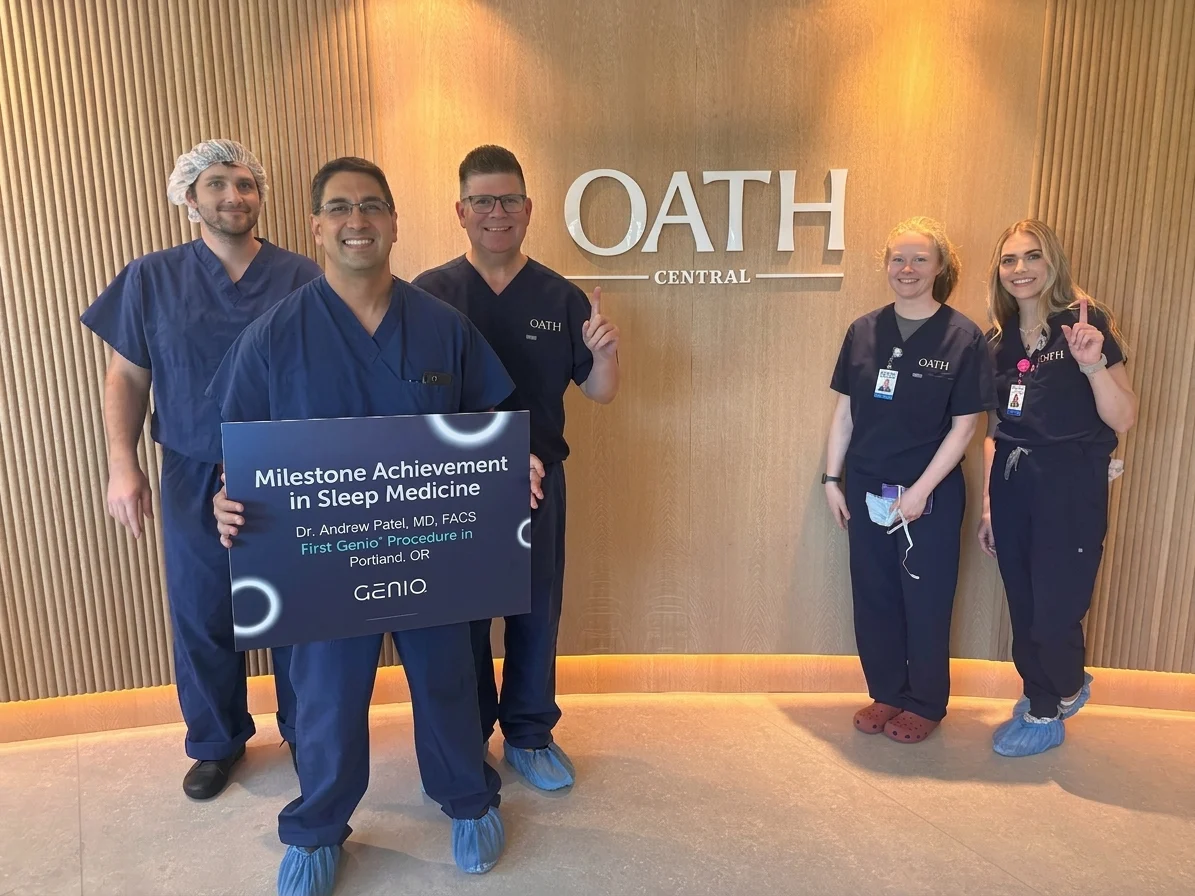
In a significant milestone for sleep medicine in the Pacific Northwest, Oath Surgical, a Portland-based, AI-native ambulatory surgery center (ASC), has successfully completed the region’s first outpatient bilateral hypoglossal nerve stimulation (HGNS) procedure. This landmark surgery signals a transformative shift in how obstructive sleep apnea (OSA) is treated, moving complex, high-acuity interventions out of traditional hospital settings and into the streamlined, patient-centric environment of modern surgical centers.
Led by Dr. Andrew Patel, a specialist in head and neck surgery, the procedure utilized the Genio system by Nyxoah—an FDA-approved neurostimulation technology. By performing this operation in an ambulatory setting, Oath Surgical is challenging the status quo of sleep apnea care, providing local patients with a sophisticated alternative to Continuous Positive Airway Pressure (CPAP) therapy without the need for extensive travel or overnight hospital stays.
The Evolution of Sleep Apnea Treatment
Obstructive sleep apnea remains one of the most pervasive chronic health conditions in the United States, affecting millions of individuals and significantly increasing the risk of cardiovascular disease, hypertension, and daytime cognitive impairment. For decades, CPAP therapy has served as the gold standard for treatment. However, patient compliance rates have historically remained stubbornly low, with many patients finding the masks uncomfortable, cumbersome, or socially restrictive.
For those unable to tolerate CPAP, surgical options were often daunting, frequently requiring hospital admission and significant recovery periods. The introduction of bilateral hypoglossal nerve stimulation represents a paradigm shift. Unlike previous iterations of nerve stimulation that focused on unilateral activation, the Genio system works in harmony with the body’s natural physiology. By providing bilateral stimulation, the device achieves a more balanced and effective opening of the airway, addressing the collapse of the tongue and surrounding muscles more comprehensively.
Chronology of a Medical Milestone
The path to this breakthrough began with the intersection of advanced medical device engineering and the operational efficiency of Oath Surgical’s "AI-native" infrastructure.
- Pre-Operative Planning: Dr. Patel and his team utilized OathOS, the center’s proprietary clinical intelligence platform, to conduct a comprehensive patient assessment. The system analyzed anatomical suitability and health history, ensuring the patient was an ideal candidate for the Genio procedure.
- The Procedure: The surgery itself was characterized by its surgical elegance. Utilizing a single-incision approach, Dr. Patel implanted the neurostimulator. A key advantage of the Genio system is its lack of an implanted battery, which reduces the complexity of the implant and lowers the risk of hardware-related complications over the patient’s lifetime.
- Post-Operative Integration: Following the successful implantation, the patient was transitioned through a recovery protocol specifically designed for outpatient care. The clinical team utilized real-time data tracking to monitor the patient’s initial recovery, ensuring that physiological markers remained stable.
- Long-Term Strategy: The success of this inaugural case has set the stage for a broader rollout. Oath Surgical is now transitioning into a phase of consistent program delivery, with a focus on longitudinal data collection to refine outcomes and optimize the patient experience.
Supporting Data and Technical Advantages
The Genio system distinguishes itself from previous neurostimulation technologies through several critical engineering features:
- Bilateral Stimulation: By targeting the hypoglossal nerve on both sides of the airway, the device provides a more robust and symmetrical response to airway obstruction, which is often multi-directional in nature.
- No Implanted Battery: Traditional neurostimulators often require periodic battery replacements, necessitating follow-up surgeries. The Genio system eliminates this requirement, sparing the patient from additional invasive procedures and reducing long-term costs.
- MRI Compatibility: As the population ages, the likelihood of needing diagnostic imaging, such as 3T MRIs, increases. The Genio system is fully compatible with 3T MRI environments, ensuring that patients are not "locked out" of necessary future medical diagnostics.
- Operational Efficiency: The use of the OathOS system allows for the seamless integration of patient records, device activation parameters, and long-term sleep metrics. By digitizing the entire "patient journey," the center minimizes administrative bottlenecks and allows surgeons to focus entirely on clinical outcomes.
Official Perspectives: The Vision for the Future
The move to bring high-acuity surgical care into an ambulatory setting is not merely a technical accomplishment; it is a strategic response to the fragmentation of the current healthcare system.
"For too long, patients in Oregon who struggled with CPAP had limited options and often had to travel outside the region to explore surgical alternatives," Dr. Andrew Patel stated in an official release. "This new procedure is a real step forward. It is bilateral, requires only a single incision, and has no implanted battery, which makes it an easier conversation to have with patients who have been hesitant about surgery. My focus now is on building a consistent, high-quality program here that puts patient outcomes and long-term follow-up at the center."
Dr. Oliver Keown, founder and CEO of Oath Surgical, emphasized the role of clinical intelligence in this achievement. "Bringing higher acuity care like this to Oregon is exactly the kind of milestone our platform was built to support," Dr. Keown noted. "Oath’s surgical centers are designed for advanced outpatient procedures, and Dr. Patel and the team have shown that bilateral HGNS therapy can be delivered safely and efficiently outside of a hospital setting. We think this is the beginning of a much broader shift in how sleep apnea care is accessed across the region."
Clinical and Regional Implications
The ripple effects of this development are likely to be felt throughout the Pacific Northwest healthcare landscape.
Improving Access and Reducing Barriers
By establishing a high-acuity sleep surgery program in Portland, Oath Surgical is effectively democratizing access to advanced therapy. Previously, patients might have faced long waitlists or the financial and physical burden of traveling to larger, out-of-state medical hubs. With this new program, the barrier to entry for life-changing surgery is significantly lowered.
A New Model for ASCs
Ambulatory Surgery Centers have traditionally been used for lower-acuity procedures like cataract surgery, endoscopy, or minor orthopedic work. Oath Surgical’s success demonstrates that with the right integration of AI, data analytics, and surgical expertise, ASCs can safely perform more complex neurostimulation procedures. This model offers a significant cost-saving opportunity for the healthcare system, as outpatient procedures typically incur lower overhead than traditional hospital-based operations.
Collaborative Care Networks
Dr. Patel is actively accepting referrals from a diverse array of practitioners, including sleep medicine specialists, primary care physicians, cardiologists, and dental providers. This collaborative approach recognizes that sleep apnea is a multi-systemic condition. By fostering a network of referring providers, Oath Surgical is positioning itself as a central node in a comprehensive sleep wellness ecosystem.
Looking Ahead
As the medical community continues to embrace digital health and minimally invasive surgical techniques, the success at Oath Surgical serves as a benchmark for future innovations. The integration of "AI-native" systems like OathOS into the surgical workflow suggests a future where patient outcomes are no longer anecdotal but are instead backed by robust, real-time data analysis.
For patients in Oregon and the surrounding Pacific Northwest, the availability of bilateral hypoglossal nerve stimulation in an outpatient setting is more than just a medical convenience; it is a gateway to improved quality of life. By reclaiming restful sleep, these patients are mitigating the long-term health risks associated with untreated OSA, potentially reducing the future burden on emergency departments and chronic disease management programs.
As the program at Oath Surgical continues to expand, the team is expected to focus on scaling its operations while maintaining the rigorous safety standards that enabled this first-of-its-kind success. For the field of sleep medicine, the message is clear: the future of surgical care is increasingly outpatient, increasingly tech-enabled, and—most importantly—increasingly accessible to those who need it most.