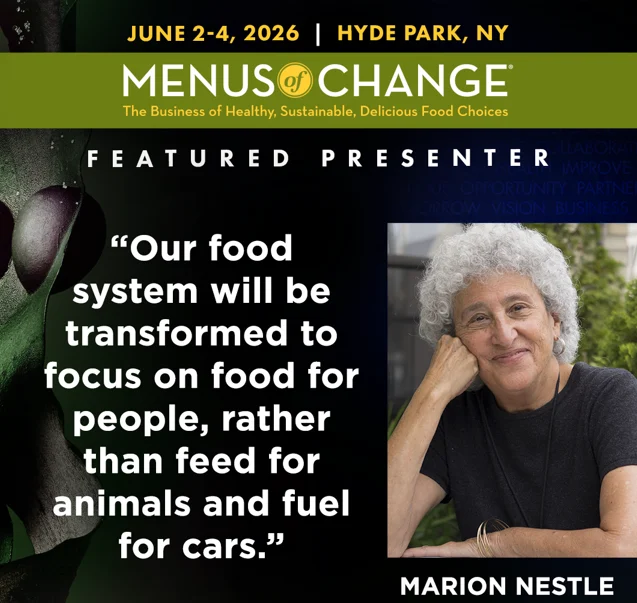
For decades, the intersection of nutrition and public policy was often dismissed as a niche academic concern. However, in the current political climate, the veil has been lifted. As Marion Nestle, PhD, MPH, a preeminent voice in food studies, notes, the question "What does food have to do with politics?" is no longer being asked—it is being answered daily in the halls of government.
Following the True Health Initiative’s 2nd Annual Global Health Misinformation Symposium, a collection of critical papers has been published in the American Journal of Health Promotion under the banner "Knowing Well, Being Well." These documents serve as a clarion call, highlighting how misinformation, corporate funding, and shifting federal priorities have turned the American diet into a battleground where profit frequently outweighs public health.
Main Facts: The Intersection of Industry and Policy
At the core of the current crisis is the fundamental tension between the profit-driven mandates of the food industry and the public health requirements of the American populace. Food companies are not health agencies; they are commercial entities beholden to shareholders.
The primary mechanism for this influence is the "funding effect." Research has consistently shown that industry-funded studies are significantly more likely to produce results favorable to the sponsor’s interests. Whether through the framing of research questions or the interpretation of "null" results as positive, the bias is systematic. As Nestle emphasizes, industry-funded research is often a marketing tool masquerading as science, designed to validate "superfood" claims or neutralize concerns regarding product healthfulness.
Chronology of Influence
To understand the current landscape, one must look at the evolution of dietary governance:
- 2002: Marion Nestle publishes Food Politics, bringing the industrial influence on nutrition into the mainstream consciousness.
- 2005: The U.S. government shifts its policy, with federal agencies taking over the writing of the Dietary Guidelines, moving the process away from the independent scientific advisory committees that previously held the reins.
- 2009: The Nova system is introduced by Carlos Monteiro, providing a standardized framework to categorize foods by their degree of processing, setting the stage for the current "ultra-processed food" (UPF) debate.
- 2019: Landmark clinical trials, such as those led by Kevin Hall, provide controlled evidence that ultra-processed diets lead to significant, inadvertent calorie overconsumption.
- 2025: The Lancet publishes three comprehensive reports on the science, policy, and politics of ultra-processed foods, concluding that the industry’s impact on global health is a systemic crisis.
- 2026: The release of the 2025–2030 Dietary Guidelines occurs under a new administration, marked by a truncated review process and the introduction of the "Eat Real Food" initiative, which nonetheless shows signs of being influenced by meat and dairy industry lobbying.
Supporting Data: The Case Against Ultra-Processed Foods
The debate surrounding ultra-processed foods (UPFs) has been the most contentious point of contention between health advocates and industry trade groups. Defined by the Nova classification system as foods that are industrially produced, chemically altered, and designed to be hyper-palatable, UPFs are linked to a host of chronic health outcomes.
Critics, often funded by the food industry, argue that the Nova system is "poorly defined" and that "all food is processed." However, the scientific consensus is shifting. Controlled metabolic ward studies have shown that even when calories and macronutrients are matched, diets high in UPFs lead to higher caloric intake and weight gain compared to unprocessed diets. The food industry’s response has been to pivot toward "education"—a strategy that favors labeling and minor product reformulation over the structural policy changes required to address the ubiquity of processed items.
Official Responses and the "Real Food" Strategy
The 2025–2030 Dietary Guidelines represent a marked departure from previous iterations. While the Dietary Guidelines Advisory Committee (DGAC) submitted a report in late 2024 that mirrored traditional public health advice, the administration ultimately rejected large swaths of this document.
In its place, a nine-expert panel was given a truncated three-month window to synthesize new guidelines. The result is the "Eat Real Food" campaign. While the guidelines do advise limiting highly processed foods—a win for public health—the document is marred by questionable nutritional advice. Recommendations to double protein intake (a clear nod to the meat industry) and the inclusion of butter and beef tallow as examples of "healthy" fats highlight a disregard for established cardiovascular science.
Furthermore, the accompanying digital infrastructure, RealFood.gov, appears to align more closely with specific dietary ideologies—such as the "carnivore diet"—than with the aggregate scientific consensus. Investigative analysis reveals that many of the contributors to these summaries maintain financial ties to meat and dairy trade associations, raising significant questions about the integrity of the review process.
Implications: Moving Beyond Personal Responsibility
The most profound implication of the current policy shift is the emphasis on "personal responsibility." By framing nutrition as a matter of individual education and choice, the government effectively absolves itself of the responsibility to regulate the food environment.
If the goal is to improve the health of the nation, education alone is insufficient. Real change requires a comprehensive policy toolkit that includes:
- Fiscal Policy: Taxes on ultra-processed products and subsidies for fresh, whole foods.
- Marketing Restrictions: Tightening regulations on the advertising of nutritionally poor foods to children.
- Procurement Standards: Mandating healthier food options in government-funded programs, schools, and hospitals.
- Product Placement: Regulating the visibility and accessibility of unhealthy options in retail environments.
As long as the "funding effect" continues to bias research and the government continues to prioritize industrial interests over the health of its citizens, the American public remains trapped in an environment where the "easy" choice is the "unhealthy" one.
The True Health Initiative and the recent Lancet reports serve as a necessary counter-narrative to the current trend of corporate-captured science. They remind us that the politics of food are not merely about what is on our plates, but about the structure of our society. To "know well and be well" requires a rigorous, transparent, and science-led approach that is willing to challenge the industrial complex that has, for too long, dictated the terms of our public health.
The shift toward a "real food" mandate is a start, but without addressing the commercial determinants of health, it remains a hollow gesture. True progress will only come when we move beyond the industry-friendly rhetoric and address the systemic issues that make the modern American diet a crisis of policy, not just a failure of individual will.
For those interested in the full scope of this research, the papers from the 2nd Annual Global Health Misinformation Symposium are available as open-access resources via the American Journal of Health Promotion. These documents offer a transparent look at the intersection of capital and health, providing the evidence base needed to push for a more equitable food system.