For decades, the fitness industry has sold a singular narrative: to build strength, one must dedicate hours to the gym, navigate complex machines, and endure exhausting, high-impact sessions. However, for those navigating the post-50 landscape, this model is not only outdated—it is often counterproductive. As the body undergoes natural physiological changes, the focus must shift from "quantity of time" to "quality of movement."
According to Tyler Read, a veteran personal trainer with 15 years of experience, the secret to maintaining vitality after 50 is not found in the duration of a workout, but in the consistency of challenging the musculoskeletal system. By prioritizing compound movements that recruit multiple muscle groups, individuals can achieve transformative results in just 12 minutes before their morning coffee.
The Paradigm Shift: Quality Over Quantity
The traditional belief that strength requires endless sets and heavy iron is a primary barrier for many adults over 50. In reality, the body’s neuromuscular system responds exceptionally well to efficiency. When you engage in compound movements—exercises that utilize the legs, hips, core, chest, and back simultaneously—you are performing "functional strength training."
Functional training is defined by its ability to mirror the demands of daily life. Whether you are lifting a grocery bag, climbing a flight of stairs, or rising from a low sofa, these actions require the coordinated effort of multiple muscle groups. By targeting these patterns in a short, high-quality burst, you can stimulate muscle protein synthesis and bone density improvements without the systemic fatigue associated with hour-long gym sessions.
The Anatomy of the 12-Minute Protocol
This routine is designed for accessibility. It requires no specialized gym membership, no heavy barbells, and minimal space. The only prerequisites are a sturdy chair and a commitment to controlled, deliberate execution.
Minutes 1-2: The Foundation (Sit-to-Stand)
The sit-to-stand is arguably the most critical movement for long-term independence. By targeting the quadriceps, glutes, and hamstrings, this exercise mimics the essential movement of getting in and out of a chair.
- The Benefit: It activates the largest muscle groups in the body, which immediately boosts metabolic rate and cardiovascular readiness.
- The Impact: Consistent practice ensures that as you age, your lower body retains the power necessary to navigate stairs and uneven terrain with confidence.
Minutes 3-4: Upper Body Stability (Wall Push-Ups)
Many individuals shy away from traditional floor push-ups due to shoulder or wrist sensitivity. Wall push-ups provide the same engagement for the pectorals, triceps, and shoulders but at an angle that reduces joint stress.
- The Benefit: This movement promotes scapular stability, which is vital for preventing the "slumped" posture that often accompanies sedentary office work.
- The Impact: By controlling the descent and pushing with purpose, you strengthen the chest and shoulders, facilitating tasks like reaching for high shelves or pushing heavy doors.
Minutes 5-6: Balance and Coordination (Standing Knee Drives)
Balance begins to decline after 50, often leading to a higher risk of falls. Standing knee drives integrate core stabilization with hip mobility.
- The Benefit: As you lift one knee, the standing leg is forced to stabilize the entire body, firing the glute medius—a crucial muscle for gait stability.
- The Impact: This movement bridges the gap between static strength and dynamic mobility, making you feel more agile and secure during your daily commute or walk.
Minutes 7-8: Counteracting the Hunch (Resistance Band Rows)
In modern society, we spend most of our time "pushing" (typing, driving, cooking). This creates a muscle imbalance where the front of the body is overactive and the back is weakened. Resistance band rows correct this.
- The Benefit: By pulling against resistance, you strengthen the rhomboids and the rear deltoids, which literally "pull" your shoulders back into proper alignment.
- The Impact: Better posture isn’t just aesthetic; it improves lung capacity and reduces chronic neck and lower back pain.
Minutes 9-10: Posterior Chain Strength (Glute Bridges)
The glutes are the powerhouses of the human body, but they often become "dormant" due to prolonged sitting. The glute bridge is the most effective way to wake them up.
- The Benefit: This exercise isolates the glutes and hamstrings without loading the spine, making it a back-friendly way to build posterior power.
- The Impact: Stronger glutes translate to a more stable pelvis, which is the ultimate safeguard for the lower back.
Minutes 11-12: Real-World Readiness (Farmer’s Carry)
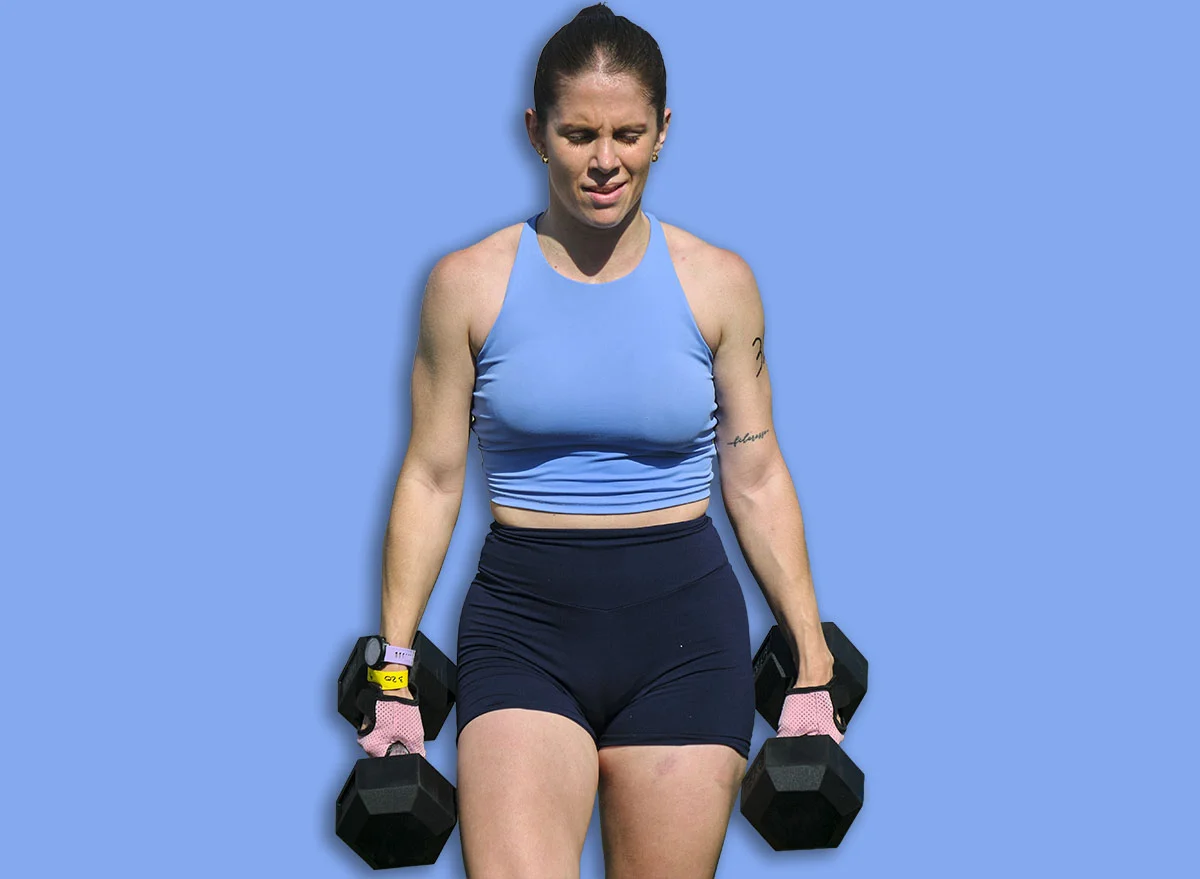
The final two minutes are dedicated to the "Farmer’s Carry"—simply walking with weight in your hands. This is the ultimate functional exercise.
- The Benefit: It engages the grip, the core, the shoulders, and the legs simultaneously. It teaches your body to maintain a neutral spine while under a load.
- The Impact: This is the direct application of your training to the real world. Whether you are carrying heavy luggage, groceries, or a grandchild, the Farmer’s Carry provides the strength needed for these essential life tasks.
Supporting Data: Why Short Workouts Work
Recent research in geriatric fitness supports the "less is more" approach. Studies published in journals like Medicine & Science in Sports & Exercise have indicated that for aging populations, the intensity of the contraction and the technical proficiency of the movement are far more significant markers of success than the total volume of repetitions.
When you perform a 12-minute session, you are less likely to experience cortisol spikes—a common issue with long, high-stress workouts. Furthermore, the psychological barrier to entry is significantly lower. It is much easier to commit to 12 minutes before breakfast than it is to carve out a 90-minute block for a commute to the gym.
Implications for Long-Term Health
The implications of adopting a 12-minute daily routine are profound. By maintaining muscle mass (a defense against sarcopenia) and bone density, you are effectively "future-proofing" your body.
- Metabolic Health: Consistent muscle engagement improves insulin sensitivity, helping to manage blood sugar levels.
- Cognitive Benefits: Exercise, even in short bursts, increases blood flow to the brain, improving focus and mood.
- Independence: The ability to perform functional movements is the single greatest predictor of "aging in place." When you can move comfortably, you maintain your autonomy.
Professional Insight and Final Recommendation
As Tyler Read emphasizes, the strongest clients he coaches are not the ones with the most equipment; they are the ones with the most discipline regarding their technique. "Master the foundational movements, perform them with focus, and stay the course," Read advises.
In conclusion, the goal of exercise after 50 should not be to punish the body, but to provide it with the stimuli it needs to stay resilient. By integrating these six movements into your morning, you are not just exercising; you are investing in a future of mobility, confidence, and strength. You don’t need a gym, and you certainly don’t need an hour—you just need 12 minutes of intentional effort to reclaim your physical potential.