Executive Summary: A Crisis of Infrastructure
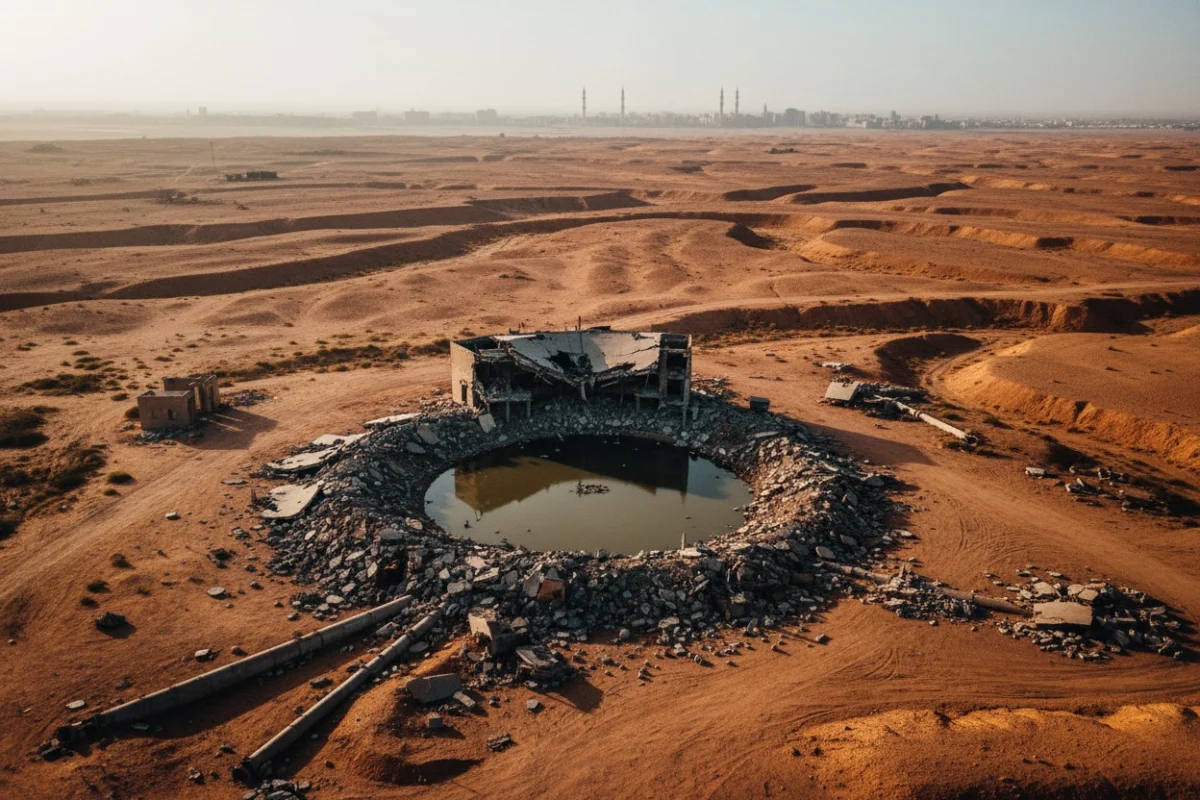
As the conflict between the United States and Iran enters its 112th day, a new, volatile dimension has been added to the theater of operations. On June 11, 2026, evidence emerged via satellite imagery analysis—published by The New York Times and corroborated by Antiwar.com—indicating that a U.S. precision airstrike had struck a critical water treatment facility deep within Iranian territory.
The facility, which served as a primary source of potable water for thousands of civilians, now lies in structural ruin. The incident has ignited a firestorm of controversy, shifting the debate from military necessity to the potential breach of international humanitarian law. While Pentagon officials maintain that the strike was aimed at a military-associated objective, the destruction of essential civilian infrastructure has prompted urgent calls for independent investigations and intensified the growing domestic pushback against the protracted conflict.
Chronology: The War That Outlasted Projections
The current hostilities, which have now spanned over 16 weeks, were initially framed by the administration as a swift, surgical campaign. In April 2026, Secretary of War Pete Hegseth suggested that the operational objectives could be met within an eight-week timeframe. However, as of June 11, 2026, the "Iran War Clock" indicates the conflict has reached 112 days, with no signs of a formal ceasefire.
- February 2026: Commencement of U.S. airstrikes, characterized by the administration as a limited effort to neutralize Iranian nuclear capabilities and command-and-control nodes.
- April 2026: Secretary of War Pete Hegseth forecasts an eight-week conclusion to the operation.
- June 3, 2026: The U.S. House of Representatives passes a War Powers Resolution (215-208), signaling a significant legislative attempt to curtail the President’s authority to continue the unauthorized conflict.
- June 11, 2026: Analysis of satellite imagery confirms the destruction of a civilian water treatment facility, sparking international condemnation and internal legal debates.
Despite President Donald Trump’s recent claims of a "great settlement" to conclude the war, the persistent nature of these airstrikes suggests a disconnect between executive rhetoric and the reality on the ground.
Supporting Data and Technical Analysis
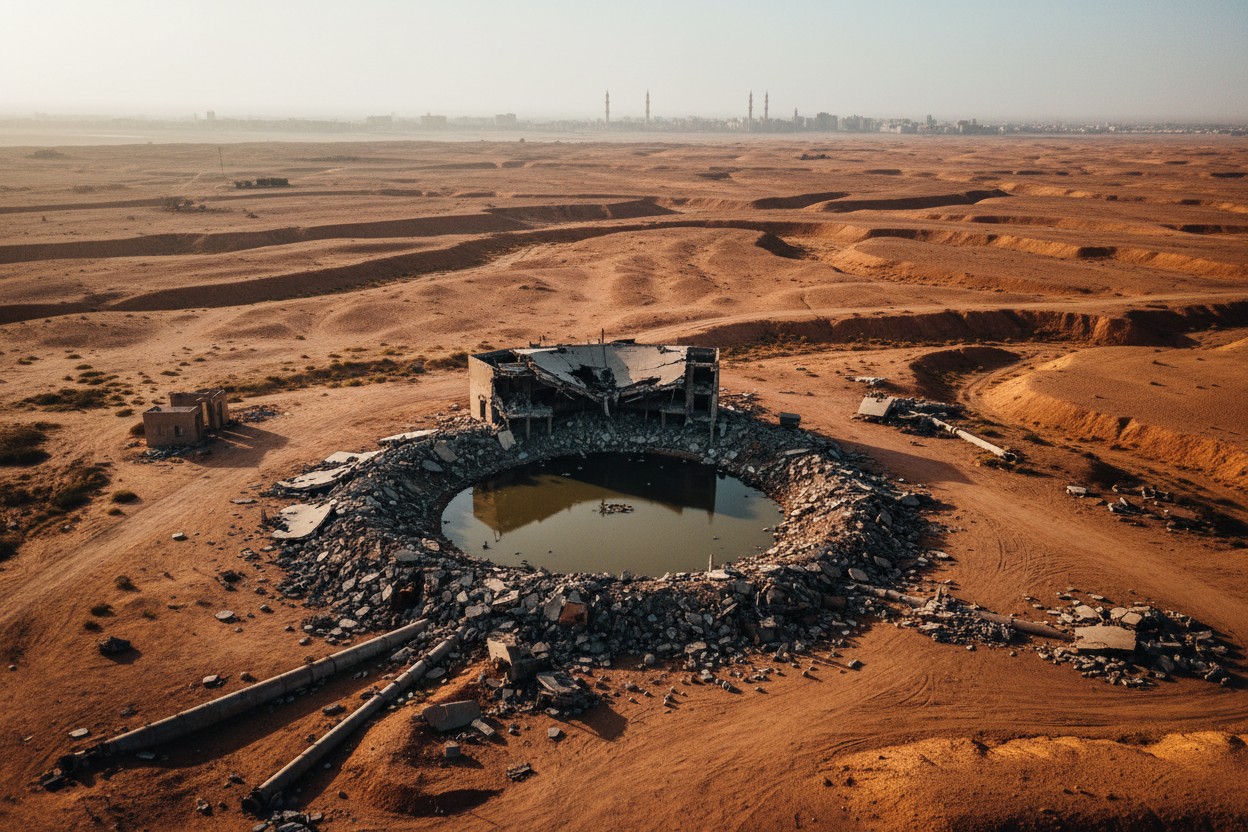
The visual evidence provided by satellite reconnaissance is difficult to dispute. High-resolution imagery analyzed by independent experts shows clear evidence of a precision-guided strike resulting in the structural collapse of the facility’s main treatment tanks and distribution piping.
Military analysts note that the precision of the weaponry involved—likely Joint Direct Attack Munitions (JDAMs) or similar guided systems—implies a high degree of intent. In the lexicon of modern warfare, "precision" is often synonymous with "deliberate." This leaves two primary possibilities: either the facility was the intended target, or there was a catastrophic failure in target identification protocols.
The Pentagon has yet to release a detailed after-action report clarifying whether the site was misidentified as a military hub or if the targeting parameters were knowingly expanded. Given the facility’s role as a life-sustaining civilian utility, the ambiguity surrounding the strike has fueled speculation regarding the shifting rules of engagement as the war enters its fifth month.
Official Responses: Deflection and Denial
The administration’s reaction to the inquiry regarding the water facility has been one of staunch defensiveness. During a press briefing, Secretary of War Pete Hegseth dismissed questions about the incident as "disingenuous."
Hegseth’s rebuttal centered on the morale and professionalism of the American military. By characterizing the questioning of the strike as an attack on the integrity of U.S. forces, the Secretary of War sought to shift the focus away from the humanitarian cost and toward the patriotic duty of supporting the troops. "To impugn the motives of our service members in the midst of a critical campaign is not only unhelpful, it is fundamentally dishonest," Hegseth stated.
This stance, however, has failed to silence critics. Former military officials, including retired Colonel Douglas Macgregor, have long warned that the administration’s strategy lacked a coherent exit plan. Macgregor’s previous analysis—that the focus on nuclear facilities would lead to a broader, uncontrollable conflict—appears to have been validated by the current escalation, which now encompasses the destruction of civil infrastructure essential to the Iranian population.
Legal Implications and the Laws of War
The core of the current crisis lies in the interpretation of international humanitarian law (IHL), specifically the Geneva Conventions. The principle of distinction mandates that parties to a conflict must at all times distinguish between combatants and civilians, and between military objectives and civilian objects.
Legal experts point out that the deliberate targeting of civilian infrastructure—especially that which is indispensable to the survival of the civilian population—is strictly prohibited. If the strike was intentional, it could be classified as a war crime. If it was an error, it raises serious questions regarding the "due diligence" practiced by the U.S. military in the verification of targets.
The Trends Journal and other geopolitical observers have suggested that this strike is not an isolated event but part of a broader pattern of operations in the Middle East where civilian infrastructure is increasingly collateralized. This perspective posits that the Western media’s narrative, which focuses heavily on state-sponsored terrorism by Iran, often obscures the humanitarian impact of U.S.-backed or executed operations. The polarized nature of these debates reflects the deep fragmentation in both domestic and international opinion regarding the legality of the U.S. presence in Iran.
Congressional Unease and the Legislative Struggle
The legislative branch has begun to reassert its role in foreign policy, as evidenced by the June 3, 2026, House vote. By passing a War Powers Resolution with a slim majority, the House has signaled that the executive branch’s unchecked authority is no longer acceptable.
The bipartisan nature of the vote—with four Republicans crossing the aisle to join Democrats—highlights the growing discomfort among lawmakers regarding the war’s legal basis. Even as President Trump declared a "great settlement," the continuation of strikes indicates that the administration is operating under a strategy that may be disconnected from the legislative will of the people.
The Senate now faces the task of deciding whether to move forward with the resolution. If passed, it would force a constitutional showdown between the White House and Congress, potentially ending the unauthorized war. However, with the current administration holding firm on its strategic path, the political landscape remains as gridlocked as the battlefield is volatile.
Conclusion: An Unresolved Human Crisis
As the Iran War grinds into its fifth month, the destruction of the water facility serves as a grim metaphor for the conflict’s overall trajectory. What began as a campaign of "precision" and "limited objectives" has evolved into a grinding war of attrition with severe consequences for the civilian populace.
The legal questions remain unanswered. The administration continues to frame the conflict through the lens of national security and military honor, while the humanitarian cost continues to mount. With no official investigation into the water facility strike on the horizon, and with the War Powers Resolution languishing in the political pipeline, the path forward remains obscured.
For the people of the region, the conflict is not a matter of geopolitical strategy or legal theory, but a matter of daily survival. As the infrastructure upon which they depend is systematically dismantled, the international community faces a difficult reckoning: how to hold the architects of this war accountable when the rules of engagement are being rewritten by the very forces tasked with upholding them. The silence from the executive branch regarding a formal inquiry only serves to deepen the divide, ensuring that the legacy of this conflict will be defined by the unresolved questions of today.