In an era where health podcasts, biohacking influencers, and social media gurus dictate the latest trends in longevity, the pursuit of a long life has become increasingly complex. From cold plunges and continuous glucose monitors to expensive supplement stacks and rigorous data tracking, the "longevity industry" often suggests that achieving a long, healthy life requires an elite-level commitment of time, money, and cognitive bandwidth.
But for the average person juggling a career, family, and social obligations, this "optimization culture" often backfires. It creates a barrier to entry that leads many to feel that if they cannot perform at the level of a high-end biohacker, they might as well give up entirely.

The reality, supported by a vast body of public health research, is far more encouraging: The most impactful longevity strategies are not complex, nor are they new. They are the foundational habits that we have known about for decades.
The Myth of Optimization
There is a growing narrative that the "basics"—exercise, a balanced diet, sleep, and stress management—are no longer sufficient. Influential figures have popularized the idea that to outlive the average American, one must engage in cutting-edge, often unproven, protocols.

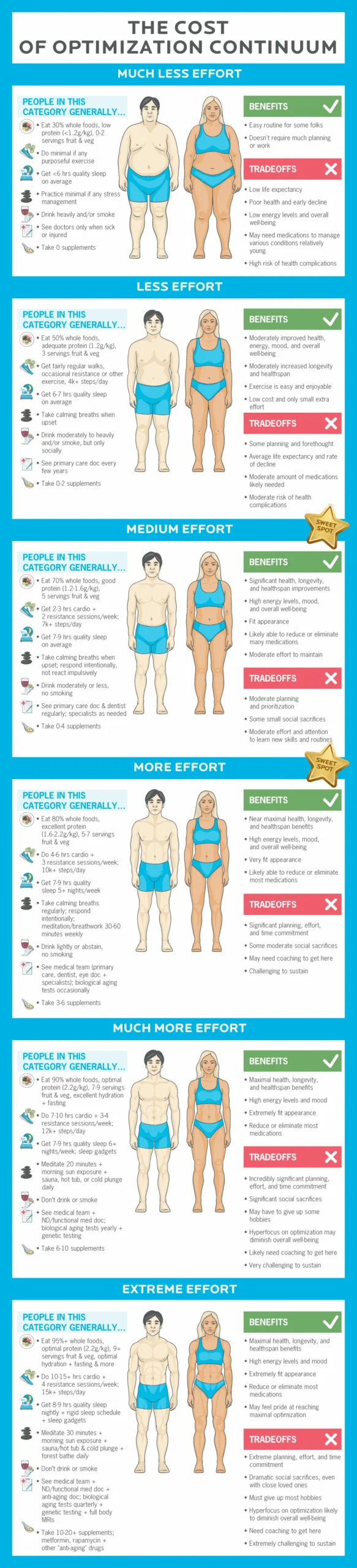
At Precision Nutrition, after coaching hundreds of thousands of clients, we have observed a critical truth: "Optimal" is rarely realistic, and more importantly, it is not necessary. In fact, there is a clear law of diminishing returns in health and fitness. A modest, consistent effort toward foundational habits yields significantly better long-term results than a sporadic, intense, and highly "optimized" regimen that leads to burnout.
Chronology of Health Behavior: The Shift from Basics to Biohacking
For decades, public health guidelines focused on the "essential pillars": movement, whole foods, and rest. These were the standard for avoiding chronic disease.

In the last ten years, however, the industry shifted toward "Longevity Optimization." This movement, spearheaded by figures like Dr. Peter Attia and biohacker Bryan Johnson, moved the goalposts from "preventing disease" to "extending healthspan." While the intent—living a high-quality life into one’s 90s—is noble, the implementation has skewed toward expensive testing, tracking, and fringe supplement use.
The danger of this shift is that it ignores the "80/20 rule" of health: 80% of your results come from 20% of the behaviors. When individuals focus on the remaining 20% (the "fringe" stuff) at the expense of the core 80%, their health often stagnates.

Supporting Data: The Power of the Fundamentals
The data is clear: Complexity is not a prerequisite for longevity.
1. Exercise: The U-Shaped Curve
Research indicates that any physical activity reduces the risk of all-cause mortality. A study of 272,550 older adults confirmed that even low amounts of exercise provide significant protection against cardiovascular disease and cancer. The "sweet spot" for exercise appears to be between 7.5 and 15 MET-hours per week. While increasing volume beyond this provides further benefits, the rate of return decreases significantly. Overtraining, conversely, can lead to hormonal disruption and increased injury risk.

2. Nutrition: The 70/30 Principle
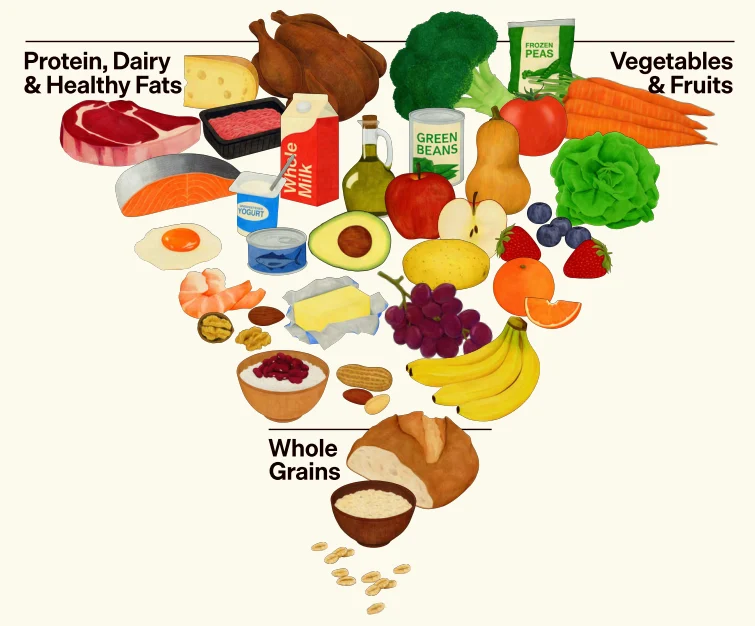
Dietary research involving over 1.8 million participants shows that health benefits plateau at five servings of fruits and vegetables daily. There is no evidence that moving to ten servings provides a proportional increase in longevity. Similarly, consuming 70–80% of your diet from whole or minimally processed foods offers the vast majority of health protection. Ultra-processed foods (UPFs) are linked to 32 harmful health effects, making the reduction of UPFs far more important than the pursuit of specific "superfoods."
3. Sleep and Stress
Sleep duration is arguably the most underrated longevity tool. Consistently getting 7 to 9 hours of sleep is associated with a lower risk of dementia and cardiovascular disease. Furthermore, managing stress through simple, consistent practices—rather than expensive therapies—prevents the chronic inflammation that accelerates biological aging.

The Financial and Time Cost of Optimization
When we compare the "healthy person" (someone practicing basic, consistent habits) to the "optimizer" (someone following extreme protocols), the difference in investment is staggering.
- Time: An "optimizer" might spend 15–20 hours a week on health-related tracking, meal prepping, specialized exercise, and recovery modalities. A "healthy person" achieves 80–90% of the same health outcomes in 4–6 hours a week.
- Money: The cost difference is often thousands of dollars annually, encompassing specialized blood panels, continuous glucose monitoring, wearable tech subscriptions, and high-end supplement stacks.
For the average person, this time and money could be better spent on social connection, which the Harvard Study of Adult Development—the longest-running study on human happiness—has identified as the single greatest predictor of longevity.

Implications: The "Deep Health" Approach
If we are to redefine what it means to be healthy, we must look at the concept of "Deep Health"—a holistic view that includes physical, mental, emotional, and social well-being.
Why "Optimal" Can Be Harmful
When health becomes an obsession, it often transitions into disordered behavior. Orthorexia (an unhealthy obsession with healthy eating) and extreme health anxiety can actually undermine the very goal they aim to achieve. If a "health plan" prevents you from having a dinner with friends, enjoying a meal with your family, or getting a full night’s sleep because you are worried about your tracking data, you have failed to achieve true health.

Moving Forward: A Realistic Strategy
To build a sustainable path to longevity, consider these steps:
- Prioritize the Big Rocks: Focus on the foundational habits. Are you moving your body? Are you eating whole foods? Are you sleeping 7–9 hours? Are you fostering relationships?
- Define Your "Enough": Recognize that there is a point where extra effort yields diminishing returns. Ask yourself: "Does this activity bring me joy or just more stress?"
- Tune Out the Noise: Be skeptical of "cutting-edge" advice that hasn’t been proven in human trials. Most of the longevity hacks touted on social media are based on theoretical science or animal studies.
- Value Social Connection: Longevity is not a solitary pursuit. Cultivating close, supportive relationships is a scientifically backed "life hack" that costs nothing but time.
Conclusion
The pursuit of extreme health optimization is often a distraction from the simple, yet profound, reality of human health. By focusing on consistency rather than perfection, you can achieve a long, high-quality life without sacrificing the joy and connection that make life worth living. You do not need to be a biohacker to live a long life; you just need to be a human who takes care of the basics, day after day, year after year.