











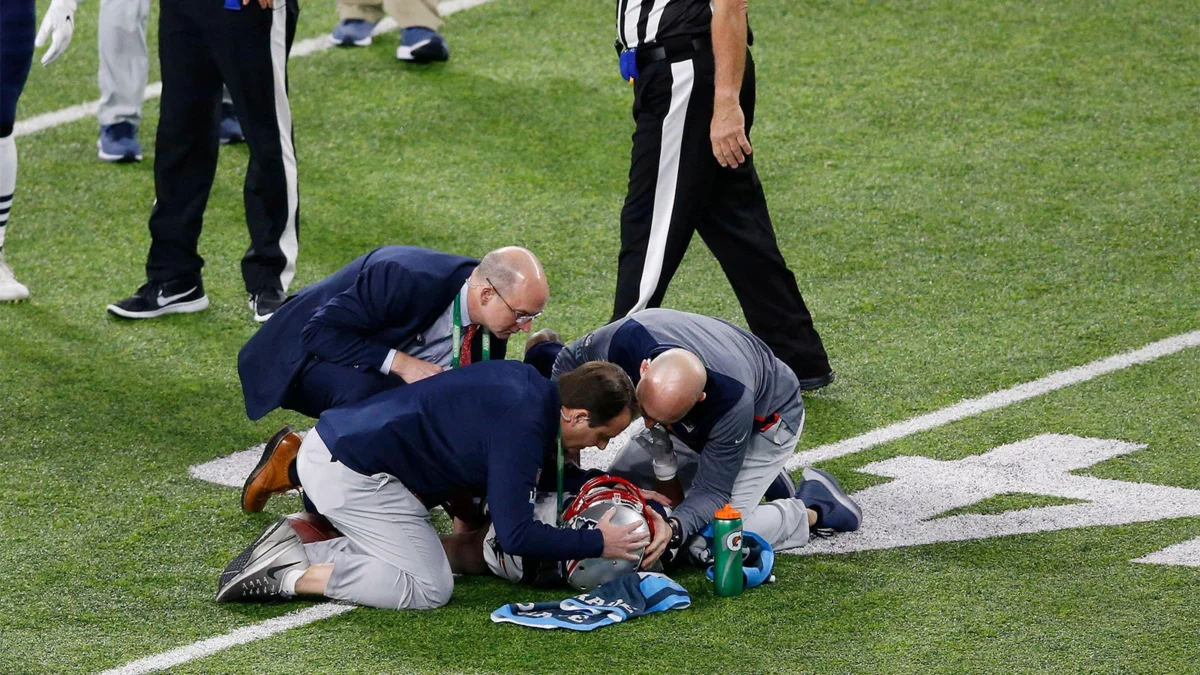
In a sobering revelation that threatens to reshape the landscape of professional sports medicine, a comprehensive retrospective study published in The BMJ has provided the most rigorous estimate to date regarding the prevalence of Chronic Traumatic Encephalopathy (CTE) among former National Football League (NFL) players. The findings indicate that at least one in four players who died between 2016 and 2021 suffered from the degenerative brain disease, a condition inextricably linked to the repetitive head impacts inherent in professional football.
The study, led by Dr. Daniel Daneshvar of Massachusetts General Hospital, moves beyond the limitations of previous anecdotal reports by establishing a statistical framework that accounts for the "selection bias" inherent in brain donation. The results suggest that the prevalence of CTE among deceased NFL players likely falls between 24.5% and 97.7%, depending on the statistical model applied. This "wake-up call" underscores a long-simmering public health concern regarding the long-term neurological consequences of high-impact contact sports.
Main Facts: A Statistical Look at the Brain Health Crisis
CTE is a progressive, neurodegenerative brain disease characterized by the accumulation of abnormal phosphorylated tau protein, which kills brain cells. Because it can currently only be definitively diagnosed during a post-mortem autopsy, researchers have historically struggled to determine its true prevalence in the living population.
The research team analyzed data from 1,712 former NFL players who passed away between 2008 and 2021. Out of this cohort, 338 players donated their brains to science, with 315 of those individuals receiving a confirmed diagnosis of CTE. By utilizing inverse probability weighting to correct for the fact that players who exhibited symptoms during their lives were more likely to donate their brains, the researchers arrived at a "plausible range" for the entire deceased NFL population.
The study also established a critical link between the severity of the disease and clinical outcomes. Stage IV CTE—the most advanced form of the condition, where tau pathology spreads extensively across cortical and subcortical brain structures—was strongly associated with clinical dementia. Patients with Stage IV CTE showed a 44% higher risk of being diagnosed with dementia during their lifetimes.
"Community brain bank studies have shown that CTE affects less than 1% of the general population," Dr. Daneshvar noted in a press release accompanying the study. "To find that a massive percentage of NFL players from that time period had this progressive brain disease is a wake-up call for the NFL and scientific communities."
Chronology: A History of Head Trauma and Medical Recognition
The trajectory of this crisis can be traced back to the introduction of modern equipment and the evolution of the game. The study focused on players who had participated in at least one NFL game after 1949—the year hard-shell plastic helmets became mandatory.
- 1949–1990s: The "Hard-Shell Era." While helmets were intended to prevent skull fractures and catastrophic brain injuries, the increased protection allowed players to use their heads as weapons, significantly increasing the frequency of sub-concussive impacts.
- 2005–2008: The early recognition of CTE in football players. Pathologist Dr. Bennet Omalu published the first findings of CTE in a former NFL player in 2005, a discovery that was initially met with intense skepticism and resistance from league-affiliated medical experts.
- 2017: A landmark study conducted at the Boston University UNITE Brain Bank examined 111 former NFL players; 110 of them tested positive for CTE. While this study was scientifically accurate, critics argued that it suffered from "ascertainment bias," as families of players who showed symptoms were more likely to donate the brains.
- 2008–2021: The window of the current BMJ study. By looking at a broader, defined population rather than just a convenience sample, researchers have attempted to move the needle from sensationalized headlines to statistically sound epidemiological data.
Supporting Data: Dissecting the Methodology
To ensure the integrity of the study, the research team employed a rigorous, multi-layered approach. Neuropathologists who were "masked"—meaning they were unaware of the clinical history or the identity of the players—conducted the brain examinations. Simultaneously, clinicians reviewed medical records provided by family members and informants to determine if the players had been symptomatic with dementia prior to death.
The data revealed several alarming trends:
- Delayed Diagnosis: Among the donors who suffered from dementia, the average age of onset was 63, with an average age of death at 73.
- The "Invisible" Disease: Perhaps most concerning, only 40.6% of donors who were diagnosed with dementia by the study clinicians actually had a neurodegenerative disease listed as their primary or secondary cause of death on their death certificates. This suggests that many cases of CTE-related cognitive decline are being missed or misattributed to other causes by medical examiners.
- Stage IV Severity: Among the donors, 30.8% reached Stage IV CTE, the stage where widespread damage to cortical structures results in profound cognitive and behavioral impairments.
Dr. Tobias Kurth and Dr. Richard Riley, who authored an accompanying editorial in The BMJ, praised the study for its methodological rigor. "Daneshvar and colleagues recognize the limitation of brain bank studies," they wrote. "Their work advances the evidence base by identifying a well-defined source population… This allowed the investigators to estimate plausible lower and upper bounds for CTE prevalence at death in all NFL players."
Official Responses and Scientific Context
The publication of this data has reignited debates within the sports medicine and public health communities. For years, the NFL and its associated medical staff maintained that the link between football-related head impacts and long-term neurodegeneration was not conclusively proven. However, in recent years, the league has adopted a more collaborative stance, investing in helmet safety technology and implementing strict concussion protocols.
Despite these efforts, the scientific community emphasizes that the current data represents a "legacy" issue. Many of the players analyzed in this study played during eras when safety protocols were nonexistent or rudimentary. The question remains whether the modern, "safer" NFL—with its current concussion protocols and rule changes—will see a decrease in CTE prevalence in the coming decades.
The NFL has previously acknowledged the existence of CTE in former players and has established funds for concussion-related research and player health initiatives. However, critics argue that the league’s response remains reactionary. Public health experts are calling for a greater focus on limiting "cumulative sub-concussive head impacts"—the thousands of smaller, non-concussive hits that occur in every game—which are now widely considered the primary drivers of CTE development.
Implications: The Future of Contact Sports and Public Policy
The implications of this study extend far beyond the NFL. The high prevalence of CTE in professional players serves as a bellwether for amateur, collegiate, and youth football programs. If the sport carries such a high risk for the elite, highly-monitored athletes of the NFL, the potential for harm among younger, less-monitored players is a matter of significant concern for parents and educators.
Potential Policy Shifts
- Strict Limitation of Contact: Experts are calling for a reduction in full-contact practices during the week, both at the collegiate and professional levels, to reduce the cumulative load of hits on the brain.
- Technological Innovation: The study provides a target for manufacturers to develop helmets that do more than prevent skull fractures—they must be designed to mitigate the rotational forces that are believed to cause the shearing of nerve fibers in the brain.
- Expanded Surveillance: There is an urgent need for longitudinal studies that track players from their active years through retirement to better understand how early-stage CTE manifests in the living brain.
- Medical Education: The findings that many dementia cases are not being captured on death certificates highlight a critical gap in pathology training. Medical examiners and neurologists need better diagnostic criteria to identify CTE-related neurodegeneration.
In conclusion, the findings presented by Dr. Daneshvar and his team provide a sobering look at the true cost of professional football. While the game continues to be a central pillar of American culture, the "silent crisis" of CTE serves as a reminder that the price of entertainment is often paid in the long-term cognitive health of those on the field. As researchers look to the future, the focus must shift from merely managing symptoms to fundamentally altering the nature of contact sports to prioritize the long-term integrity of the human brain.