Introduction: The Dawn of Driverless Agriculture
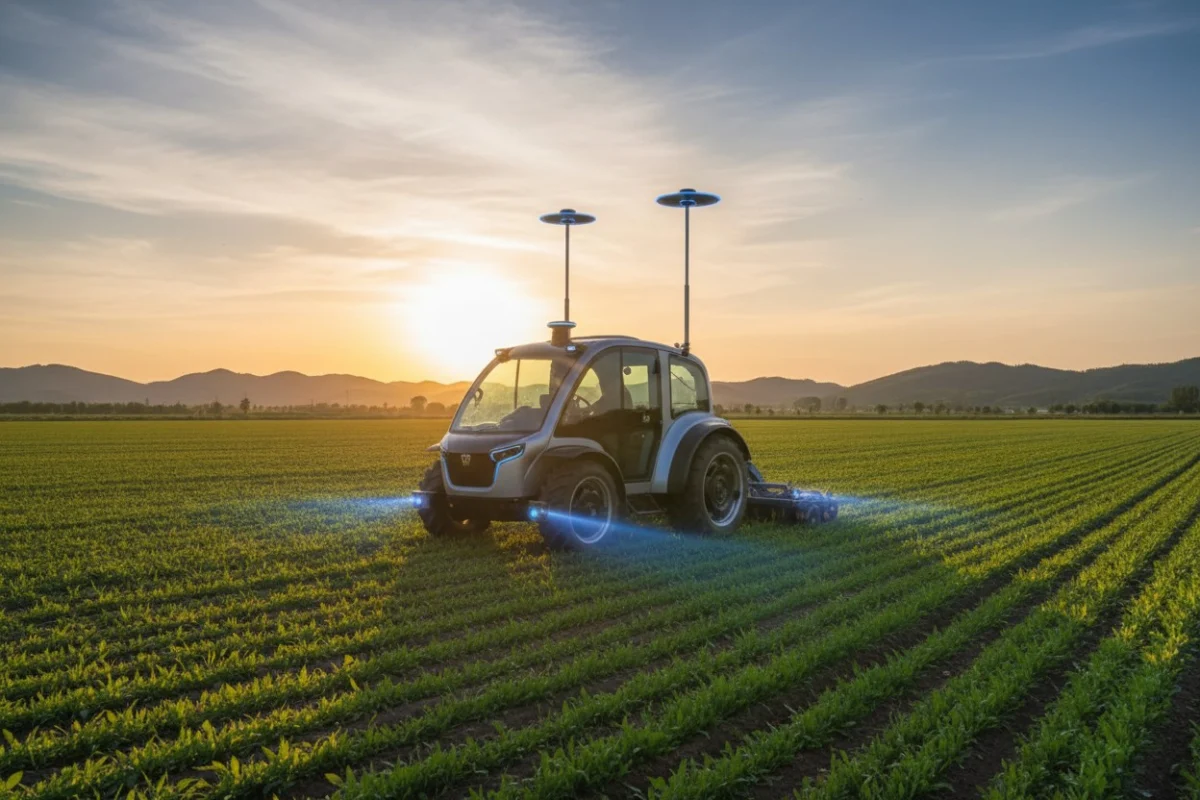
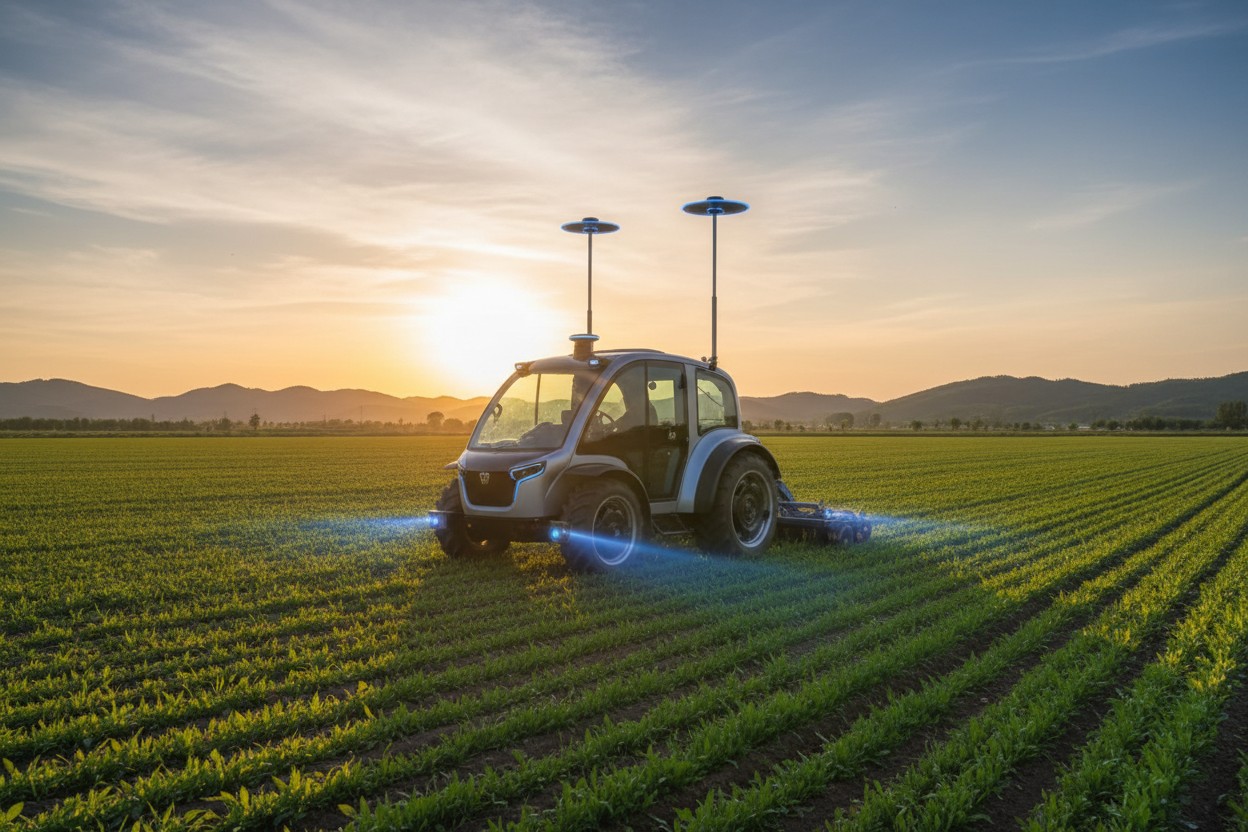
In the vast, undulating fields of rural China, a quiet revolution is taking place, one that is being captured in grainy, high-engagement footage across social media platforms like X (formerly Twitter). The centerpiece of this transformation is the Honghu T70, a fully autonomous electric tractor that has captured the global imagination. Developed by a prominent Chinese agricultural technology firm, the T70 represents a paradigm shift in how we conceive of food production. By removing the operator from the cab, the T70 promises to redefine efficiency, sustainability, and the labor dynamics of the modern farm.
As the global agricultural sector faces the dual pressures of an aging rural workforce and the urgent need for decarbonization, the Honghu T70 stands as a tangible answer to these complex problems. While autonomous technology has long been a fixture in mining and logistics, its integration into the unpredictable, organic environment of a working farm marks a significant technological leap.
Main Facts: The Anatomy of the T70
The Honghu T70 is not merely a tractor; it is a sophisticated mobile robotics platform. Unlike conventional machinery, which requires a human pilot to navigate the complexities of soil consistency and crop density, the T70 utilizes a comprehensive suite of sensors to perform its duties with surgical precision.
The Sensor Suite
At the heart of the T70’s navigation system is a robust array of hardware:
- LiDAR (Light Detection and Ranging): This provides the tractor with a high-resolution, 360-degree point-cloud map of its environment, allowing it to detect obstacles in real-time.
- Real-Time Kinematic (RTK) GPS: This enables centimeter-level positioning accuracy, essential for tasks like seeding and row-crop cultivation where deviation can lead to wasted resources or damaged crops.
- Multimodal Sensor Fusion: By integrating ultrasonic and visual sensors, the tractor can distinguish between field debris, livestock, and human personnel, allowing for an emergency stop protocol that ensures site safety.
Propulsion and Versatility
The T70 is powered by a high-density electric battery, moving away from the traditional combustion engines that have dominated agriculture for a century. This switch to electric propulsion is part of a larger, state-led initiative to integrate sodium-ion battery technology into heavy machinery. The T70 is designed for a multi-hour duty cycle, capable of autonomous plowing, seeding, and precision spraying. Its modular design allows it to adapt to various terrains, from the expansive flatlands of Northern China to the more challenging, undulating topography of the country’s central provinces.
Chronology of Development
The trajectory of the Honghu T70 is emblematic of the rapid acceleration of Chinese agricultural tech.
- Phase I: Research and Prototyping (2021–2023): The manufacturer focused on retrofitting existing chassis with autonomous navigation stacks. During this time, the emphasis was on "geofencing" and basic path-following algorithms.
- Phase II: The "Field-Test" Era (Early 2024): The T70 moved from controlled laboratory environments to active pilot programs. This period was critical for testing how the machine handled adverse weather, such as heavy rain or high humidity, which can interfere with sensor accuracy.
- Phase III: Public Unveiling (Mid-2025): The company officially showcased the T70. The release was strategically timed to coincide with national policies promoting "Agricultural Modernization 2030."
- Phase IV: Viral Adoption and Scrutiny (Late 2025–Present): Following the circulation of viral videos, the T70 has moved from a niche industrial product to a subject of global discourse, prompting both excitement and intense technical debate.
Supporting Data: Why Agriculture Needs Automation
The push for the T70 is not driven by novelty, but by necessity. Agricultural data points reveal a stark reality that necessitates such innovations:
- The Labor Deficit: Demographic shifts in China have seen a mass migration of the youth from rural farming hubs to urban manufacturing and tech centers. The average age of the agricultural worker in many provinces now exceeds 55, creating a critical shortage of manual labor.
- Efficiency Metrics: Early reports from pilot farms indicate that the T70 can reduce operational costs by approximately 30–40% when compared to human-operated diesel tractors. This is achieved through the elimination of human error, more efficient fuel (energy) usage, and the ability to operate 24/7.
- Investment Returns: Large-scale commercial farms have long struggled with the "Return on Investment" (ROI) paradox. High capital expenditure on equipment is rarely offset by the rising costs of fuel and labor. The T70 offers a path toward a more predictable cost-structure, essentially transforming the tractor from a depreciating asset into a programmable service tool.
Official Responses and Regulatory Outlook
The emergence of the T70 has triggered a flurry of activity within government regulatory bodies. The Ministry of Agriculture and Rural Affairs has signaled its intent to create a framework for "autonomous machine safety certification."
The Regulatory Hurdle
Industry analysts point out that while the hardware is ready, the legal framework is not. There is currently no clear protocol for "liability in the event of an autonomous farm accident." If a T70 causes property damage or injury, does the blame lie with the manufacturer’s code, the network provider, or the landowner?
Government Stance
Government officials have remained cautiously optimistic. In recent press briefings, representatives emphasized that the T70 is a "vital pillar" of China’s push for food self-sufficiency. They have announced that further testing and rigorous certification processes will be mandatory before the T70 can be cleared for mass commercial deployment across provinces. This "test-first" approach is intended to build public trust, particularly among skeptical farmers who are wary of relying on software to manage their livelihoods.
Implications for the Global Agricultural Industry
The ripple effects of the Honghu T70 are being felt far beyond China’s borders.
1. The Death of the "Tractor Cab"
If autonomous systems become the standard, the very design of agricultural machinery will change. Without a human operator, the need for air conditioning, ergonomically designed seats, and windshields disappears. This could lead to a new generation of "pancake" tractors—lower-profile, lighter, and more energy-efficient machines that minimize soil compaction, a major issue in modern industrial farming.
2. Infrastructure Requirements
For the T70 to truly scale, the "digital field" must be realized. This requires:
- 5G/6G Connectivity: To ensure that the tractor remains in constant communication with a central control unit for remote monitoring.
- Charging Infrastructure: Agricultural land is notoriously poorly served by high-voltage charging grids. The deployment of the T70 necessitates a parallel investment in rural electrical infrastructure.
3. Socio-Economic Impact
Critics raise valid concerns regarding the displacement of workers. While proponents argue that the T70 fills a gap created by labor shortages, unions and social advocacy groups warn that the automation of rural work could further hollow out the economic viability of small-scale family farms that cannot afford to transition to high-tech, automated fleets.
Public Reaction: The Digital Debate
On platforms like X, the T70 has become a litmus test for views on technology.
- The Optimists: Many users argue that the T70 is the "only way forward" to ensure food security for a growing global population. They highlight the precision aspect, noting that autonomous machines can reduce the overuse of fertilizers and pesticides by applying them only where needed.
- The Skeptics: A significant contingent of commenters has raised concerns about "black box" technology. The inability of the manufacturer to publicly address how the tractor handles edge-case scenarios—such as a child running into a field or a sudden sensor failure during a storm—remains a major point of contention. The "human-in-the-loop" vs. "fully autonomous" debate is currently the most active discussion topic among industry followers.
Conclusion: The Road Ahead
The Honghu T70 is a milestone in the history of agricultural technology, serving as a high-visibility proof of concept for the future of farming. It is a synthesis of China’s massive advancements in battery storage, AI, and robotics. However, the transition from a viral sensation to a staple of the countryside will be a slow, iterative process.
As we look to the coming decade, the success of the T70 will not be measured by the number of clicks on a social media video, but by its ability to navigate the complex, often chaotic reality of day-to-day farming. Regulatory approvals, the establishment of safety standards, and the willingness of the market to embrace a driverless future will determine whether the Honghu T70 remains a technical curiosity or becomes the standard-bearer for the next generation of global agriculture. For now, the world watches, as the fields of China are plowed by a machine that knows no fatigue, needs no sleep, and represents the quiet, relentless march of progress.
References and Further Reading
- Journal of Agricultural Robotics: "The Rise of Sodium-Ion Battery Systems in Mobile Heavy Equipment," Vol 14, 2025.
- Rural Economic Review: "Demographic Shifts and the Labor Crisis in Modern Agriculture," 2024.
- Global Mining & Automation Weekly: "Cross-Industry Applications of Autonomous Navigation," 2025.
- Ministry of Agriculture (China) Reports: "Policy Frameworks for the Modernization of Farm Equipment," 2025.