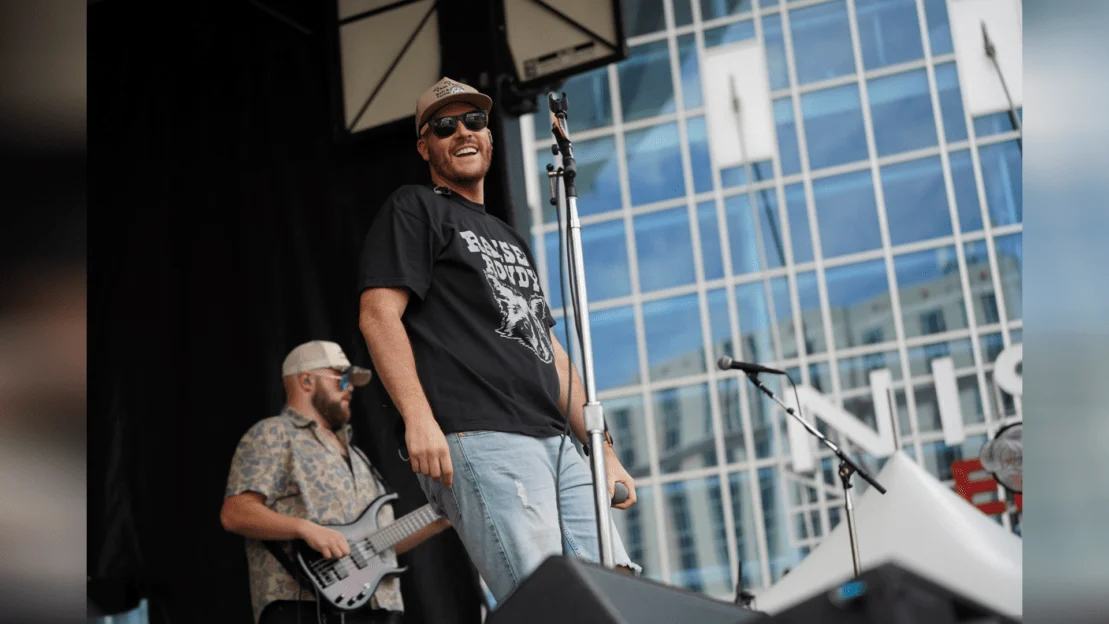
Life for country music standout Trey Lewis is currently moving at a velocity that matches the intensity of his new, rigorous training regimen. For a man who once described himself as the "fat kid" in gym class—the one struggling to maintain a walking pace while his peers lapped him on the track—the current iteration of Lewis is almost unrecognizable. Today, Lewis isn’t just keeping pace with his rapidly ascending music career; he is actively outrunning his past, one mile and one set of pushups at a time.
Main Facts: A Transformation of Body and Mind
The Alabama-raised singer, now 38, is currently navigating the most successful chapter of his life, anchored by a dual commitment to sobriety and physical conditioning. Following a breakout moment in 2020 with the viral, double-platinum hit "Dicked Down in Dallas," Lewis has successfully pivoted from a chaotic, addiction-fueled lifestyle to a structured, disciplined existence.
His physical transformation is the byproduct of a calculated, long-term approach to wellness. After battling a lifelong addiction to food that saw him lose and regain over 100 pounds on two separate occasions, Lewis has finally found a sustainable path. By working with Nashville-based performance specialist Justin Todd, Lewis has replaced erratic dieting with a holistic strength and conditioning routine. He currently weighs in at a steady 225 pounds, but he is quick to clarify that the number on the scale is no longer his primary objective. Instead, his focus has shifted to athletic performance, mental clarity, and the physical stamina required to command a stage for hours without fatigue.
Chronology: The Road to Redemption
The Foundation of Sobriety
Lewis’s journey began nearly two decades ago. In June, he celebrated his 19th year of sobriety—a milestone that serves as the bedrock for everything he has built since. Growing up in Alabama surrounded by the music of Hank Williams Jr. and Lynyrd Skynyrd, Lewis did not actually pick up a guitar until he successfully left alcohol behind. For Lewis, music became his "new addiction," a creative outlet that provided the stability he lacked during his years of substance abuse.
The Food Addiction Struggle
While his sobriety remained steadfast, his relationship with food proved to be a far more insidious hurdle. After his initial success with sobriety, he often replaced alcohol with excessive consumption of fast food, leading to severe weight fluctuations. He attempted to use 12-step programs to combat his food addiction, resulting in a temporary 100-pound weight loss. However, without a long-term nutritional plan, the pressure of his career—compounded by the chaotic nature of life on the road—led to a relapse. By the time his music career exploded in 2020, Lewis had returned to a weight of over 320 pounds, fueled by a diet of pizza and chicken fingers on the tour bus.
The Catalyst: Cold Plunges and Accountability
The turning point arrived during a podcast project where Lewis was interviewing others about their struggles with substance abuse. Sitting in a cold plunge tub while discussing mental health, he experienced a moment of profound realization: he was preaching the gospel of recovery while neglecting his own physical vessel. He reached out to Justin Todd, a performance specialist who had worked with artists like Kameron Marlowe. The two bonded over their shared sobriety, and Lewis made a "half-joking" promise: if Todd provided the cold plunge, Lewis would commit to the gym.
Supporting Data: The Science of Sustained Change
Justin Todd’s approach to training Lewis was centered on longevity rather than aesthetics. Recognizing that Lewis had limited athletic experience, Todd focused on mobility and structural integrity.
- Phase 1: Mobility and Movement: Sessions began with full-body assessments to address imbalances caused by hours of hunching over a guitar. The use of resistance bands and light weights established a foundation that prioritized joint health.
- Phase 2: Engagement: To ensure consistency, Todd integrated "play" into the programming. Utilizing basketball and pickleball courts, Todd gamified the workouts—missed free throws resulted in extra reps, while successful shots reduced the volume.
- Phase 3: The Results: Lewis transitioned from being unable to perform a single pushup to easily banging out sets of 20. His strength on the bench press climbed to 165 pounds, and his cardiovascular capacity evolved from 30-second bursts of jogging to effortless four-mile runs.
This methodical approach prevented the burnout that had plagued his previous, more restrictive attempts at weight loss. By focusing on "feeling good" rather than starving himself, Lewis successfully maintained his progress even when life became difficult.
Official Responses: A New Philosophy
Reflecting on his journey, Lewis emphasizes that his perspective on fitness has undergone a radical shift. "I’m 38, so it’s about feeling good," he says. "It’s not about how much weight can I lift or how many miles can I run. It’s about waking up every day and getting some movement in."
His performance coach, Justin Todd, notes that the success of this phase is rooted in Lewis’s newfound mental fortitude. "A lot of weight loss is about proper goal setting and taking the focus off the number on the scale," Todd explains. "Trey never missed a workout. That’s the attitude that he adopted, and it’s the reason he’s seeing these results."
The consistency has permeated all aspects of his life. Lewis, once a self-described night owl, now maintains a rigid, disciplined schedule: rising at 6:00 a.m., completing his workout, engaging in 20 minutes of sauna therapy at 200 degrees, and dedicating time to prayer, meditation, and songwriting before the day truly begins.
Implications: The Future of a Resilient Artist
The implications of Lewis’s transformation extend far beyond his physique. By cultivating a disciplined, high-performance lifestyle, he has effectively future-proofed his career. The ability to perform at a high level without fatigue has allowed him to increase his tour dates and improve the quality of his live shows, where fans might now catch him doing pushups between guitar riffs.
His career continues to gather momentum. With a Sony Music Publishing deal, successful songwriting credits for industry heavyweights like Tracy Lawrence and Cole Swindell, and the launch of his introspective project Thomason, Lewis is in the midst of a creative renaissance. His most recent single, "2 Inches," and a robust touring schedule indicate that he is not slowing down.
For Lewis, the lesson is universal: "It’s the same thing with songwriting or any of this other stuff. You just have to show up. That’s more than half the battle. Then you do the work."
As he looks toward the future, Lewis remains focused on the process rather than the destination. He is currently eyeing another 10-pound weight loss, not for vanity, but for further optimization. He has proven that the same determination required to conquer addiction can be channeled into building a body capable of sustaining a lifelong career. Trey Lewis is no longer just a musician; he is an athlete of his own life, and he has no intention of looking back. Whether he is on stage in Bristol, Tennessee, or in the gym in Nashville, the message remains the same: the work is the reward.