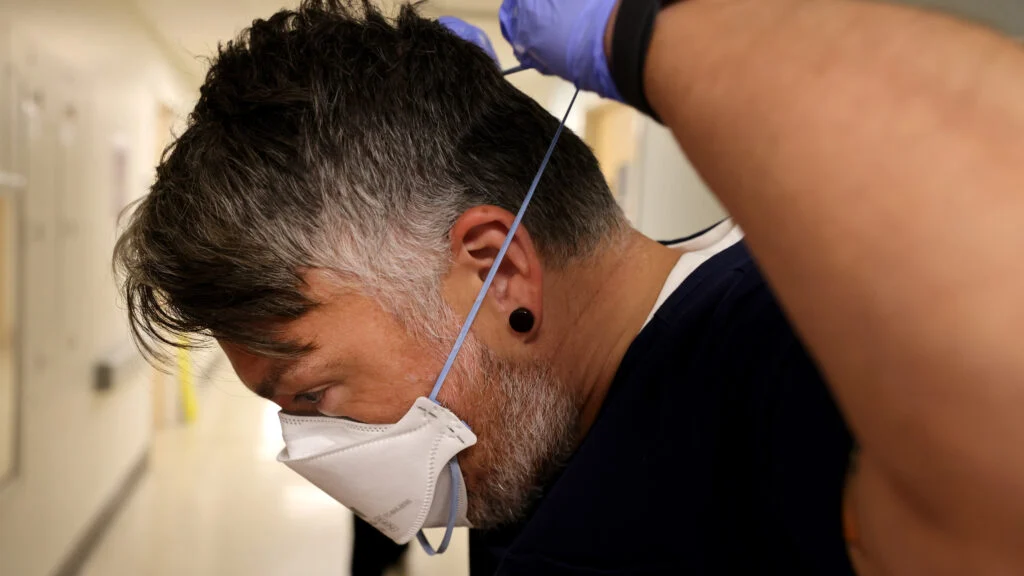
As the United States grapples with an aging population and a mounting burden of chronic disease, the demand for high-quality healthcare is reaching a fever pitch. Yet, even as the need for care grows, the nation’s healthcare systems are facing a formidable bottleneck: a critical shortage of qualified nurses. With nearly 200,000 job openings expected annually, the shortfall is not merely a staffing inconvenience—it is a systemic threat to patient safety and institutional viability.
While many solutions have been proposed, one of the most promising and consistently overlooked strategies lies in diversifying the profession by recruiting more men. Despite the potential for career stability, high earnings, and leadership opportunities, men account for just 12% of the nursing workforce—a number that has remained stagnant for years. To address the looming workforce collapse, nursing leaders, policymakers, and educators must confront the outdated stereotypes and structural barriers that continue to keep men on the sidelines of one of the most vital professions in the modern economy.
The Economics of a High-Stakes Profession
To understand why nursing is an essential engine for economic mobility, one must look past the "pink-collar" tropes that have historically dogged the profession. For many first-generation college students, nursing represents a reliable pathway to the American dream.
Unlike many sectors vulnerable to automation or outsourcing, the demand for skilled nurses is constant. For those who choose to pursue graduate-level training—such as Nurse Practitioners or Certified Registered Nurse Anesthetists—the financial rewards are significant, with median salaries often exceeding $130,000. For registered nurses, salaries are highly competitive, frequently approaching six figures.
Nicholas A. Giordano, Ph.D., R.N., an assistant professor at Emory University’s Nell Hodgson Woodruff School of Nursing, recalls how this stability became clear to him during his youth. Growing up in a community where local manufacturing jobs were evaporating, he observed that the only individuals who remained consistently employed were those working in the local hospital or family medicine clinics. "It was within this landscape," Giordano notes, "that I realized the stability and growth offered by pursuing careers in healthcare."
A Chronology of Stagnation: The Gender Gap
The historical underrepresentation of men in nursing is not a new phenomenon, but the failure to move the needle is a modern policy failure.
- The Mid-20th Century: Nursing became increasingly codified as a "female" profession, a transition reinforced by social norms that relegated men to physician roles and women to nursing roles.
- The Early 2000s: Public health advocates began to recognize that a gender-skewed workforce was unsustainable. Diversity initiatives were launched to encourage men to enter the field.
- 2015–2020: While some progress was made in absolute numbers, the percentage of male nurses plateaued around 11–12%.
- 2020–Present: The Covid-19 pandemic exacerbated burnout and accelerated the exodus of nurses reaching retirement age. Despite this, recruitment of men has failed to keep pace with the urgent need for new talent, leaving the profession with a widening demographic void.
Supporting Data: Why Diversity Matters
The case for recruiting men is not just about filling headcount; it is about the clinical efficacy of care. A landmark report from the National Academies of Sciences, Engineering, and Medicine (NASEM) underscores that a diverse nursing workforce strengthens a health system’s ability to deliver culturally competent, patient-centered care.
Collaboration and Team Dynamics
Research consistently shows that gender-diverse teams contribute to better collaboration and more robust interpersonal communication. In high-acuity settings, such as emergency departments and intensive care units, the presence of both men and women on a nursing team has been linked to improved problem-solving and a more balanced clinical perspective.
The Patient-Clinician Connection
For many patients, the gender of their caregiver can play a role in their comfort level. Research indicates that male patients, in particular, may be more willing to engage in sensitive discussions or undergo physical examinations when attended to by a male nurse. By mirroring the diversity of the patient population, healthcare systems can foster greater trust, enhance communication, and increase the likelihood that patients will adhere to their prescribed treatment plans.
Official Responses and Systemic Barriers
Despite these documented benefits, the path for men remains cluttered with institutional obstacles. As an educator, Dr. Giordano observes that the lack of growth in lecture halls is "perplexing."
The Financial Hurdle
Recent federal policy shifts have threatened to make the journey to nursing more difficult. The U.S. Department of Education’s recent reclassification of nursing as a non-professional degree—a decision that has drawn intense criticism from the American Association of Colleges of Nursing (AACN)—will restrict access to financial aid. By limiting the ability of students to borrow necessary funds, this policy change creates a structural barrier that hits underrepresented groups, including men, particularly hard.
Misguided Stereotypes
The "pink-collar" stigma persists in popular culture, despite the fact that modern nursing is a technology-driven, high-skill profession. It requires rapid diagnostic thinking, proficiency with advanced medical technology, and the emotional intelligence to manage complex patient care in high-stakes environments. When media portrayals, such as the male nurses depicted in HBO’s The Pitt, accurately reflect the reality of the profession, they help dispel these myths, but such representation remains the exception rather than the rule.
Implications: A Call to Action
If the nursing profession is to avoid a catastrophic shortfall, it must treat the recruitment of men as a strategic imperative. This requires a three-pronged approach:
1. Intentional Outreach and Mentorship
Schools of nursing must move beyond passive admissions processes. Programs like the Fellowship in Nursing Development (FIND) at Emory University serve as a blueprint. By inviting students from non-healthcare majors to experience the complexity of the profession through immersive, two-week programs, schools can capture talent that might otherwise look elsewhere.
2. Investing in Male Faculty
The "see it to be it" principle holds true in academia. Nursing schools must prioritize the hiring of male faculty who can serve as mentors, not only in the classroom but in the clinical setting. Having male role models in leadership positions helps dismantle the perception that nursing is not a viable or "masculine" career path.
3. Strengthening Academic-Practice Partnerships
Health systems and universities must work in tandem to create clear pipelines. This includes encouraging male employees in other allied health roles—such as respiratory therapy or emergency medical services—to transition into nursing. By creating internal pathways for career development, health systems can turn their existing staff into the next generation of highly qualified nurses.
Conclusion: Bridging the Divide
The nursing profession sits at a crossroads. We can continue to struggle against the tide of workforce shortages, or we can actively dismantle the barriers that have prevented a significant portion of the population from contributing to the field.
Increasing the number of men in nursing is not about replacing existing talent; it is about expanding the pipeline to ensure that the healthcare system is as diverse, capable, and resilient as the society it serves. By investing in accessible education, fostering inclusive environments, and challenging the outdated cultural scripts that govern our views on "who" a nurse should be, we can build a stronger, more effective healthcare system for all.
The journey toward a fully staffed, diverse nursing workforce is long, but the destination—a sustainable, high-quality healthcare system—is well worth the effort. As Dr. Giordano notes, "We must sustain national efforts to widen access and ultimately turn the increasing tide of nursing shortages facing communities nationwide." The time for half-measures has passed; the time for bold, inclusive recruitment is now.