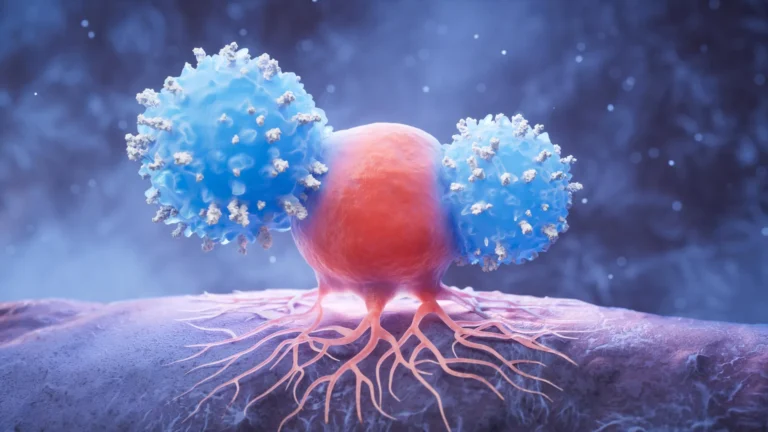
In a significant leap forward for medical science, researchers at the MRC Laboratory of Medical Sciences (LMS) and Imperial College London have uncovered a critical vulnerability in "senescent" cells—often referred to in the scientific community as "zombie cells." This breakthrough, published in Nature Cell Biology, promises to reshape our approach to cancer therapy and the management of age-related degenerative diseases. By identifying a specific protein that acts as a life-support system for these harmful cells, scientists have paved the way for a new class of drugs that could effectively "purge" these cells from the body.
The Nature of the "Zombie" Cell
To understand the significance of this discovery, one must first understand the paradoxical role of senescence. For decades, cellular senescence was viewed primarily as a biological safety mechanism. When cells become damaged or undergo stress—such as during the onset of cancer—they enter a state of permanent growth arrest. By stopping their division, the body prevents these potentially damaged cells from replicating into a tumor.
However, recent research has unveiled a darker reality. While these cells stop dividing, they do not simply vanish. Instead, they remain in a state of suspended animation, accumulating in the body and adopting a "secretory phenotype." They begin to release a cocktail of inflammatory molecules, growth factors, and enzymes that wreak havoc on the surrounding tissue.
These secretions can induce chronic inflammation, facilitate the metastasis of nearby cancer cells, and recruit immune cells that inadvertently promote tumor aggressiveness. Furthermore, these cells are heavily implicated in the aging process and conditions like fibrosis. As lead author Mariantonietta D’Ambrosio notes, while chemotherapy is designed to induce senescence to stop tumor growth, the long-term presence of these residual zombie cells can actually create a more hospitable, inflammatory environment for cancer to thrive in later stages.
Chronology of the Discovery
The path to this discovery was one of massive scale and rigorous chemical screening. The research team, collaborating with the Department of Medicinal Chemistry at Imperial College London, sought to identify "senolytic" therapies—drugs specifically designed to induce the death of senescent cells without harming healthy, functional cells.
Phase 1: High-Throughput Screening
The team initiated a massive undertaking, screening a library of 10,000 unique chemical compounds against both healthy and senescent cell populations. This was not a random search; the researchers focused on "covalent compounds." Unlike standard drugs that might bind loosely to a protein, covalent compounds form a permanent, irreversible chemical bond with their target. This allows scientists to "lock" onto proteins that were previously considered "undruggable" due to their complex or inaccessible structures.
Phase 2: Identifying the Target
Out of the 10,000 candidates, four emerged as highly effective at selectively eliminating senescent cells. Upon further analysis, the team discovered that three of these four compounds converged on a single, critical target: the protein GPX4.
Phase 3: Validation in Mouse Models
With the target identified, the team transitioned to in vivo testing. Utilizing three distinct mouse models of cancer, the researchers administered these GPX4-targeting compounds. The results were consistent and profound: the drugs significantly reduced tumor volume and, crucially, extended the survival rates of the subjects.
Supporting Data: The GPX4 and Ferroptosis Mechanism
The core of this discovery lies in the concept of "ferroptosis"—a unique form of programmed cell death characterized by the iron-dependent accumulation of lipid peroxides.
Senescent cells exist in a state of extreme metabolic stress. To survive this constant internal damage, they produce abnormally high levels of the protein GPX4. GPX4 acts as a biological shield, neutralizing the reactive oxygen species that would otherwise trigger ferroptosis.
D’Ambrosio uses a vivid analogy to explain this relationship: "It’s like taking painkillers while continuing to run on a badly injured ankle. The structural damage remains, but the symptoms are suppressed." By using their covalent compounds to block the GPX4 "painkiller," the researchers essentially force the senescent cells to face the reality of their own internal damage, triggering a rapid and fatal onset of ferroptosis. This mechanism is highly selective, as healthy cells typically do not rely on such elevated levels of GPX4 to maintain homeostasis, thereby minimizing the toxic "off-target" effects often associated with chemotherapy.
Official Perspectives and Expert Insight
The implications of this research were underscored by the team at the MRC Laboratory of Medical Sciences (LMS). Professor Jesus Gil, head of the Senescence group, emphasized that while the initial results are promising, the transition from lab bench to clinical application requires a nuanced understanding of the systemic effects of these drugs.
"In mouse models, we saw that these drugs reduced tumor size and improved survival," Professor Gil stated. "However, the next frontier is understanding the interaction with the immune system. We need to determine if this therapy is doing more than just killing the bad cells—we want to know if it is also ‘awakening’ the positive aspects of the immune response, such as T-cells and natural killer cells, to further bolster the body’s fight against the tumor."
D’Ambrosio adds that the strategy is not intended to replace existing treatments, but to serve as a powerful force multiplier. "Targeting senescence is a huge opportunity for cancer treatments, and ultimately it can play a supporting role in addition to chemotherapy and immunotherapy," she noted.
The study also highlights the international effort required for such a breakthrough, with contributors including the Institute of Oncology Research (IOR) in Switzerland and the M3 Research Centre at the University of Tübingen in Germany.
Implications for Future Medicine
The discovery of GPX4-targeted senolytics opens several transformative possibilities for clinical medicine:
1. Combination Therapy
One of the most immediate applications is the integration of senolytics with standard chemotherapy. Since chemotherapy often increases the burden of senescent cells, administering a GPX4 inhibitor during or immediately after a chemotherapy cycle could "clean up" the remaining zombie cells, potentially preventing tumor recurrence and reducing the side effects associated with post-treatment inflammation.
2. Precision Oncology
Professor Gil pointed out that the next step involves identifying which patient profiles would benefit most from this approach. By screening for patients who exhibit high GPX4 expression in their tumors or surrounding microenvironments, clinicians could move toward a more personalized, precision-medicine approach, ensuring that these drugs are used where they are most likely to be effective.
3. Beyond Cancer: Age-Related Degeneration
While the current study focused on cancer, the implications for gerontology are profound. Senescent cells are known to accumulate in organs as we age, contributing to everything from cardiovascular disease and chronic inflammation to neurodegeneration. If a therapy can safely eliminate these cells without damaging healthy tissue, it could potentially delay or alleviate a host of age-related conditions, fundamentally changing how we approach the biology of aging.
Conclusion: A New Strategy
The identification of the GPX4-ferroptosis axis provides a concrete, targetable vulnerability in a cell type that has long been a clinical nuisance. By moving away from general cytotoxicity and toward the targeted elimination of senescent "zombie" cells, the scientific community is entering a new era of cancer care.
While the journey from mouse models to human trials is rigorous, the ability to selectively purge these detrimental cells represents a sophisticated evolution in oncology. As research continues to unravel the complex relationship between senescence, the immune system, and tumor biology, the work of the LMS and their international partners stands as a testament to the power of high-throughput chemical screening and a deeper, more mechanistic understanding of cellular life and death. The "zombie" cells may have finally met their match.