










The U.S. Food and Drug Administration (FDA) finds itself in a state of administrative flux following the sudden resignation of Commissioner Marty Makary, MD, MPH, last week. The departure has triggered an immediate search for a successor, with the administration reportedly weighing a roster of familiar faces from the first Trump term. While the agency currently navigates this transition under temporary leadership, the path toward a permanent appointment remains clouded by complex political dynamics, the shadow of past controversies, and the upcoming midterm election cycle.
The Current State of Play: A Stabilizing Hand
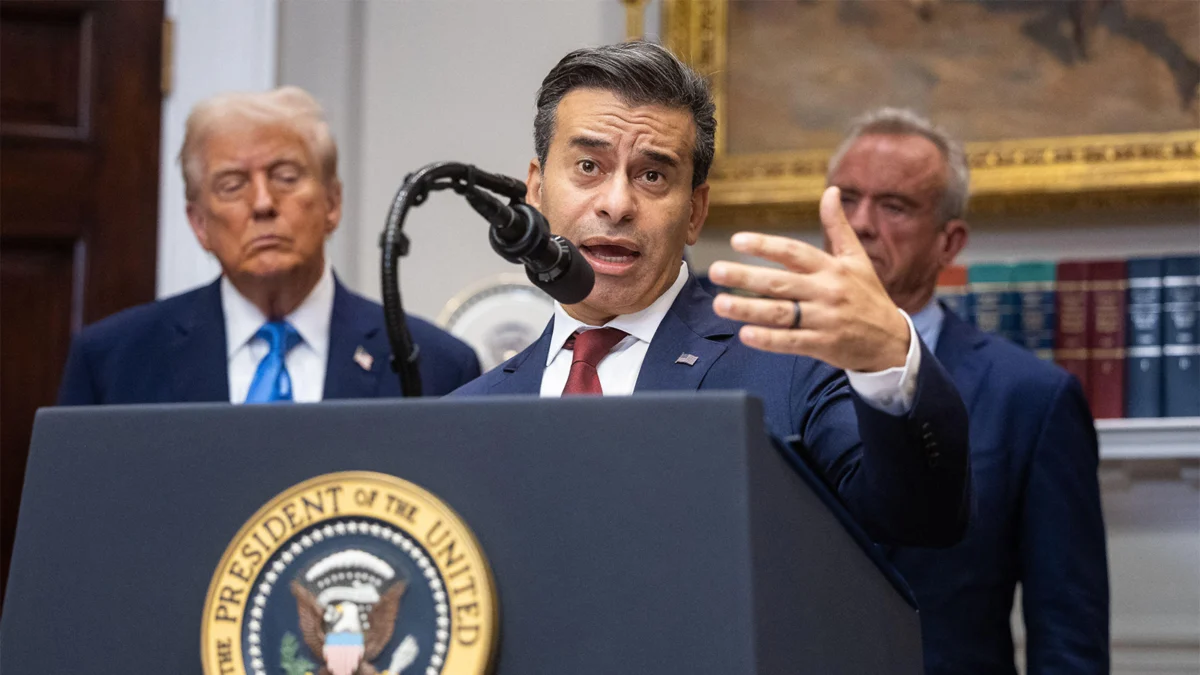
In the wake of Dr. Makary’s exit, the mantle of authority has passed to Kyle Diamantas, JD, who previously served as the FDA’s deputy commissioner for food. As the new acting commissioner, Diamantas faces the immediate challenge of maintaining the agency’s complex regulatory machinery while the administration determines its long-term strategy.
Diamantas, a graduate of the University of Florida Levin College of Law, brings a background rooted in legal and political stakeholder management rather than traditional clinical medicine. According to his official agency biography, his career has been defined by navigating the intersections of industry, law, and policy.
Steven Grossman, an FDA regulatory and policy consultant and author of the industry-influential blog FDA Matters, views the appointment of Diamantas as a tactical move toward stabilization. "Diamantas is a stabilizing choice," Grossman noted, arguing that while he lacks a medical degree, the agency is inherently structured to provide him with the necessary scientific and clinical expertise. "There are plenty of doctors at the FDA to offer him advice. As a lawyer, he may be uniquely inclined to adhere to the agency’s traditional, established decision-making processes—a sharp contrast to the more volatile approach seen under his predecessor."
Chronology of Contenders: The Search for a Permanent Successor
The list of potential nominees to replace Dr. Makary reads like a "who’s who" of the previous administration’s health leadership. While the White House has yet to confirm any formal shortlist, the names of three prominent physicians—Stephen Hahn, MD, Brett Giroir, MD, and Ned Sharpless, MD—have surfaced in political circles.
Stephen Hahn, MD
Dr. Hahn served as the FDA commissioner from December 2019 through January 2021. His tenure was marked by the overwhelming challenges of the COVID-19 pandemic. A former chief medical executive at the University of Texas MD Anderson Cancer Center, Hahn possesses an extensive research background, boasting hundreds of peer-reviewed publications. However, his previous stint at the agency was not without friction; he faced significant public criticism during the early pandemic for the emergency use authorization (EUA) of hydroxychloroquine, a decision he later defended as being made under intense pressure from the White House. Following the January 6 Capitol riot, Hahn reportedly considered resignation, highlighting the tension between his scientific independence and the political demands of his office.
Brett Giroir, MD
A four-star admiral in the U.S. Public Health Service Commissioned Corps, Dr. Giroir is well-versed in the bureaucracy of Washington. He served as the Assistant HHS Secretary from 2018 to 2021 and acted as the national "testing czar" during the height of Operation Warp Speed. His familiarity with the agency, coupled with his brief stint as acting commissioner in late 2019, makes him a candidate with a proven operational track record.
Ned Sharpless, MD
Dr. Sharpless offers a different profile, having spent his career largely in academic and research-heavy leadership roles. He served as the acting FDA commissioner for much of 2019 and held the position of director of the National Cancer Institute (NCI) from 2017 to 2022. Prior to his government service, he led the University of North Carolina Lineberger Comprehensive Cancer Center. His experience in steering the NCI provides him with a deep understanding of oncological research, a core component of the FDA’s mandate.
The "Makary Era" and the Return to Protocol
The urgency to find a steady hand at the FDA is partly a reaction to the departure of Dr. Makary, whose leadership style sparked significant internal and external debate. During his tenure, the FDA moved away from traditional advisory committee pathways, frequently utilizing ad-hoc "expert panels" to bypass standard scientific review processes.
Critics argued that these panels often lacked transparency and were prone to "cherry-picking" evidence and participants, leading to a erosion of trust in the agency’s regulatory conclusions. The shift toward a more process-driven leadership under an acting commissioner like Diamantas is seen by many in the regulatory community as a necessary "reset." As Grossman noted, the FDA possesses a distinct "DNA"—a culture defined by listening to stakeholders, adhering to rigorous scientific standards, and engaging in transparent, deliberative decision-making.
Strategic Implications and the Midterm Shadow
Despite the circulation of high-profile names, political analysts remain skeptical about a swift confirmation. The nomination process for an FDA commissioner is a high-stakes affair that requires rigorous Senate vetting, and the political climate is currently fraught with landmines.
"All the obvious candidates are unlikely to be able to run the gauntlet of competing positions to satisfy the White House, be Senate-confirmable, and contribute, or at least not detract from, Republican Congressional wins in the midterms," Grossman explained.
The FDA’s role has become increasingly entangled with contentious social and legal issues. For instance, the ongoing litigation surrounding access to the abortion drug mifepristone—specifically the Louisiana lawsuit—serves as a flashpoint for any nominee. A confirmation hearing would inevitably force a candidate to take a public stance on this and other hot-button issues, potentially alienating key voting blocs just as the party enters a crucial election cycle.
Consequently, the administration may prefer to leave the agency under acting leadership for months. Under current legal guidelines, Diamantas can legally occupy the acting role well past the midterm elections, effectively insulating the White House from a bruising and unpredictable confirmation battle.
Institutional Integrity and Future Expectations
Looking ahead, the primary concern for the scientific community remains the preservation of the FDA’s institutional integrity. The agency’s credibility hinges on its ability to act as an impartial arbiter of safety and efficacy.
"The goal is to be sure that the nominee for permanent commissioner has serious clinical medical or public health credentials," Grossman emphasized. "Any nominee who understands the agency’s history of transparency and commits to it will have started on the path to being a successful FDA commissioner."
However, whether the administration prioritizes a candidate with impeccable scientific credentials or one who can navigate the political tightrope of the current environment remains an open question. For now, the FDA continues to operate under the stewardship of a legal professional, waiting for the political dust to settle before a permanent appointment is made.
As the agency moves forward, the focus will undoubtedly be on the delicate balance between responding to the directives of the Executive Branch and maintaining the scientific rigor that the global medical community expects of the FDA. The transition period, while uncertain, provides a rare window for the agency to reaffirm its core mission: protecting public health through evidence-based, transparent, and consistent regulatory action. Whether the incoming permanent commissioner—whoever they may be—can restore the agency’s traditional procedural harmony while navigating an increasingly polarized political landscape will be the defining challenge of the next administration.