







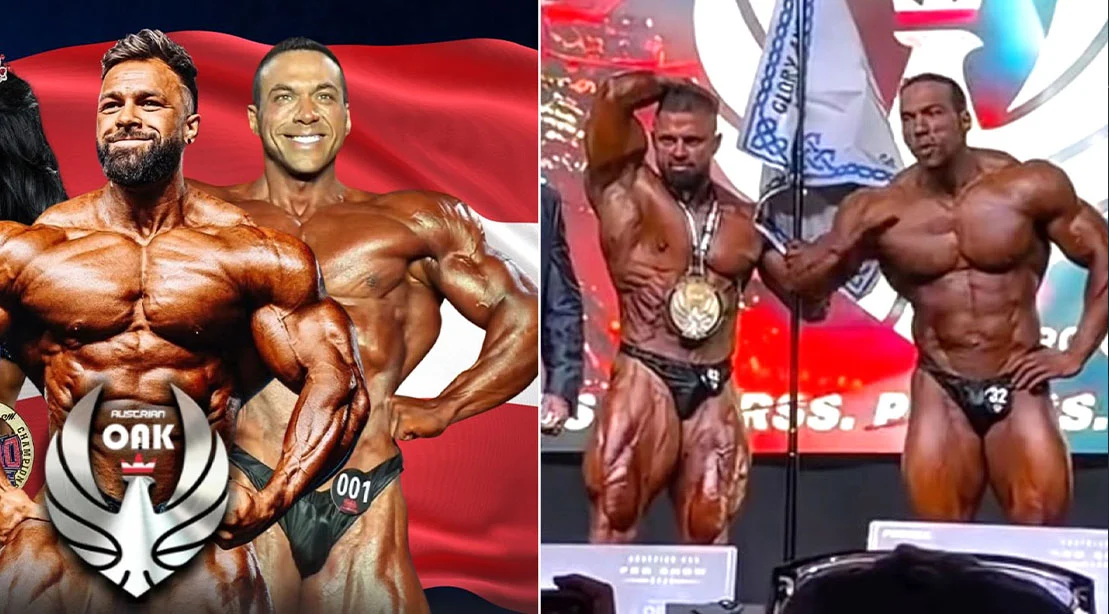
The bodybuilding world turned its eyes to Europe this past weekend as the 2026 Austrian Oak Pro took center stage, serving as a pivotal qualifier for the upcoming Joe Weider’s Olympia Fitness & Performance Weekend. While the event was defined by the triumphant performance of French-Canadian star Regan Grimes, who successfully punched his ticket to Las Vegas, the atmosphere in the arena was sharply divided by a rare and heated display of professional misconduct that has since ignited debate across the industry.
The Path to Victory: Regan Grimes Reclaims the Spotlight
On August 24, 2026, the Austrian stage became the site of a career-defining performance for Regan Grimes. In the highly competitive Open Bodybuilding division, Grimes presented a physique that balanced mass with the aesthetic flow that has become his signature. Facing off against a roster of elite competitors, including a formidable Damian Kuffel and the physically imposing Joan Pradells, Grimes demonstrated the conditioning and maturity required to stand at the top of the podium.
Grimes, who has been a consistent presence in the upper echelons of the sport, navigated the lineup with precision. His victory was not merely a win on the scorecards; it was a testament to his tactical evolution as an athlete. By securing the top spot, Grimes officially confirmed his presence at the 2026 Mr. Olympia, set to take place in Las Vegas from September 24 to 27. As he exited the stage, trophy in hand, his message was clear and concise: "We’re going to the Olympia."
The podium in the Open division was rounded out by Damian Kuffel, whose runner-up finish marks a significant climb in his professional standing, and Joan Pradells, who took home third place after a hard-fought battle. For the fans in attendance, the Open category provided the high-octane spectacle expected from an Olympia qualifier, setting a high bar for the remainder of the season.
Chronology of an On-Stage Meltdown: The Classic Physique Incident
While the Open division celebrated its champion, the Classic Physique category devolved into a scene that sent shockwaves through the audience and the officiating panel. The drama centered on Michael Daboul, a perennial contender who found himself in an unfamiliar position: third place.
The evening began with the typical pageantry of a professional bodybuilding show. As the results were finalized, it became clear that Bulgarian bodybuilder Zhivko Petkov had captured the hearts of the judges, earning the first-place trophy. Germany’s Florian Hartlage followed closely in second, leaving Daboul to round out the top three.
What followed was an unprecedented display of frustration. Upon the announcement of the results, Daboul did not offer the traditional sportsman-like gesture of congratulating his peers. Instead, he turned his ire directly toward the judging panel. Witnesses reported that Daboul began to audibly berate the judges, questioning their criteria and the integrity of the decision.
The situation escalated when Daboul attempted to walk off the stage in an act of open protest. Security and event officials were forced to intervene, eventually persuading the athlete to return to the center of the stage for the final photography session. However, the tension remained palpable. During the official photos, Daboul refused to cooperate with the staff, standing with his hands on his hips while Petkov attempted to maintain his composure and celebrate his victory. The standoff left a lingering shadow over the ceremony, turning a moment of celebration for Petkov into a display of professional disharmony.
Analysis: The Weight of Professional Expectations
In the world of professional bodybuilding, the judge’s decision is final, yet the subjective nature of the sport often leads to intense debates. However, the distinction between private frustration and public spectacle is a line that the IFBB Pro League strictly guards.
The incident involving Michael Daboul raises critical questions regarding athlete conduct. Bodybuilding is a sport of extreme discipline, but it is also a performance art that relies on the decorum of the stage. When an athlete chooses to protest a result in such a visceral, public manner, it challenges the authority of the governing bodies and potentially undermines the credibility of the event.
Industry experts note that while athletes pour their entire lives into their preparations—often undergoing months of grueling training and restrictive dieting—the emotional toll is high. However, the expectation of professionalism remains constant. The incident in Austria serves as a cautionary tale for competitors regarding the importance of "grace under pressure."
Official Responses and the Road to Redemption
Following the backlash on social media and within the bodybuilding community, Michael Daboul issued an official apology via his Instagram account later that evening. The statement was a candid acknowledgment of his lapse in judgment.
"I really apologize for the way I reacted after the result," Daboul stated. "I let my emotions take control of me and that is not how I want to represent myself as a professional athlete."
The apology is a necessary first step in what will likely be a period of reflection for the athlete. While the IFBB has not yet announced formal sanctions, such public outbursts often carry the risk of fines or temporary suspensions. The bodybuilding community, while divided, largely appreciates the transparency of the apology, noting that athletes are human and that the pressure of an Olympia qualifier can push even the most seasoned veterans to their limits.
Implications for the 2026 Olympia
As the dust settles, the focus of the bodybuilding world shifts back to the upcoming Olympia weekend in Las Vegas. The inclusion of Regan Grimes in the lineup adds a compelling narrative to the Open category. His victory in Austria suggests he is entering the final stage of his preparation with the momentum needed to challenge the world’s best.
For the Classic Physique division, the incident in Austria has inadvertently increased interest in future matchups. Fans are now keen to see how the judging panel responds to the event’s fallout and whether the athletes involved can channel their energy into their performances rather than their politics.
The 2026 Olympia is shaping up to be one of the most competitive in recent history. With qualifiers like the Austrian Oak Pro providing both high-level athleticism and the occasional dose of volatility, the stage is set for a historic showdown.
Looking Ahead: The Evolution of Professional Bodybuilding
The 2026 season has been marked by a series of high-stakes qualifiers, each contributing to the narrative of the sport’s evolution. Athletes like Patrick Moore, who recently secured his own path to the Olympia, and the rising stars seen in Austria, are defining the future of the IFBB Pro League.
As the industry grows, the demands on athletes increase. The role of the media, the influence of social media, and the constant scrutiny of fans mean that athletes are under more pressure than ever before. Yet, the core of the sport remains: the pursuit of physical perfection, the mastery of the mind, and the spirit of competition.
As we look toward Las Vegas, the lessons from the Austrian Oak Pro are clear. Success in this sport requires more than just the perfect physique; it requires the mental fortitude to accept the judge’s decision, the humility to respect one’s fellow competitors, and the professional integrity to uphold the standards of the sport. Whether it is the triumphant rise of a new contender or the raw, unfiltered emotions of a disappointed athlete, the drama of the 2026 season is what continues to make bodybuilding one of the most compelling sports in the world.
For fans and enthusiasts, the road to the Olympia is long, but the milestones are worth the wait. With the Austrian Oak Pro now in the rearview mirror, the countdown to Las Vegas officially begins. The athletes are ready, the stakes are high, and the world is watching to see who will be crowned the best in the world.