











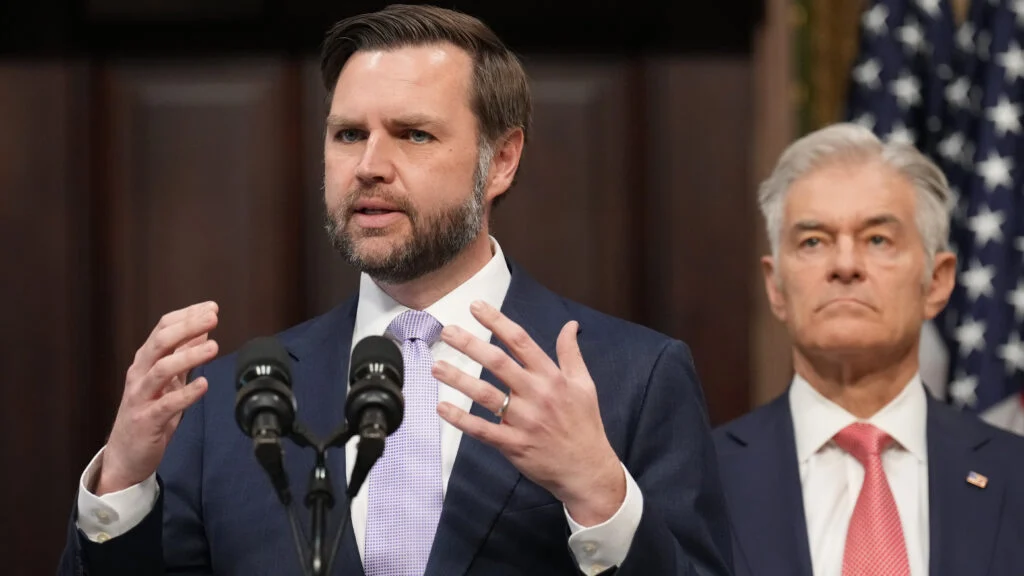
WASHINGTON — In a major expansion of the Trump administration’s aggressive oversight of federal health programs, Vice President JD Vance announced on Wednesday a sweeping series of initiatives designed to root out systemic fraud. The centerpiece of this enforcement effort is a $1.3 billion deferral in Medicaid reimbursements to California, a move federal officials describe as a necessary measure to ensure fiscal accountability in one of the nation’s largest state health programs.
The announcement, delivered during a high-profile press event at the White House, signals a pivot toward more punitive federal intervention in state-managed health dollars. "These fraudulent health care providers are getting rich by giving people medications they don’t even need," Vice President Vance stated, emphasizing that the administration views such exploitation as a direct theft from American taxpayers and the vulnerable beneficiaries who rely on these programs for survival.
The Scope of the Crackdown
Beyond the immediate deferral of California’s Medicaid funds, the administration is implementing a nationwide six-month moratorium on new Medicare enrollments for specific hospice and home health care providers. Furthermore, the Department of Health and Human Services (HHS) has issued stern warnings to state attorneys general across the country, cautioning that failure to proactively investigate Medicaid fraud could result in the withholding of federal financial support.
These maneuvers are the latest—and most significant—actions taken by the administration’s interagency anti-fraud task force. Since its inception, the task force has become a cornerstone of the White House’s domestic policy, serving as both a mechanism for fiscal belt-tightening and a potent political tool as the administration approaches the November elections.
Chronology: A Months-Long Campaign of Oversight
The current escalation is the culmination of a deliberate strategy deployed over the last several months to assert tighter federal control over health expenditures.
- Early 2025: The administration establishes the anti-fraud task force, tasking it with auditing high-risk payment patterns in Medicare and Medicaid.
- Spring 2025: CMS begins targeting specific sectors, including durable medical equipment suppliers, issuing localized moratoriums to prevent “bad actors” from entering the Medicare system.
- April 2025: A controversy erupts when CMS is forced to admit to significant errors in the data used to justify a high-profile fraud investigation in New York, casting a shadow over the administration’s methodology.
- May 2025: CMS announces a mandate requiring all 50 states to submit detailed plans on how they intend to revalidate their Medicaid provider networks.
- June 2025: The administration halts $243 million in Medicaid payments to Minnesota and initiates inquiries in at least four other states.
- Wednesday, June 2025: Vice President Vance announces the $1.3 billion California deferral and a nationwide hospice/home care enrollment freeze.
Supporting Data: Why California is in the Crosshairs
The $1.3 billion deferral represents the largest single-instance withholding of Medicaid funds in the history of the program. Dr. Mehmet Oz, who leads the Centers for Medicare and Medicaid Services (CMS), defended the move by citing a lack of transparency regarding how California’s state health department handles certain "outlier" payments.
"We’d like the state to at least come to the table and explain to us how these outlier payments have been generated," Dr. Oz said. The scale of the issue is significant; California’s total Medicaid program—a joint state and federal endeavor—is projected to cost approximately $222 billion for the fiscal year beginning July 1.
Federal officials argue that their use of "advanced data analytics" has identified patterns of billing that deviate significantly from national averages, suggesting that these funds may be vulnerable to abuse. While the administration points to these statistics as evidence of success, the lack of immediate, granular detail regarding the specific providers targeted in California has fueled concerns about the potential for collateral damage to legitimate healthcare institutions.
Official Responses and Political Implications
The administration’s aggressive posture has drawn a mixed reaction from stakeholders across the healthcare landscape.
The Administration’s Stance
Vice President Vance, widely viewed as a potential 2028 presidential contender, has used his oversight assignment to bolster his profile as a fiscal hawk. By focusing on the "clawing back" of taxpayer dollars, Vance is attempting to connect with voters grappling with the dual pressures of inflation and rising healthcare costs. He is scheduled to take this message to Maine on Thursday, where the administration’s focus on accountability is expected to be a key theme in local primary election discourse.
Provider and Industry Concerns
Industry experts are largely supportive of the goal of fraud reduction but are increasingly critical of the method. Tricia Neumann, a senior vice president at the nonprofit KFF, noted that while the six-month moratorium is not without precedent—referencing similar actions during the Clinton administration—the breadth of the current federal push is unprecedented.
"A brief moratorium gives the administration time to crack down on true fraud and prevent new fraudulent entities from popping up," Neumann observed. However, representatives for healthcare providers have raised alarms that these "catchall" measures may disproportionately penalize law-abiding clinics and home health agencies that are already struggling under the weight of administrative compliance.
State-Level Silence
The office of California Governor Gavin Newsom and the state’s Department of Finance remained notably quiet in the immediate aftermath of the announcement, having not yet provided a formal response to the $1.3 billion deferral. This silence is interpreted by political analysts as a sign that state officials are currently assessing the legal avenues available to challenge the federal government’s authority to withhold these specific funds.
Implications for the Future of Healthcare Access
The broader context of these actions is a domestic landscape defined by increasing anxiety over healthcare costs and accessibility. Critics of the Trump administration argue that while the anti-fraud initiative is politically popular, it may be masking the negative impacts of other policies.
For instance, the implementation of new, stringent work requirements for Medicaid eligibility is expected to result in millions of enrollees losing their health coverage nationwide. Critics contend that the administration’s focus on fraud is an attempt to deflect attention from the fact that its broader health policy changes are expected to strain hospital systems and reduce coverage for the working poor.
The Risk of Overreach
The controversy surrounding the New York investigation—where CMS acknowledged erroneous figures—remains a cautionary tale for the administration. Skeptics argue that the "attack first, confirm later" strategy risks undermining the credibility of the task force. If the administration continues to face setbacks in justifying its actions, the legal and political cost of these initiatives could eventually outweigh the savings.
As the administration continues its push, the focus remains on whether these aggressive tactics will succeed in weeding out corruption or if they will result in a fragmented healthcare system where the most vulnerable—both patients and honest providers—suffer the consequences of a systemic, top-down crackdown. With federal agencies now demanding more rigorous revalidation processes from all 50 states, the administrative burden on state governments is likely to grow, setting the stage for a protracted battle over the limits of federal authority in the oversight of state-managed public health.