In the high-stakes arena of oncology, the battle against breast cancer has traditionally focused on the most visible enemy: the rapidly dividing cells that fuel tumor growth. However, a groundbreaking study published in the journal Genome Medicine has unveiled a hidden, more insidious threat lurking within the tumor microenvironment. Researchers from the MRC Laboratory of Medical Sciences (LMS), Imperial College London, and the UCL Genetics Institute have constructed the first detailed cellular map of breast tumors, revealing that dormant cancer cells—long suspected of driving recurrence—are not merely hiding; they are being actively protected by a specialized "neighborhood" of immune and connective tissue cells.
This discovery challenges the fundamental approach to cancer therapy, suggesting that for treatment to be truly curative, it must evolve from a singular focus on cell proliferation to a multifaceted strategy that disrupts the protective ecosystems housing dormant, treatment-resistant cells.
The Landscape of the Tumor: A Complex Ecosystem
To the naked eye, a tumor is often viewed as a singular, aggressive entity. In reality, a breast tumor is a complex, chaotic metropolis. While rapidly multiplying cancer cells constitute the primary engine of tumor expansion, they exist alongside a diverse array of supporting cells, including blood vessels, immune cells, and fibroblasts.
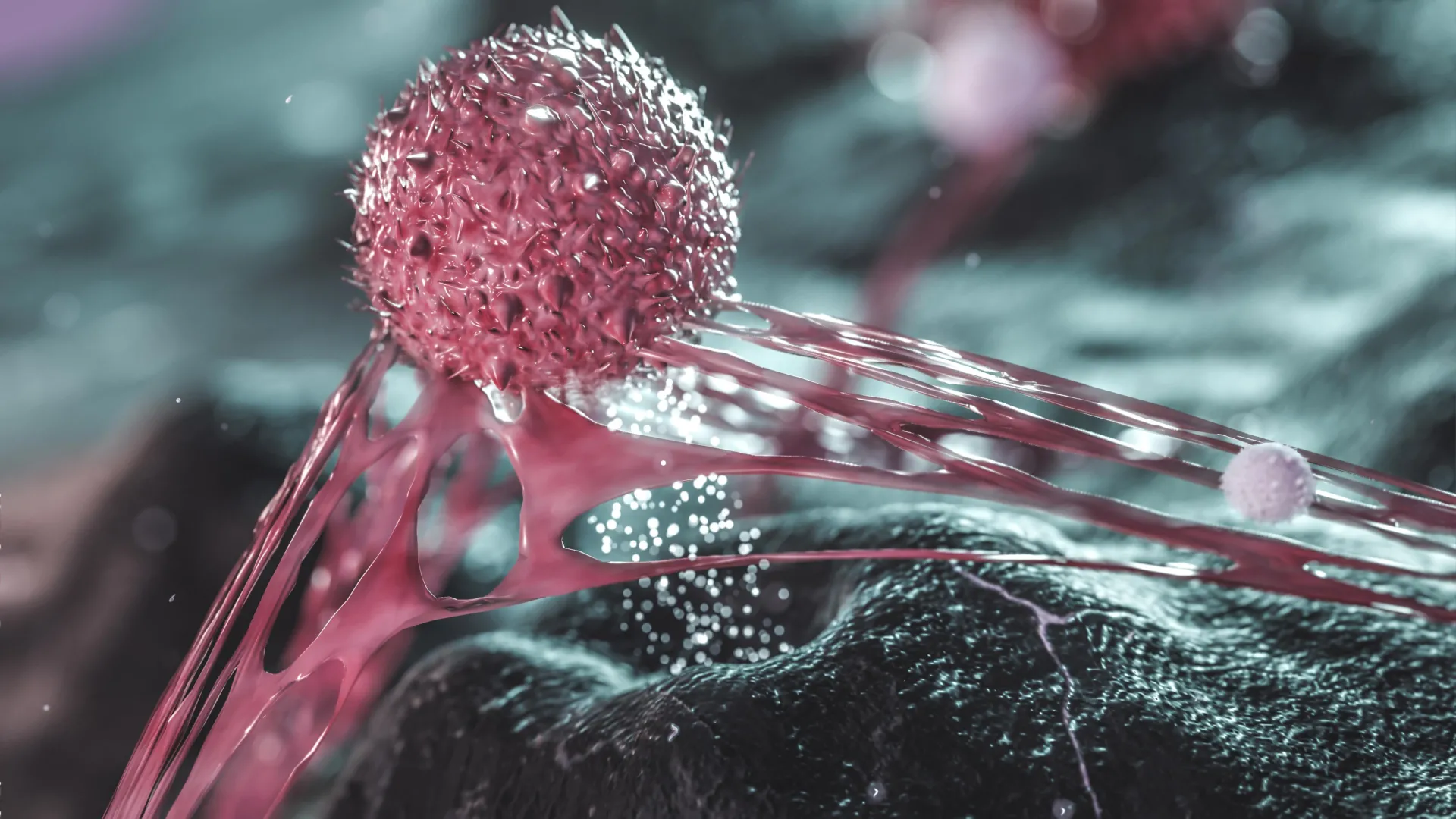
Within this biological city, there exists a subset of cancer cells known as "quiescent" or dormant cells. Unlike their proliferative counterparts, these cells have effectively hit the "pause" button on their cell cycle. While they remain inactive, they are not dead. Instead, they exist in a state of metabolic hibernation, waiting for the right environmental cues to reactivate and resume growth. This ability to evade detection—and destruction—is what makes them a primary suspect in the phenomenon of cancer relapse, where disease returns years, or even decades, after successful initial treatment.
Chronology of the Research: Mapping the Invisible
The road to this discovery began with a collaborative effort to bridge the gap between computational biology and clinical observation. Dr. Alexis Barr, head of the Cell Cycle Control group at the MRC LMS, and Dr. Maria Secrier, who leads a computational biology team at UCL, spearheaded the project with a singular goal: to identify exactly where these dormant cells live and who their "neighbors" are.
Phase 1: Integrating Data
The researchers utilized publicly available single-cell RNA sequencing data to identify the gene expression profiles of individual cells within breast tumors. By analyzing which genes were active, they could distinguish between cells that were actively dividing and those that had entered a state of quiescence.
Phase 2: Spatial Transcriptomics
Knowing the identity of the cells was only half the battle; the team needed to understand their geography. Using spatial transcriptomics, the researchers mapped these cells back onto the physical architecture of the tumor. This allowed them to observe not just the presence of dormant cells, but their proximity to other cell types.
Phase 3: Pattern Recognition
As the maps emerged, a striking, consistent pattern appeared across both aggressive and slower-developing breast cancers. Dormant cells were not randomly scattered; they were found in distinct clusters, consistently surrounded by specific types of immune cells known as CXCL10-positive macrophages and tumor-supporting fibroblasts. This architectural organization suggested that the tumor environment is not a chaotic mess, but a highly structured, strategic defensive formation.
Supporting Data: The Anatomy of a Shield
The research provides a compelling look at the symbiotic relationship between dormant cancer cells and their surroundings. The findings suggest that the tumor microenvironment is intentionally or adaptively modified to ensure the survival of these quiescent cells.
The Protective "Shield"
The study identifies that these dormant cells are often "encapsulated" by macrophages and myofibroblastic cancer-associated fibroblasts. These cells appear to act as a physical or biological barrier, potentially shielding the dormant cancer cells from the reach of chemotherapy drugs or the surveillance of the body’s own immune system.
Existing Resistance
Perhaps most surprising was the discovery that these therapy-resistant pockets exist before any treatment is administered. This contradicts the long-held assumption that resistance is solely an evolutionary response to chemotherapy. Instead, it appears that the tumor builds its own "bunkers" from the very beginning of its development, pre-loading the cancer with a survival mechanism that is triggered once the "war" (treatment) begins.
Official Perspectives: Decoding the Implications
The researchers involved in the study emphasize that this discovery changes the way we must view the "enemy."
Dr. Alexis Barr, co-lead author, highlights the urgency of addressing this dormant population. "Quiescent cancer cells are very dangerous," she explains. "These cells can hide from chemotherapy and then remain in this dormant quiescent state in the tumor, and then later reactivate to drive proliferation." According to Dr. Barr, the analogy of a hibernating bear is apt—these cells wait for the hostile environment (treatment) to pass before they re-emerge to resume their path of destruction. "If we want to achieve long-term control of peoples’ tumors and prevent tumor relapse, we have to focus on these dormant quiescent cancer cells," she adds.
Dr. Maria Secrier, who co-led the research, points to the potential for novel therapeutic interventions. "The cancer cells are really encapsulated within these areas of macrophages and fibroblasts that we think act as shields," she notes. Dr. Secrier emphasizes the complexity of this interaction: "We don’t yet know the direction of cause and effect: whether the surrounding cells push cancer cells into dormancy or if the cancer cells attract or alter their surroundings. It’s very likely coming from both sides."
Implications for Future Cancer Therapies
The study’s findings are a clarion call for a shift in how we design cancer drugs. If a tumor contains two distinct populations—one rapidly dividing and one dormant—it is unlikely that a single therapy will suffice.
Beyond Proliferation
Current chemotherapy regimens are largely designed to kill rapidly dividing cells by disrupting the cell cycle. By definition, dormant cells are immune to these drugs because they are not dividing. The new research suggests that future clinical strategies must target:
- The Dormant Cells Directly: Developing therapies that force dormant cells out of their "hibernation" so they can be targeted by conventional chemotherapy.
- The Microenvironment: Attacking the "shielding" macrophages and fibroblasts. If the support network is dismantled, the dormant cancer cells may lose their protection and become vulnerable to the immune system or standard treatment.
- The Complement Pathway: The researchers identified increased activity in the complement pathway—part of the immune system—within these dormant niches. This specific pathway could serve as a "druggable" target to disrupt the survival signals being sent to the quiescent cells.
The Era of Combination Therapy
The vision for the future is one of "precision combination therapy." As Dr. Secrier notes, "Different parts of the tumor will likely respond to different drugs. If we understand what drug combinations we can use to target both the proliferative and the dormant areas, potentially that could be more successful than current therapies."
This research marks a significant departure from the "one-size-fits-all" model. By providing the first high-resolution map of these hidden cellular neighborhoods, the LMS and UCL teams have provided a roadmap for a new generation of cancer research. While experimental validation in clinical trials remains the next critical step, the path forward is clearer: we must stop fighting the tumor as a whole and start dismantling the individual fortresses that allow cancer to survive, hide, and eventually return.
This foundational work was primarily supported by the UKRI Future Leaders Fellowship, the Medical Research Council, and the Biotechnology and Biological Sciences Research Council.