




WASHINGTON, D.C. — In what is being hailed as a pivotal moment for student-led health policy, Active Minds, the nation’s leading nonprofit organization promoting mental health awareness for young adults, has announced the details of its 2026 Hill Day and National Conference. This year, the organization is pivoting from traditional awareness-building toward direct legislative mobilization, bringing over 200 youth advocates to the halls of Congress to champion the "Campus Lifeline Act."
As the mental health crisis among Gen Z continues to escalate, the 2026 conference represents a strategic shift. By combining community building with high-stakes political advocacy, Active Minds aims to move the needle on federal support for college students, ensuring that mental health resources are not just available, but institutionalized through bipartisan legislation.
Main Facts: The Legislative Push for the Campus Lifeline Act
The cornerstone of the 2026 mobilization is the Campus Lifeline Act, a bipartisan bill designed to address the systemic gaps in mental health support within higher education. Led by the very demographic it serves, the act focuses on two primary pillars intended to modernize the way universities handle psychological crises.
First, the bill seeks to mandate the inclusion of the 988 Suicide & Crisis Lifeline on all newly issued student identification cards. Proponents argue that by placing this resource literally in the pockets of millions of students, the barrier to seeking help during a moment of acute distress is significantly lowered.
Second, the legislation calls for a substantial increase in federal investment toward youth-informed mental health strategies. Unlike previous top-down approaches, this act requires that strategies implemented on campuses be developed in consultation with students themselves, ensuring that the programs are culturally competent and relevant to the specific stressors of modern campus life.
"Youth and young adults are facing unprecedented mental health challenges," an Active Minds representative stated. "Action is no longer a luxury; it is a necessity. The Campus Lifeline Act gives young people a seat at the table, allowing them to lead the solutions to the problems they live through every day."
Chronology of the Event: From Advocacy to Action
The 2026 conference is structured to take advocates on a journey from the steps of the Capitol to the collaborative spaces of the conference hall, blending political engagement with professional development.
The Morning: Boots on the Ground
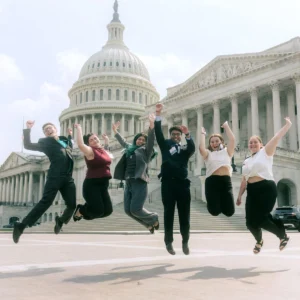
The event begins with "Hill Day," where more than 200 trained student advocates from across the country meet with legislators and their staffers. These meetings are the culmination of months of preparation by the Active Minds Advocacy Institute, where students learn how to share their lived experiences in ways that resonate with policymakers. The goal is to secure co-sponsors for the Campus Lifeline Act and to humanize the statistics often cited in budget hearings.
The Afternoon: Social Mobilization and Digital Advocacy
Following the meetings on Capitol Hill, the focus shifts to digital and community mobilization. Recognizing that modern advocacy requires a "phygital" (physical and digital) approach, the conference features brand activations with partners like ENOUGH. These sessions are designed to take the energy of the morning’s in-person meetings and amplify them through social media challenges, ensuring that the call for mental health reform trends across digital platforms.
The Evening: Connection and Reflection
As the sun sets, the "Social Hour" begins—a space dedicated to networking and professional growth. This segment includes several unique stations:
- Cause + Career Headshots: Recognizing that advocacy is often a stepping stone to professional careers in public health and policy, the conference provides professional headshots to help students elevate their LinkedIn profiles.
- Send Silence Packing (SSP) "Share Your Story" Booth: The long-standing SSP exhibit, which uses backpacks to represent lives lost to suicide, has been reimagined. This year, it features an interactive booth where participants can record their own stories of resilience, contributing to a national archive of youth mental health experiences.
- The SAC Reflection Wall: Organized by the Student Advisory Committee (SAC), this collaborative installation allows attendees to use photos, drawings, and written notes to create a visual map of the advocacy movement.
Supporting Data: The Urgency of Youth Mental Health
The push for the Campus Lifeline Act is backed by a mounting body of evidence suggesting that the mental health of college-aged individuals is at a breaking point. According to data from the Centers for Disease Control and Prevention (CDC) and recent collegiate surveys:
- Rising Distress: Nearly 40% of college students report experiencing significant depression, while over 30% report struggling with anxiety disorders.
- The 988 Impact: Since the transition to the three-digit 988 number in 2022, call centers have seen a significant increase in volume. However, awareness among the 18–24 demographic remains inconsistent. Proponents of the Campus Lifeline Act argue that putting the number on ID cards could increase usage by up to 25% among at-risk students.
- Peer Support Efficacy: Research consistently shows that students are more likely to turn to a peer than a faculty member or professional counselor during the initial stages of a mental health struggle. Active Minds’ focus on student-led programming directly addresses this "peer-first" reality.
Federal investment has historically lagged behind the need. While the Mental Health Service Professional Demonstration Grant Program and the School-Based Mental Health Services Grant Program have provided some relief, these funds often do not reach the grassroots, student-led organizations that provide the most immediate support on the ground.

Official Responses: Insights from the "Built for This" Panel
The conference concludes with a flagship panel titled "Built for This: The Advocacy Pipeline from School Passion to National Impact." This discussion features five prominent voices who represent the evolution of mental health advocacy.
Brandon Bond (Moderator):
As the Director of People & Organizational Well-Being at Garrett’s Space, Bond bridges the gap between public health and social work. A former Human Rights Commissioner in Ann Arbor, Bond emphasizes the need for multicultural wellness. "We have to move beyond a one-size-fits-all approach to mental health," Bond notes. His work with the Active Minds x MTV Entertainment Youth Advisory Board helped launch the "A.S.K." (Acknowledge, Support, Keep-in-Touch) campaign, which is a focal point of the current conference’s training.
Bria Murph:
A member of the Active Minds Advocacy Institute and the reigning Miss Celina, Murph uses her platform to promote "Project Zen UH." Her focus is on the physical environment of campuses, revamping older spaces into "Zen" zones to foster social connectedness. "Advocacy isn’t just about what we say to Congress; it’s about how we change the spaces where we live and study," Murph says.
Rohan Sajita:
Representing the entrepreneurial side of advocacy, Sajita is the CEO of the Let’s Learn Foundation. He has distributed over 5,000 mental health kits to underserved students. His "Vibrant Voices Project" utilizes monologue-writing workshops for youth in juvenile detention, proving that mental health advocacy must extend to the most marginalized and "invisible" populations.
Jodi Johnson:
Johnson brings the perspective of "Team Active Minds," highlighting the intersection of athletics and mental health. Through distance running and his project "Brother, You’re Not Alone," Johnson addresses the specific stigma surrounding mental health treatment for Black and Caribbean American men. "Endurance athletics taught me that the mental game is just as important as the physical. We need to fund preventative support so that men don’t feel they have to run their races alone," Johnson explains.
Varsha Penumalee:
A leader within the NAMI Virginia NextGen and the Active Minds Student Advisory Committee, Penumalee represents the strategic core of the movement. Her work focuses on systemic change and addressing health inequities. "Our lived experience is our expertise," Penumalee asserts. "When we speak to legislators on Hill Day, we aren’t just asking for help; we are providing them with the roadmap for a healthier nation."
Implications: A New Era of Student Power
The 2026 Active Minds Hill Day and Conference marks a transition for the mental health movement. For decades, the primary goal was to "break the silence" and reduce stigma. While those goals remain, the 2026 agenda suggests that awareness is no longer enough.
The implications of this shift are three-fold:
1. Legislative Accountability: By focusing on a specific bill like the Campus Lifeline Act, Active Minds is creating a mechanism to hold federal and university officials accountable. If passed, the act will standardize mental health access across all state-funded institutions, removing the "zip code lottery" that currently dictates the quality of campus mental health care.
2. The Professionalization of Advocacy: Through the inclusion of headshot stations, LinkedIn networking, and policy training, the conference is signaling that "advocate" is a viable and necessary career path. This ensures a pipeline of talent into the public health and legislative sectors who have a deep, personal understanding of mental health issues.
3. Digital Integration: By leveraging social media challenges and "Share Your Story" booths, the movement is ensuring that the momentum of a single day in D.C. can be sustained indefinitely online. This digital footprint serves as a constant reminder to legislators that the youth vote is increasingly tied to mental health policy.
As the advocates return to their respective campuses following the conference, they do so not just as students, but as a mobilized political force. The success of Hill Day 2026 may well be remembered as the moment when the "mental health generation" stopped asking for a seat at the table and started building their own.