









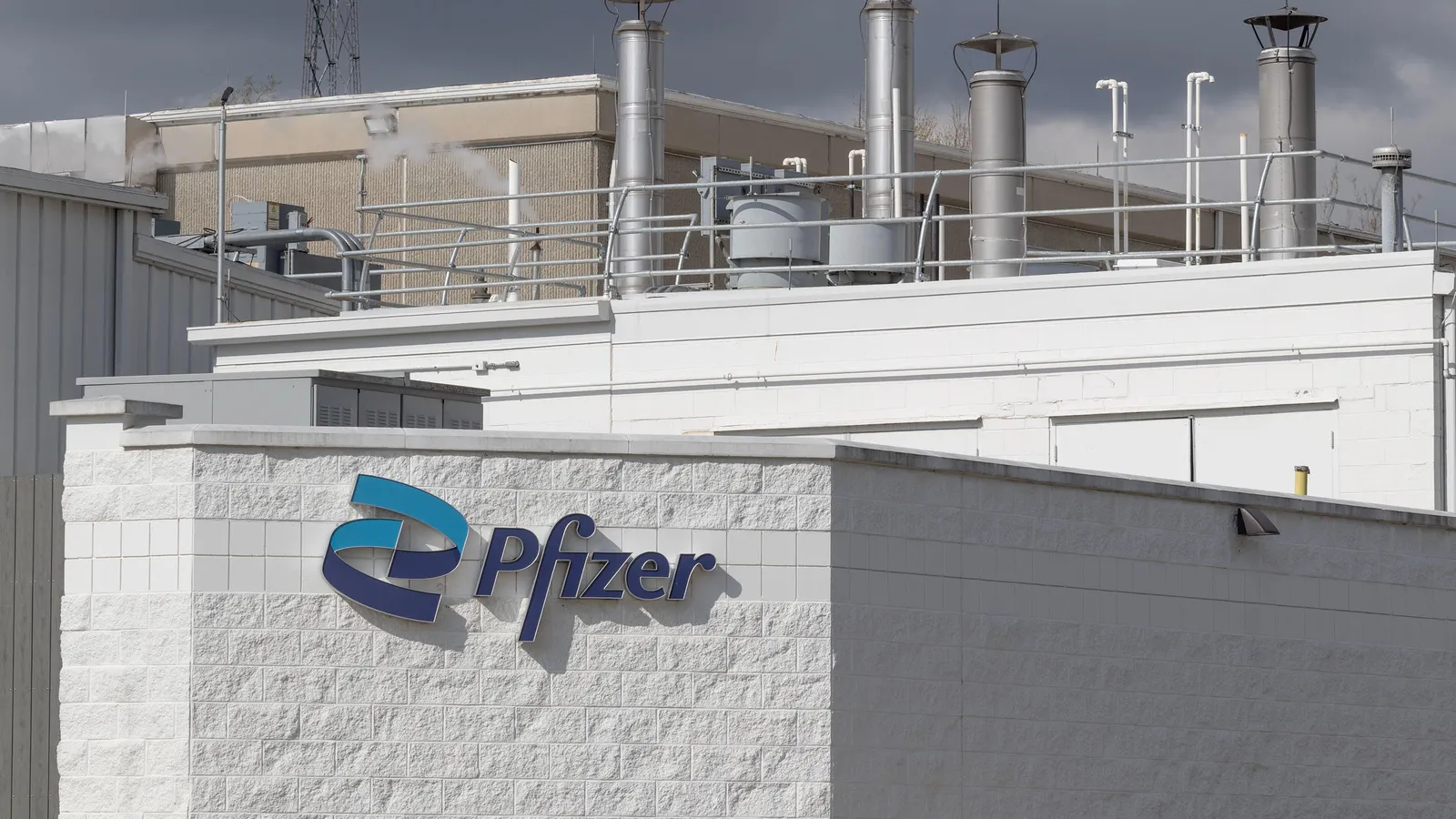
In a move that underscores the seismic shift in pharmaceutical R&D, Pfizer has announced an expansive, multi-year strategic alliance with Suzhou-based Innovent Biologics. The deal, which could reach a total valuation exceeding $10 billion, signals a deepening dependency of Western pharmaceutical giants on the rapidly maturing Chinese biotechnology ecosystem.
This partnership targets the cutting edge of cancer therapy: antibody-drug conjugates (ADCs) and multispecific antibodies. By offloading early-stage discovery to Innovent, Pfizer is betting that the speed and technical proficiency of Chinese labs can provide the next generation of blockbuster oncology treatments, effectively outsourcing the "risky" early-phase research while retaining the financial muscle to scale successful candidates globally.
The Anatomy of the Deal: A Complex Pipeline
The agreement centers on a portfolio of 12 distinct cancer-focused programs. These assets are categorized into two primary buckets: eight early-stage prospects originating from Innovent’s internal discovery engine and four "Pfizer-proposed" discovery programs.
Structural Breakdown
The collaboration is not a simple licensing agreement; it is a nuanced division of labor and risk:
- Discovery and Early Phase: Innovent will maintain the lead on discovery and early research, effectively acting as the engine room for the alliance.
- Phase 1 and Beyond: Pfizer will assume the mantle for global development once the assets transition out of Phase 1 testing.
- Commercial Rights: The distribution of rights is split based on the specific asset group:
- Group 1: Pfizer gains worldwide rights and assumes all development costs for four programs.
- Group 2: Pfizer acquires ownership outside of Greater China for four programs.
- Group 3: The final four programs operate under a 50/50 cost-and-profit-sharing arrangement, with rights split equally between the two firms.
Financially, the deal is front-loaded with a $650 million cash payment to Innovent. The remaining $9.85 billion is contingent upon the successful achievement of various clinical, regulatory, and commercial milestones. Should these drugs reach the market, Innovent is also entitled to tiered royalties on net sales, providing a long-term revenue stream for the Chinese innovator.
Chronology: The Great Pivot Toward China
The Pfizer-Innovent pact is the latest in a rapid succession of "mega-deals" that have defined the mid-2020s. The timeline of this trend reveals a shift from isolated, opportunistic licensing to a systematic reliance on Chinese innovation.
- 2023–2024: The "discovery phase" of the trend. Major firms began testing the waters, acknowledging that China’s biotech sector had evolved from a low-cost manufacturing hub into a sophisticated discovery powerhouse capable of producing "best-in-class" molecules.
- 2025: The year of acceleration. Following three smaller, one-off agreements by Pfizer earlier in the year, the industry saw over 60 licensing deals struck between Western and Chinese firms.
- 2026 (The Current Wave): The trend has matured into a broader, more aggressive phase. Since July 2025, firms including GSK, Takeda, AstraZeneca, Eli Lilly, and Bristol Myers Squibb have committed at least $8 billion to similar multi-drug partnerships.
- Late 2026: The Pfizer-Innovent announcement serves as the capstone of this period, confirming that top-tier pharma is no longer viewing China as an "emerging" market, but as an essential partner for long-term survival in the oncology space.
Supporting Data: Why China?
The data underpinning this shift is compelling. The Chinese biotech sector has benefited from years of intensive capital investment and a workforce of highly trained scientists who have returned from Western institutions.
Key Drivers of the Alliance:
- Speed to Clinic: Chinese firms have demonstrated an ability to move from bench to clinical trial at a velocity that often outstrips traditional Western timelines.
- Specialization: Innovent and its peers have mastered the production of ADCs—often called "guided missiles" for cancer—and multispecific antibodies, which engage multiple biological pathways simultaneously. These are the current "holy grails" of oncology.
- Efficiency: For a giant like Pfizer, the ability to iterate on 12 different programs simultaneously without expanding its own internal headcount to an unmanageable degree is a massive operational win.
Data from BioPharma Dive confirms that Innovent is a central pillar of this trend. Having been involved in three of the largest recent deals, the company now holds the potential to unlock more than $30 billion in future payments, positioning it as one of the most successful R&D engines globally.
Official Responses: The Strategic Rationale
In an official statement, Jeff Legos, Pfizer’s chief oncology officer, emphasized the synergy of the collaboration.
"By combining Innovent’s discovery and early clinical development with Pfizer’s global research and development and commercialization capabilities, we have an opportunity not only to strengthen our pipeline, but to accelerate the delivery of breakthroughs that can redefine standards of care," Legos stated.
For Pfizer, this is an existential imperative. With several key patents facing expiration, the company’s oncology division—which was significantly bolstered by the acquisition of Seagen—needs a steady flow of high-potential, innovative assets to maintain its competitive advantage. By outsourcing the "high-risk, high-reward" discovery of novel toxic payloads and unique antibody designs to Innovent, Pfizer protects its portfolio from stagnation.
Implications: A Geopolitical and Economic Tightrope
The growing interdependency between Western pharma and Chinese labs is not without its detractors.
The Regulatory and Political Dilemma
In Washington, the "China-Biotech" connection has triggered a bipartisan alarm. Lawmakers are increasingly concerned that the U.S. is losing its long-held edge in pharmaceutical innovation, ceding both manufacturing capacity and, more importantly, intellectual leadership to China. Recent congressional reports and commission hearings have highlighted fears that the U.S. healthcare system could become overly reliant on a geopolitical rival for life-saving medicines.
The Industry Divide
Within the biotech investment community, a split has emerged. One camp views these deals as a pragmatic, necessary evolution of the globalized drug discovery market. They argue that excluding Chinese innovation would be a disservice to patients and a death knell for companies looking to maximize R&D ROI.
The opposing camp views the trend as an existential threat. They worry that the current "arms race" of licensing deals is effectively subsidizing the rise of China’s biotechnology sector at the expense of U.S. domestic startups, which may struggle to compete for capital when big pharma is pouring billions into foreign partners.
The Future of Global Medicine
Despite the "consternation" in Washington and the debate in executive boardrooms, the trend shows no sign of slowing. The sheer technical prowess of companies like Innovent makes them too valuable to ignore.
The implication for the future is clear: the future of cancer treatment will likely be a hybrid product—discovered by the agile, specialized labs of Suzhou or Shanghai, and developed, refined, and distributed by the global infrastructure of New York, Basel, or London.
For Pfizer, the gamble is that by tying its future to this cross-border model, it will secure the next decade of oncology leadership. For Innovent, the deal represents the final validation of a decade of investment, cementing its status as a global player. Whether this model survives the cooling of U.S.-China relations remains the single biggest question for the pharmaceutical industry, but for now, the machinery of the global R&D engine continues to turn, unhindered by the political storms brewing in D.C.