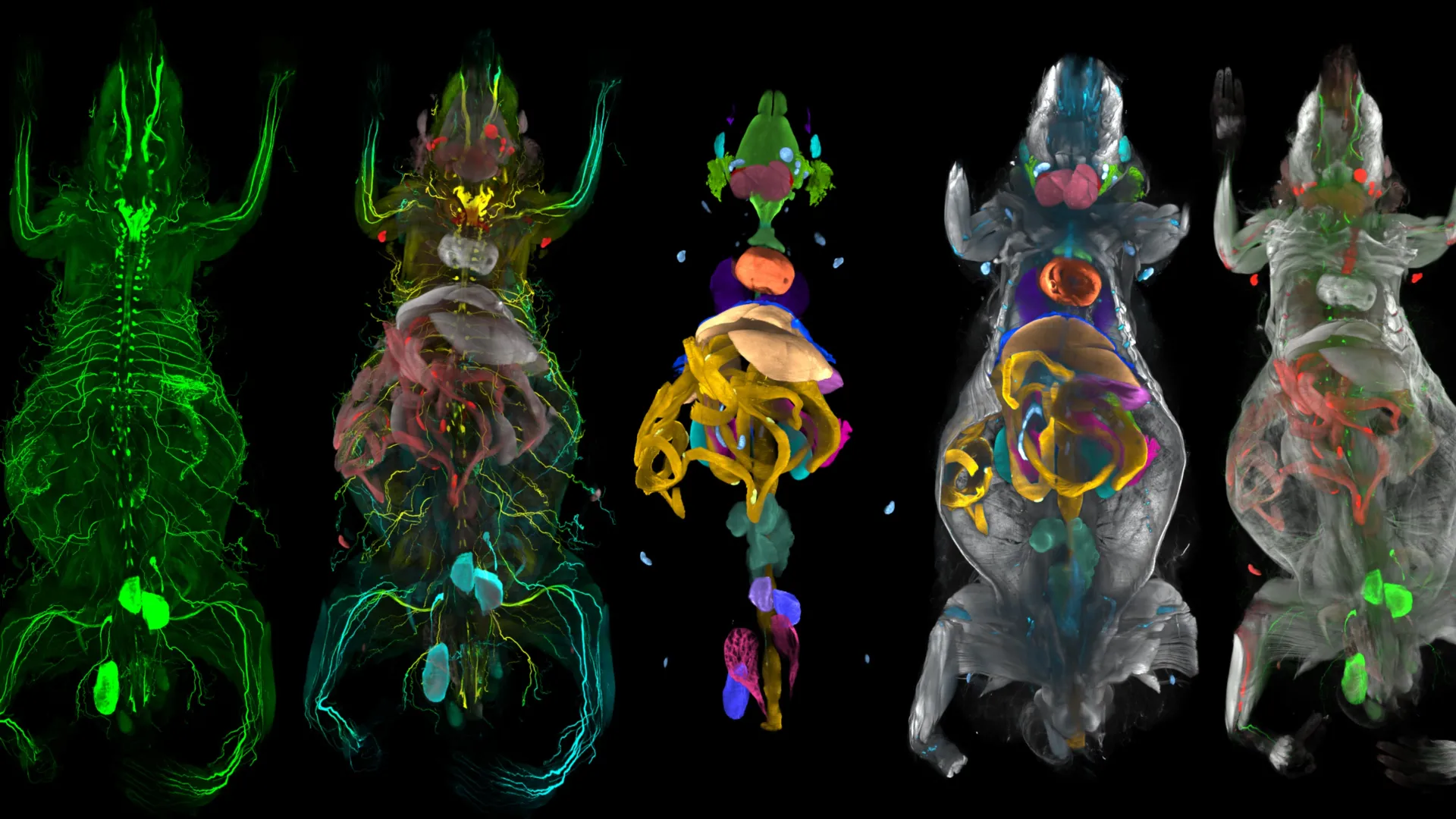
In a landmark study published in the journal Nature, an international research consortium led by Helmholtz Munich and Ludwig Maximilians University Munich (LMU) has unveiled a technological leap that promises to fundamentally alter the study of complex diseases. The team has developed "MouseMapper," an artificial intelligence-driven platform capable of mapping disease-related physiological changes across an entire mouse body at the resolution of individual cells.
By integrating foundation-model-based deep learning with advanced tissue-clearing and 3D imaging techniques, researchers have successfully identified previously unknown nerve damage and systemic inflammation linked to obesity. Perhaps most significantly, the study confirms that these molecular patterns are mirrored in human tissue, suggesting that the neurological toll of obesity is far more pervasive—and conserved across species—than previously understood.
The Genesis of MouseMapper: Bridging the Gap in Biological Imaging
For decades, the study of systemic diseases like obesity, diabetes, and cancer has been hampered by a "siloed" approach to biology. Traditionally, researchers have been forced to examine individual organs in isolation, often relying on thin tissue slices that fail to capture the complex, interconnected nature of the body’s physiological networks.
"We have been looking at the puzzle through a keyhole," noted Professor Ali Ertürk, Director of the Institute for Biological Intelligence (iBIO) at Helmholtz Munich. "To understand a disease that affects the entire body, you cannot study the liver, the brain, or the fat tissue as if they were separate islands."
The development of MouseMapper was a direct response to this limitation. The AI framework utilizes deep learning to automatically segment and identify 31 distinct organ and tissue types. Unlike traditional image analysis, which often requires manual intervention or rigid, predefined parameters, MouseMapper is built on a foundation model. This architectural choice allows the system to generalize across diverse datasets, identifying anatomical landmarks and cellular clusters with a level of precision that was previously unattainable.
Chronology of the Breakthrough
The project, which represents years of interdisciplinary effort, followed a rigorous scientific progression:
- Preparation and Transparency: Researchers employed advanced tissue-clearing methods to render mice transparent. By using fluorescent markers to "light up" nerves and immune cells, the team was able to preserve the 3D integrity of the body’s internal architecture.
- Whole-Body Imaging: Using high-resolution light-sheet microscopy, the team captured tens of millions of cellular structures. This process generated massive datasets that would be impossible for a human researcher to annotate manually.
- Algorithmic Analysis: MouseMapper was deployed to process these datasets, autonomously mapping the spatial distribution of immune cells and nerve networks.
- Obesity Modeling: The researchers introduced a high-fat diet to the test subjects, inducing metabolic states comparable to human obesity.
- Validation and Cross-Species Comparison: Upon identifying specific nerve damage, the team performed spatial proteomics analysis, comparing the molecular signatures found in the mice to human clinical samples, confirming the translational relevance of their findings.
Supporting Data: The Hidden Toll of Obesity
The most striking discovery made by MouseMapper concerns the trigeminal nerve—a critical structure responsible for facial sensation and motor function. In the obese mice, the AI-driven analysis revealed a marked reduction in the density of nerve branches and endings.
This structural degradation was not merely a cosmetic finding; it had functional consequences. Behavioral assays revealed that the obese mice exhibited a significantly diminished response to sensory stimulation compared to their lean counterparts. When the researchers peered into the trigeminal ganglion—the hub where facial sensory neurons reside—they discovered clear molecular markers of inflammation and tissue remodeling.
When the team compared these signatures to human tissue samples from obese patients, they found a startling alignment. This suggests that the "neuropathy of obesity" is not just a metabolic issue, but a systemic neurological one that may explain why obesity is so strongly correlated with a wide array of sensory and cognitive disorders in humans.
Official Perspectives: Redefining Medical Research
The researchers involved emphasize that MouseMapper is not just a one-off tool for obesity research; it is a fundamental shift in methodology.
"MouseMapper is built on a foundation model, which means it generalizes far beyond the data it was originally trained on," explains Ying Chen, co-first author of the study. This versatility is precisely what makes the platform so attractive for future applications in oncology, immunology, and neurodegeneration.
Dr. Doris Kaltenecker, a senior scientist at the Institute for Diabetes and Cancer (IDC) at Helmholtz Munich and co-first author, underscores the importance of the whole-body perspective: "We revealed previously unknown structural and molecular changes in the trigeminal ganglion and its facial branches, and the same molecular signature was conserved in human tissue. This kind of finding simply cannot emerge from studying one organ at a time."
Implications: The Road Toward "Digital Twins"
The implications of this research are profound. By making their datasets publicly available, the team is fostering a new culture of open science, allowing researchers worldwide to interrogate the systemic effects of various diseases without the need for constant, redundant animal testing.
However, the ultimate vision articulated by Professor Ertürk is even more ambitious: the creation of "digital twins" of biological organisms.
"Our long-term vision is to build truly realistic digital twins of mice in health and disease," says Ertürk. "These are cell-level atlases that we can query, perturb, and screen in silico computationally. This would let us pinpoint the earliest changes a disease causes, design interventions to prevent them, and accelerate the discovery of new treatments while significantly reducing the number of physical experiments we need to run."
A New Era of Precision Medicine
The ability to simulate and visualize disease progression at a whole-body scale could slash the time required for drug development. Currently, many promising compounds fail in clinical trials because their systemic effects—both positive and negative—are not understood until it is too late. By identifying "disease hotspots" early in the process, MouseMapper could help scientists screen for side effects before a drug ever reaches a human participant.
Furthermore, the technology holds promise for neurodegenerative diseases like Alzheimer’s and Parkinson’s. If these conditions involve systemic inflammatory signaling—as some theories suggest—MouseMapper could be the key to tracing those signals back to their origin in the gut, the fat tissue, or the immune system, providing a roadmap for new, systemic therapies.
Conclusion: A Paradigm Shift
As the scientific community continues to grapple with the complexity of chronic diseases, the integration of AI and high-resolution imaging is proving to be an essential evolution. MouseMapper represents a departure from the "reductionist" science of the 20th century, favoring a "systems-level" view that respects the complexity of the living organism.
By proving that obesity-related nerve damage can be mapped and understood in the context of the entire body, the Helmholtz Munich team has provided a blueprint for how we might treat other systemic illnesses in the future. As these digital atlases grow more sophisticated, we move closer to a future where medical interventions are not just reactive, but predictive—informed by a complete, high-definition understanding of the human (and murine) body in health and disease.
The research was made possible through extensive support from major European and German funding bodies, including the European Research Council, the German Research Foundation (DFG), and the Nomis Foundation, among others. As these institutions look toward the next phase of development, the scientific community awaits the first wave of therapeutic breakthroughs derived from this unprecedented depth of biological data.