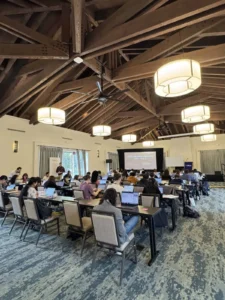












In the landscape of modern psychology, few voices have been as consistent, compassionate, and academically rigorous as that of Dr. Angela Neal-Barnett. As a trailblazing psychologist, professor, and researcher, Dr. Neal-Barnett has dedicated her career to dismantling the stigmas surrounding mental health within the Black community. By focusing specifically on the unique intersections of race, gender, and anxiety, she has carved out a necessary space for healing and understanding, fundamentally changing how we approach the psychological well-being of Black women and girls in the United States.
Main Facts: A Legacy of Academic and Clinical Excellence
Dr. Angela Neal-Barnett serves as a professor within the Department of Psychological Sciences at Kent State University. Her appointment made history, as she became the first Black woman to be granted tenure and promoted to the rank of professor within that department. This milestone was not merely an individual achievement; it was a watershed moment for the university and the field of psychology, signaling a shift toward recognizing the importance of diverse perspectives in clinical research.
At the core of her professional contributions is her role as the director of the Program for Research on Anxiety Disorders among African Americans (PRADAA). Under her leadership, the program has become a hub for studying the manifestation of anxiety, panic, and fear as they relate specifically to the Black experience. Unlike traditional psychological models, which have historically relied on data derived from white populations, Dr. Neal-Barnett’s work insists on context—recognizing that cultural history, systemic stressors, and racial trauma are not peripheral to mental health, but are instead central to it.
Her influence extends beyond the classroom and the laboratory. She is the author of the critically acclaimed book, Soothe Your Nerves: The Black Woman’s Guide to Understanding and Overcoming Anxiety, Panic and Fear. This work has been hailed as a seminal text, bridging the gap between high-level psychological theory and accessible, actionable self-care for women navigating the complexities of modern life.
Chronology: The Evolution of a Trailblazer
The trajectory of Dr. Neal-Barnett’s career reflects a steady, determined ascent marked by a commitment to marginalized communities.
- Early Academic Foundation: Dr. Neal-Barnett’s journey began with a rigorous academic foundation, where she identified early on that the prevailing literature on anxiety disorders lacked a comprehensive understanding of the African American experience.
- Kent State University Tenure: Her ascension to tenure and the rank of full professor at Kent State University serves as a cornerstone of her timeline. This period established her as an institutional leader and allowed her to formalize the PRADAA initiative.
- The Publication of Soothe Your Nerves: The release of her book by Fireside/Simon and Schuster marked a pivot point where her academic insights reached the general public. It transformed her from a niche researcher into a national resource for Black women.
- Digital Innovation: In recent years, Dr. Neal-Barnett moved into the digital health space by developing the Build Your Own Theme Song App©. This innovative tool, designed to help users manage anxiety through cognitive-behavioral techniques, demonstrates her commitment to utilizing technology to democratize mental health support.
- Media Advocacy: Throughout the last two decades, she has leveraged media platforms—from The New York Times and Essence to CNN and NPR—to normalize conversations about anxiety, moving the needle on how mental health is discussed in Black households.
Supporting Data: The Case for Culturally Competent Care
The urgency of Dr. Neal-Barnett’s work is supported by a wealth of data concerning the disparities in mental health treatment. For years, the psychological community operated under the assumption that anxiety presented identically across all demographics. Dr. Neal-Barnett’s research has challenged this.
Understanding "The Strong Black Woman" Schema
Her research has frequently highlighted the psychological tax of the "Strong Black Woman" schema. This cultural ideal—the expectation that Black women must be resilient, self-reliant, and capable of enduring significant hardship without complaint—often masks symptoms of chronic anxiety. By quantifying the stress associated with this expectation, Dr. Neal-Barnett has provided data-driven evidence that "strength" can often be a barrier to seeking necessary care.
Funding and Institutional Recognition
The significance of her work is further underscored by the support she has received from prestigious organizations. Her research has been funded by:
- The National Institute of Mental Health (NIMH): Recognition of her work’s impact on national health priorities.
- The National Institutes of Health (NIH): Validating the clinical rigor of her studies.
- The Ohio Commission on Minority Health: Supporting her community-based outreach initiatives.
- The Women’s Endowment Fund of the Akron Community Foundation: A testament to her impact on local, grassroots mental health advocacy.
These grants are not merely financial transactions; they represent institutional acknowledgement that the study of race-based anxiety is a public health necessity.
Official Responses and Peer Recognition
Dr. Neal-Barnett’s work has garnered widespread acclaim, not just from the general public, but from her peers in the clinical community. Her role as an international workshop presenter has made her a highly sought-after voice at psychological conferences globally.
Media and Public Reception
The media response to her work has been overwhelmingly positive, reflecting a growing societal appetite for nuanced discussions on mental health.
- Print Media: Her insights have been featured in Health magazine, Working Mother, Ebony, and the New York Times, providing a mainstream platform for her research.
- Broadcast Media: Her appearances on platforms like CNN, BET, and the Tom Joyner Morning Show have allowed her to reach audiences that might otherwise be alienated by traditional, ivory-tower psychological discourse.
Colleagues often cite her ability to translate complex neuro-biological data into relatable narratives as her greatest strength. She does not speak down to her audience; she speaks to them as a partner in their own healing process.
Implications: The Future of Mental Health Equity
The implications of Dr. Neal-Barnett’s career are profound and far-reaching. By centering Black women and girls in her research, she is forcing a necessary evolution in the field of psychology.
1. Reforming Clinical Practice
Her work implies that traditional cognitive behavioral therapy (CBT) must be adapted to be culturally sensitive. Therapists who use her frameworks are better equipped to recognize how racial microaggressions, economic inequality, and historical trauma manifest as physical symptoms of anxiety.
2. Digital Therapeutics
The development of the Build Your Own Theme Song App© suggests a future where mental health support is accessible via the palm of a hand. This is particularly important for marginalized communities that may face geographic or financial barriers to accessing traditional, in-person therapy.
3. The Generational Impact
By focusing on young Black girls, Dr. Neal-Barnett is engaging in preventative care. Her research suggests that by identifying and addressing anxiety early in development, we can mitigate the long-term health consequences—such as hypertension and heart disease—that are frequently exacerbated by unmanaged, chronic stress.
4. A New Academic Standard
As the first Black woman tenured in her department at Kent State, she has set a precedent for academic institutions. Her success provides a roadmap for universities to support faculty who engage in community-focused, advocacy-driven research. It challenges the academic status quo to value research that serves the public good, rather than research that remains confined to theoretical journals.
Conclusion: A Call to Action
Dr. Angela Neal-Barnett’s career is a testament to the power of combining rigorous academic inquiry with deep, empathetic advocacy. She has proven that anxiety is not a personal failure, nor is it a character flaw; it is a human experience that is profoundly shaped by the world around us.
As we look toward the future, the work of Dr. Neal-Barnett remains a critical guide for anyone interested in the intersection of psychology and social justice. Her legacy is one of empowerment—teaching Black women and girls that their mental health is not just a luxury, but a fundamental right. Through her writing, her digital tools, and her tireless research, she continues to provide the roadmap for a society that understands, acknowledges, and heals the anxieties of its most vulnerable members.
For those looking to learn more, her ongoing contributions continue to be a beacon of hope and a source of practical wisdom. Whether through her academic papers, her workshops, or her digital outreach, Dr. Neal-Barnett remains a transformative force, ensuring that the conversation around mental health remains inclusive, rigorous, and, most importantly, human.