For decades, the medical community has treated chronic stress as an invisible, subjective burden—a "silent killer" that patients describe through questionnaires and clinicians interpret through the lens of symptoms like anxiety, hypertension, and fatigue. Now, a groundbreaking development in medical imaging and artificial intelligence (AI) promises to change that. Researchers have successfully deployed a deep-learning model to identify the first objective, visual biomarker of chronic stress using standard, routine medical scans.
The findings, set to be presented at the upcoming annual meeting of the Radiological Society of North America (RSNA), represent a paradigm shift in how we quantify the cumulative toll that stress takes on the human body. By measuring the physical changes in the adrenal glands through routine chest CT scans, doctors may soon be able to detect the physiological fingerprints of long-term stress before they manifest as catastrophic clinical events.
The Main Facts: Visualizing the Invisible
Chronic stress is more than a mental health concern; it is a physiological phenomenon that triggers a cascade of hormonal and systemic responses. According to the American Psychological Association, prolonged exposure to stress is inextricably linked to systemic inflammation, impaired immune function, muscle pain, and metabolic disorders. Its reach extends into the most critical areas of human health, including the development of heart disease, obesity, and clinical depression.
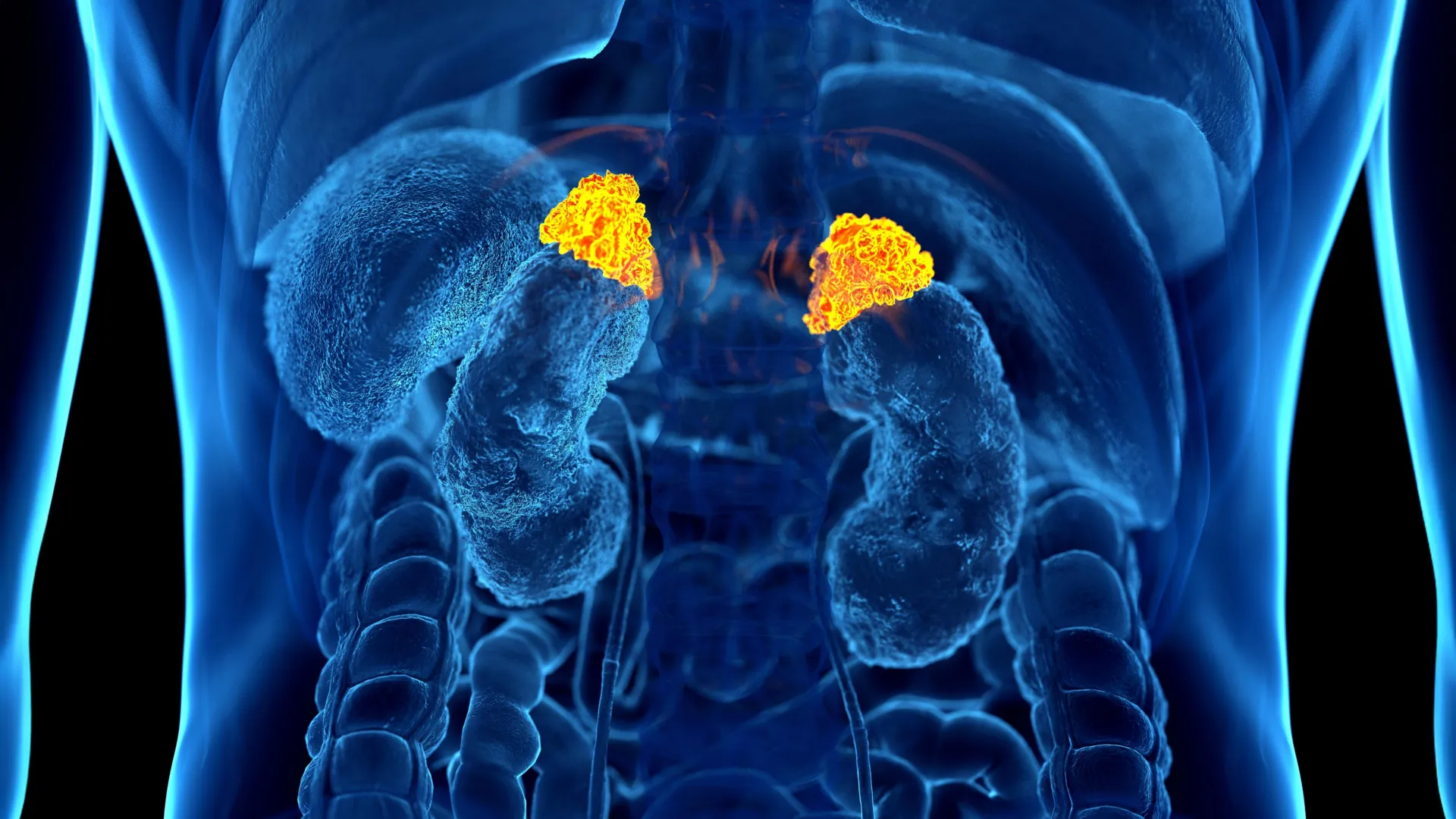
The new research, led by Dr. Elena Ghotbi and her team at the Johns Hopkins University School of Medicine, utilizes a deep-learning algorithm to measure the volume of the adrenal glands. The adrenal glands, located atop the kidneys, are the primary drivers of the body’s stress response. When the body is under chronic stress, these glands often undergo structural changes. By automating the measurement of these glands on existing CT scans, the AI provides an "Adrenal Volume Index" (AVI)—a quantifiable metric that serves as a proxy for the body’s long-term stress load.
Chronology of the Study: A Multi-Year Synthesis
The path to this discovery was paved by a unique synthesis of longitudinal data. The research team drew from the Multi-Ethnic Study of Atherosclerosis (MESA), a massive, multi-institutional initiative that provided a comprehensive dataset of 2,842 participants, with a mean age of 69.3 years.
- Data Integration: The study was uniquely positioned because it merged three distinct types of data: high-resolution chest CT imaging, validated psychological stress questionnaires, and rigorous biochemical markers.
- Development of the Model: Dr. Ghotbi and her colleagues trained a deep-learning tool to automatically outline and segment the adrenal glands from existing, archival CT scans. This automation is critical; it bypasses the need for manual, time-consuming radiological measurements.
- Establishing the Metric: The team defined the Adrenal Volume Index (AVI) as the adrenal volume in cubic centimeters (cm³) divided by the square of the patient’s height (m²).
- Validation: To confirm that the AVI reflected biological reality, participants provided salivary cortisol samples eight times per day over two days, capturing hormonal fluctuations. Furthermore, the team calculated "allostatic load"—the total physiological "wear and tear" on the body—by analyzing glucose, blood pressure, white blood cell counts, and metabolic indicators like BMI, albumin, and creatinine.
- Outcome Analysis: The team tracked participants over a 10-year period, allowing them to correlate their AI-derived adrenal measurements with real-world clinical outcomes, including heart failure and mortality.
Supporting Data: The Correlation Between Anatomy and Health
The data produced by the AI model revealed a striking alignment between physical anatomy and subjective experience. The study found that higher AVI values were consistently linked to:
- Hormonal Overload: Higher AVI scores correlated with increased total cortisol exposure and elevated peak cortisol levels.
- Psychosocial Alignment: Participants who self-reported high levels of stress on validated questionnaires showed significantly higher AVI values compared to those who reported low stress.
- Cardiac Risk: Perhaps most critically, the study established a direct link between the Adrenal Volume Index and heart health. The researchers discovered that AVI was tied to the left ventricular mass index, a key indicator of heart structure.
- Predictive Power: The study found that for every 1 cm³/m² increase in AVI, the risk of heart failure and eventual death rose. This validates the adrenal gland’s size as an independent predictor of cardiovascular failure, a finding that could revolutionize how cardiologists assess risk in asymptomatic patients.
Official Responses: A "Step Forward" for Clinical Practice
The research has been met with significant enthusiasm from the medical community, particularly among experts who have long sought a better way to quantify the health impacts of chronic stress.
"For over three decades, we’ve known that chronic stress can wear down the body across multiple systems," says co-author Dr. Teresa E. Seeman, a professor of epidemiology at UCLA and a pioneer in the study of allostatic load. "What makes this work so exciting is that it links a routinely obtained imaging feature—adrenal volume—with validated biological and psychological measures of stress and shows that it independently predicts a major clinical outcome. It’s a true step forward in operationalizing the cumulative impact of stress on health."
Dr. Shadpour Demehri, senior author and professor of radiology at Johns Hopkins, emphasized the accessibility of the new tool. "For the first time, we can ‘see’ the long-term burden of stress inside the body, using a scan that patients already get every day in hospitals across the country," he stated. "Until now, we haven’t had a way to measure and quantify the cumulative effects of chronic stress, other than questionnaires, surrogate serum markers like chronic inflammation, and cortisol measurement, which is very cumbersome to obtain."
The researchers stress that while cortisol tests offer a snapshot of stress at a single moment in time, the volume of the adrenal glands acts as a "long-term gauge," effectively capturing the history of a patient’s stress burden.
Implications: The Future of Preventive Care
The implications of this study are profound for the future of cardiovascular and preventive medicine. Because tens of millions of chest CT scans are performed annually in the United States for various diagnostic reasons, this AI tool can be integrated into existing workflows without requiring additional radiation or invasive testing.
Improving Risk Stratification
Currently, clinicians rely on traditional risk factors—such as cholesterol levels, smoking status, and family history—to predict heart disease. The addition of an "Adrenal Volume Index" could provide a missing piece of the puzzle, identifying patients who are at higher risk due to chronic physiological stress. This allows for earlier intervention, perhaps through lifestyle changes, stress-reduction therapies, or pharmacological support, long before a patient experiences a cardiac event.
A New Standard for "Stress-Related" Medicine
Beyond heart disease, the researchers believe this imaging biomarker could be applied to a wide array of stress-related conditions affecting middle-aged and older populations. As the AI tool becomes more refined, it could potentially become a standard "stress report" generated alongside routine radiological evaluations.
The ability to quantify stress marks a departure from the "wait and see" approach that has defined much of modern medicine. By turning the intangible burden of a stressful life into a measurable, clinical data point, Dr. Ghotbi and her team have opened a new door for personalized, proactive healthcare. As the medical community prepares to discuss these findings at the RSNA annual meeting, the message is clear: the cumulative impact of stress is no longer invisible, and that knowledge may be the key to saving lives in the years to come.
Co-authors of the study include: Roham Hadidchi, Seyedhouman Seyedekrami, Quincy A. Hathaway, M.D., Ph.D., Michael Bancks, Nikhil Subhas, Matthew J. Budoff, M.D., David A. Bluemke, M.D., Ph.D., R. Graham Barr, and Joao A.C. Lima, M.D.