









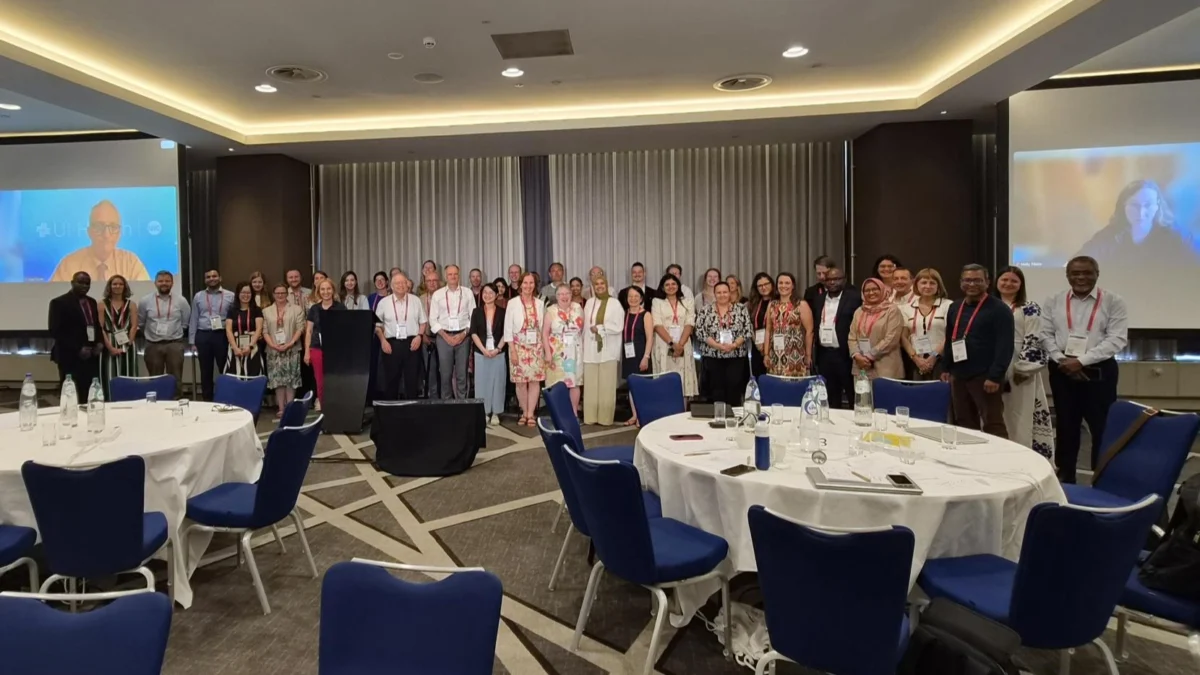
The landscape of European respiratory health is undergoing a critical transformation. While the medical community has long possessed the clinical data necessary to treat, diagnose, and prevent chronic respiratory conditions, a persistent gap has remained between research findings and real-world clinical application. Addressing this, the European Respiratory Society (ERS) and the European Lung Foundation (ELF) recently convened to showcase a series of flagship initiatives designed to move beyond the laboratory and into the daily lives of patients.
These projects—ranging from the Joint Action on Respiratory Diseases (JARED) to the Strengthening the Screening of Lung Cancer in Europe (SOLACE) initiative—represent a fundamental shift in strategy. They move the focus from purely theoretical discovery to "implementation research," a methodology that prioritizes how evidence-based care can be effectively integrated into diverse healthcare systems.
The “Cinderella Disease”: Addressing the Global Neglect of Lung Health
The conference was anchored by a sobering opening address from José Luis Castro, the WHO Director-General’s Special Envoy for Chronic Respiratory Diseases. Castro utilized the metaphor of the “Cinderella disease” to describe the state of respiratory health globally.
"Respiratory diseases remain the Cinderella disease of global health: common, costly, devastating, and too often left in the shadows," Castro remarked. He emphasized that the impact of these conditions extends far beyond biological impairment. "Respiratory disease does not just attack the lungs. It attacks people’s dignity. It drives them into social isolation."
For many, the physical symptoms—shortness of breath, chronic cough, and fatigue—are compounded by the systemic failure to prioritize respiratory health in political agendas. Castro’s message was a clarion call to delegates: while political recognition is a necessary first step, it is insufficient on its own. "Recognition without implementation changes nothing," he stated, reminding the assembly that policy declarations are merely the precursors to the actual work of saving lives.
Chronology of Action: The Evolution of Implementation Projects
The conference served as a progress report for several EU-funded and supported initiatives that are currently rewriting the standard of care across the continent.
JARED and the Framework for Coordinated Care
Professor Ildikó Horváth introduced the Joint Action on Respiratory Diseases (JARED). This initiative is designed to move past fragmented national approaches, helping EU member states align their respiratory health strategies. By fostering coordinated action, JARED aims to standardize quality of care and ensure that patients in every corner of Europe have access to similar diagnostic and therapeutic protocols.
Early Intervention: LungHealth4Life (LH4L)
Cláudia Sofia de Almeida Vicente Ferreira presented the LungHealth4Life (LH4L) project, which addresses the root of the problem: childhood development. By targeting schools in Portugal, the pilot program emphasizes that lung health is a lifelong journey. The project demonstrates that by fostering respiratory awareness and healthy environments early, the incidence of chronic conditions in adulthood can be significantly mitigated.
Environmental Health: FA4L and JA-SAFE
Rianne van der Kleij showcased FRESHAIR4Life (FA4L), which looks at the intersection of lifestyle and environment. The project is centered on the premise that respiratory health is inextricably linked to the air we breathe and the environments we inhabit. Complementing this, Constantine Vardavas presented the Joint Action on Health Promotion and Disease Prevention including Smoke and Aerosol Free Environments (JA-SAFE). This project is a multi-national effort to accelerate the creation of smoke-free and aerosol-free environments, with the ultimate goal of fostering a tobacco-free generation across Europe.
Equity in Diagnostics: SOLACE
Concluding the project presentations, Professor Martina Koziar Vašáková outlined Strengthening the Screening of Lung Cancer in Europe (SOLACE). As one of the most fatal cancers, lung cancer remains a primary target for early detection. The SOLACE project is focused on the logistics of equity, working to ensure that lung cancer screening is not a privilege afforded only to those in affluent urban centers, but an accessible standard for all European citizens, regardless of socioeconomic background.
Supporting Data and the Mechanics of Change
The core philosophy uniting these projects is the transition from "knowing" to "doing." Implementation research is not a linear path; it is a complex cycle that involves iterative learning. The data presented during the sessions highlighted that the challenges in respiratory care are rarely about a lack of medicine; they are about a lack of access, education, and political will.
For instance, the success of the JA-SAFE initiative is measured not just in health outcomes, but in the successful adoption of policy frameworks that transcend national borders. Similarly, the LH4L pilot program in Portuguese schools provides empirical evidence that community-based interventions are highly effective at reaching populations that might otherwise fall through the cracks of the formal healthcare system.
The projects collectively illustrate a critical lesson: clinical success requires the participation of stakeholders beyond the medical establishment. By involving researchers, healthcare professionals, patients, policymakers, and local communities, these initiatives are creating a “multi-stakeholder ecosystem” that ensures new evidence is translated into routine practice.
Official Responses and the Need for Inclusive Policy
A standout moment of the conference was the panel discussion on equity, which interrogated the historical exclusion of patients from the policymaking process. Kjeld Hansen, former Chair of the European Lung Foundation, provided a blunt assessment of current policy failures.
"Successful healthcare policies cannot simply be designed by experts and handed down to patients," Hansen asserted. He argued that the “top-down” model of medical governance is inherently flawed because it ignores the lived experience of the patient. According to Hansen, lasting change is only possible when patients, families, and community members are given a seat at the table.
This sense of "ownership" is crucial. When individuals are involved in the design of healthcare initiatives, they are more likely to support them and adhere to the resulting protocols. This principle is a cornerstone of the ELF’s mission: meaningful patient involvement is not just a moral imperative, but a practical requirement for equitable health outcomes.
Implications: Translating Policy into Impact
The two-day gathering concluded with a clear consensus: the infrastructure for better respiratory health exists, but it requires a shift in focus toward the "last mile" of delivery—reaching the patient.
The implications of this shift are profound. If these implementation strategies are successfully scaled, we can expect to see:
- Earlier Diagnosis: Through initiatives like SOLACE, more patients will be diagnosed at stages where treatment is significantly more effective.
- Environmental Protection: Through the work of JA-SAFE and FA4L, the burden of preventable lung disease caused by tobacco and pollution will decrease.
- Coordinated Systems: Through JARED, national health systems will benefit from shared knowledge, reducing the redundancy and inefficiency that often plagues respiratory care.
As José Luis Castro summarized, "Policy declarations create possibilities. Implementation creates impact."
For the millions of people living with chronic lung conditions, this transition is not just academic—it is a matter of survival. The move toward implementation-focused research signifies a transition from a reactive model of care, which treats symptoms after they appear, to a proactive model that builds healthier environments and more resilient populations.
The challenge for the coming decade is clear: to ensure that the knowledge generated by these flagship initiatives is not confined to conference halls or academic journals, but is woven into the fabric of every national health service. By focusing on equitable access, patient-centered design, and the rigorous application of implementation science, the European respiratory community is finally moving the "Cinderella disease" out of the shadows and into the spotlight of global health priority.
The path forward is defined by collaboration. From the school corridors of Portugal to the legislative chambers of the EU, the message is the same: change is not a single event, but a continuous process of translating knowledge into the daily reality of better patient care. The tools are in our hands; the task now is to ensure they are used effectively for the benefit of all.