






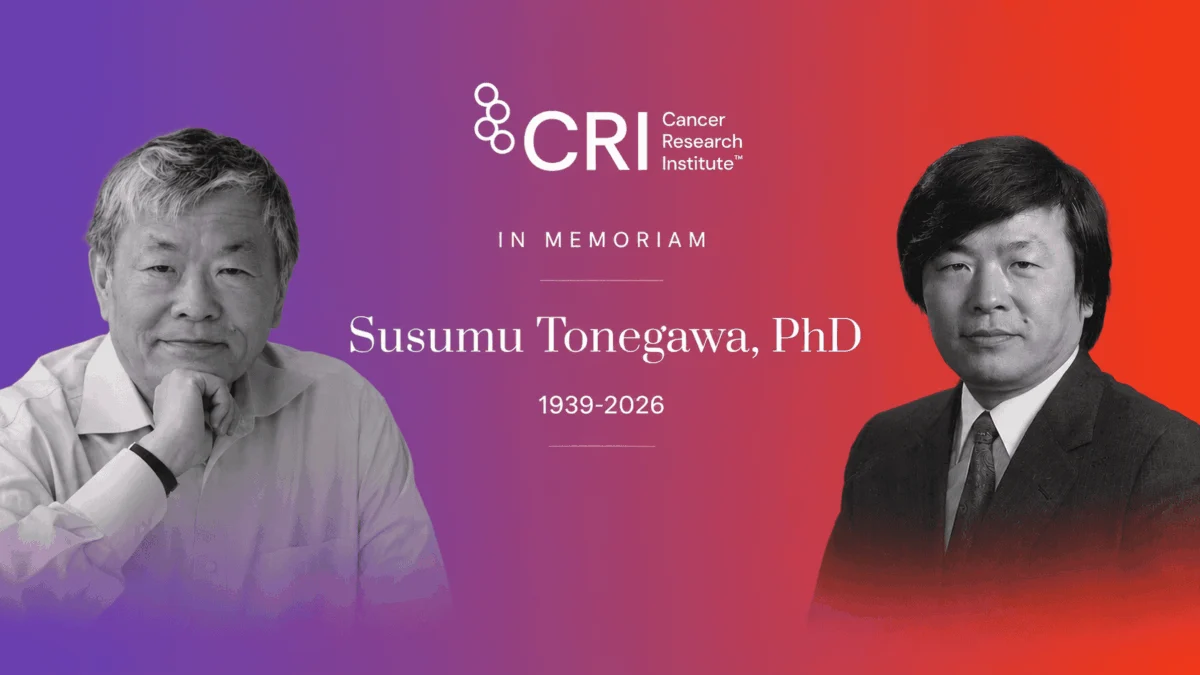
The global scientific community is in mourning following the passing of Dr. Susumu Tonegawa, a visionary molecular biologist whose work fundamentally altered our comprehension of the human immune system. Dr. Tonegawa, a Nobel laureate and a stalwart member of the Cancer Research Institute (CRI) Scientific Advisory Council, passed away on July 11, 2026, at the age of 86. His death marks the end of a career that spanned continents and disciplines, bridging the complex mechanisms of adaptive immunity with the equally intricate architecture of human memory.
Dr. Tonegawa’s life was defined by a restless intellectual curiosity. Whether he was unraveling the genetic puzzles of antibody production or mapping the engrams of the brain at the Massachusetts Institute of Technology (MIT), he remained a relentless pursuer of the "how" and "why" of biological life. His passing is not merely the loss of a brilliant researcher; it is the loss of a mentor, a philosopher of science, and a foundational architect of modern immunotherapy.
A Legacy of Discovery: The Genetic Mechanism of Diversity
To understand the magnitude of Dr. Tonegawa’s impact, one must look back to the prevailing biological dogma of the 1970s. At the time, the scientific community was gripped by a fundamental mystery: how could the human body produce an almost infinite variety of antibodies to fight off diverse pathogens when the human genome contains only a finite number of genes? The prevailing theory suggested that every antibody must be coded for by its own specific gene—a mathematical impossibility given the limited DNA capacity of the human cell.
Working with tireless precision, Dr. Tonegawa performed the experiments that shattered this assumption. In 1976, he demonstrated that immune cells do not inherit a fixed set of genes for antibodies. Instead, he discovered that these cells undergo a process of somatic recombination—a "genetic shuffle." By rearranging segments of DNA during development, immune cells can create a staggering diversity of antibody receptors. This discovery did more than just solve a riddle; it explained the very mechanism of adaptive immunity.
For this monumental breakthrough, Dr. Tonegawa was awarded the Nobel Prize in Physiology or Medicine in 1987. His work provided the bedrock upon which the modern field of immunology was built, offering the first clear explanation of how the immune system can distinguish between the "self" and the "non-self," a principle that remains the cornerstone of cancer immunotherapy today.
Chronology of a Scientific Life
Dr. Tonegawa’s journey was one of global movement and intellectual transformation. Born in 1939 in Nagoya, Japan, he displayed an early aptitude for the rigorous logic of the natural sciences.
- 1963: Graduated from Kyoto University, where he began his initial foray into microbiology.
- 1968: Received his PhD from the University of California, San Diego, marking the beginning of his international scientific career.
- 1971–1981: Served as a researcher at the Basel Institute for Immunology in Switzerland. It was here that he conducted his Nobel-winning research on antibody diversity, effectively silencing skeptics who doubted that DNA could be rearranged in somatic cells.
- 1981: Joined the faculty at the Massachusetts Institute of Technology (MIT), where he would spend the remainder of his active research career.
- 1987: Awarded the Nobel Prize in Physiology or Medicine, solidifying his status as a titan of molecular biology.
- 1994–2006: Served as the Director of the Center for Learning and Memory at MIT, where he shifted his focus from the immune system to the molecular basis of memory.
- 2009–2018: Served as Director of the RIKEN Brain Science Institute in Japan, continuing his commitment to international scientific collaboration.
- 2026: Passed away on July 11, leaving behind a legacy that has touched millions of lives through advancements in cancer treatment and beyond.
Bridging Immunology and Neuroscience
Perhaps the most remarkable aspect of Dr. Tonegawa’s career was his willingness to pivot to an entirely new field at the height of his fame. After revolutionizing immunology, he turned his sights to the brain. Many researchers spend their entire lives refining a single niche; Dr. Tonegawa chose to apply the same rigor he used to decode DNA to the study of neural circuits.
At MIT, he pioneered research into how memories are stored and retrieved. He utilized optogenetics—a technique that uses light to control the activity of individual neurons—to demonstrate that specific memories are tied to "engram cells." This work mirrored his earlier discoveries in immunology: just as he found the genetic "code" for immune recognition, he sought the physical "code" for human experience. This intellectual breadth made him a rare bridge-builder in the scientific world, encouraging researchers to look beyond their specific silos and consider the broader implications of their work.
Institutional Impact: The Cancer Research Institute
For the Cancer Research Institute (CRI), Dr. Tonegawa was more than a luminary; he was a guiding light. As a longtime member of the CRI’s Scientific Advisory Council, he played an instrumental role in shaping the organization’s strategic vision. He understood that the same adaptability he discovered in immune cells in the 1970s was the key to unlocking the future of oncology.
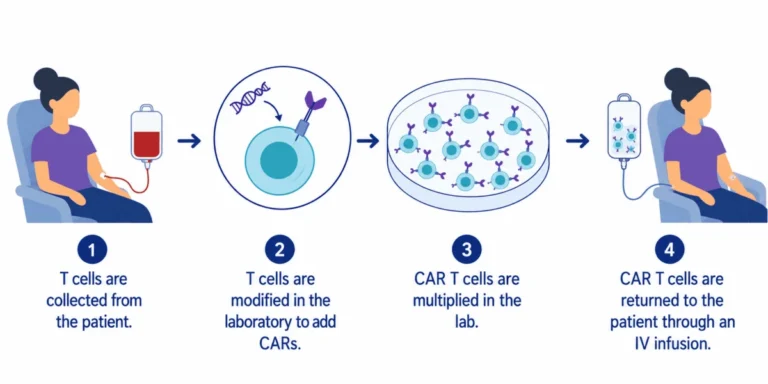
His influence on the CRI was characterized by his commitment to "high-risk, high-reward" science. He championed projects that pushed the boundaries of conventional thinking, insisting that the best breakthroughs often come from challenging established dogma. His mentorship of junior scientists at the institute helped cultivate a new generation of investigators who are currently at the forefront of developing CAR-T cell therapies and checkpoint inhibitors—treatments that essentially "teach" the immune system to hunt down and destroy cancer cells.
Official Responses and Reflections
The loss of Dr. Tonegawa has prompted an outpouring of tributes from the highest echelons of the scientific establishment. Alicia Zhou, PhD, CEO of the Cancer Research Institute, offered a poignant reflection on his contributions:
"The history of cancer immunotherapy rests on a handful of discoveries that fundamentally changed how we think about the immune system. Dr. Tonegawa’s discovery of the genetic mechanism that creates antibody diversity is one of them. His work revealed the remarkable adaptability of the immune system and forever changed how scientists study immunity, disease, and cancer. We were honored to benefit from his wisdom as a member of our Scientific Advisory Council, and his legacy will continue to inspire generations of scientists working to improve the lives of patients."
Colleagues remember him not just for his intellectual brilliance, but for his character. In his later years, when asked to define the nature of creativity, Dr. Tonegawa famously prioritized open-mindedness and the courage to abandon one’s own assumptions. He believed that scientific progress was not a linear path, but a series of collisions between disparate ideas.
The Enduring Implications for Modern Medicine
The implications of Dr. Tonegawa’s work are visible in every modern hospital that provides immunotherapy to cancer patients. When a patient receives a treatment that reprograms their own immune cells to recognize a tumor, they are benefiting from the fundamental science that Tonegawa pioneered. By proving that the immune system is a dynamic, evolving entity capable of internal genetic restructuring, he provided the theoretical license for doctors to manipulate that system for therapeutic gain.
Beyond immunology, his work in neuroscience continues to inform our understanding of neurodegenerative diseases. The same techniques he used to study memory are currently being used to investigate how immune dysfunction might contribute to conditions like Alzheimer’s and dementia. The "Tonegawa approach"—characterized by technological innovation, cross-disciplinary collaboration, and an unwavering commitment to basic science—remains the gold standard for clinical researchers today.
A Final Farewell
As the scientific community processes this loss, the focus remains on the immense value of the legacy he leaves behind. Dr. Tonegawa’s life serves as a testament to the power of human inquiry. He demonstrated that with enough curiosity, the most daunting mysteries of nature—be they the genetic codes of our defense systems or the neural maps of our memories—can be unlocked.
We extend our heartfelt condolences to Dr. Tonegawa’s family, friends, colleagues, and the countless trainees who benefited from his guidance. While he is no longer with us, the principles he championed—rigor, curiosity, and the courage to challenge the status quo—will continue to permeate the labs and clinics where the next generation of breakthroughs is currently being born. Dr. Susumu Tonegawa’s light has dimmed, but the fire he ignited in the world of science will burn for decades to come.