






In the landscape of modern medicine, few challenges are as persistent or as devastating as the aftermath of a heart attack. When blood flow to the heart is obstructed, the resulting tissue death creates a cascade of damage that often leads to irreversible scarring, heart failure, and a lifetime of compromised physical function. For decades, medical intervention has been largely reactive, focusing on clearing blockages and preventing secondary events. However, a revolutionary breakthrough in bioengineering—a "smart" injectable biomaterial—is poised to shift the paradigm from damage control to active tissue regeneration.
Developed by a team of bioengineers and physicians at the University of California San Diego, this novel biomaterial is designed to navigate the bloodstream and treat damaged tissue from the inside out. Unlike previous iterations of regenerative medicine that required invasive surgical access, this material promises a minimally invasive, systemic approach to healing that could one day treat everything from myocardial infarction to traumatic brain injury.
The Evolution of Cardiac Repair: A Chronological Journey
The journey toward this breakthrough began with the foundational work of Dr. Karen Christman, a professor of bioengineering at UC San Diego. Her team’s initial success centered on a hydrogel derived from the extracellular matrix (ECM) of cardiac muscle tissue. This natural scaffolding provided the structural support necessary for cells to regenerate, but it came with a significant caveat: it had to be injected directly into the heart muscle via a catheter.
The Milestone Timeline
- 2019: The team reports successful results from a Phase 1 human clinical trial of "VentriGel." While safe and feasible for patients with left ventricular dysfunction, the study underscored a critical limitation: direct myocardial injection could not be performed immediately after a heart attack due to the fragility of the tissue, creating a "treatment gap" during the most critical window of injury.
- 2022: A team of bioengineers and physicians publishes a landmark study in Nature Biomedical Engineering. The research introduces an intravascularly infused version of the ECM biomaterial, designed to be delivered through standard intravenous (IV) lines or during routine angioplasty.
- 2025: A follow-up study published in Nature Communications utilizes advanced spatial transcriptomics and single-nucleus RNA sequencing to map exactly how these ECM-based materials influence cellular repair, confirming their role in immune modulation and vascular development.
- Present Day: Efforts are currently focused on securing FDA authorization for clinical trials, with commercial entities like Ventrix Bio, Inc. working to scale the technology for broader medical applications.
The Mechanics of Regeneration: From Hydrogel to Nano-Scale Therapy
The primary obstacle in transforming the original VentriGel into an intravenous therapy was particle size. The original hydrogel particles were too large to circulate effectively through the microvasculature. Martin Spang, the paper’s first author and a doctoral alumnus of the Christman lab, spearheaded the solution. By processing the liquid precursor of the hydrogel through high-speed centrifugation, the team isolated nano-sized particles.
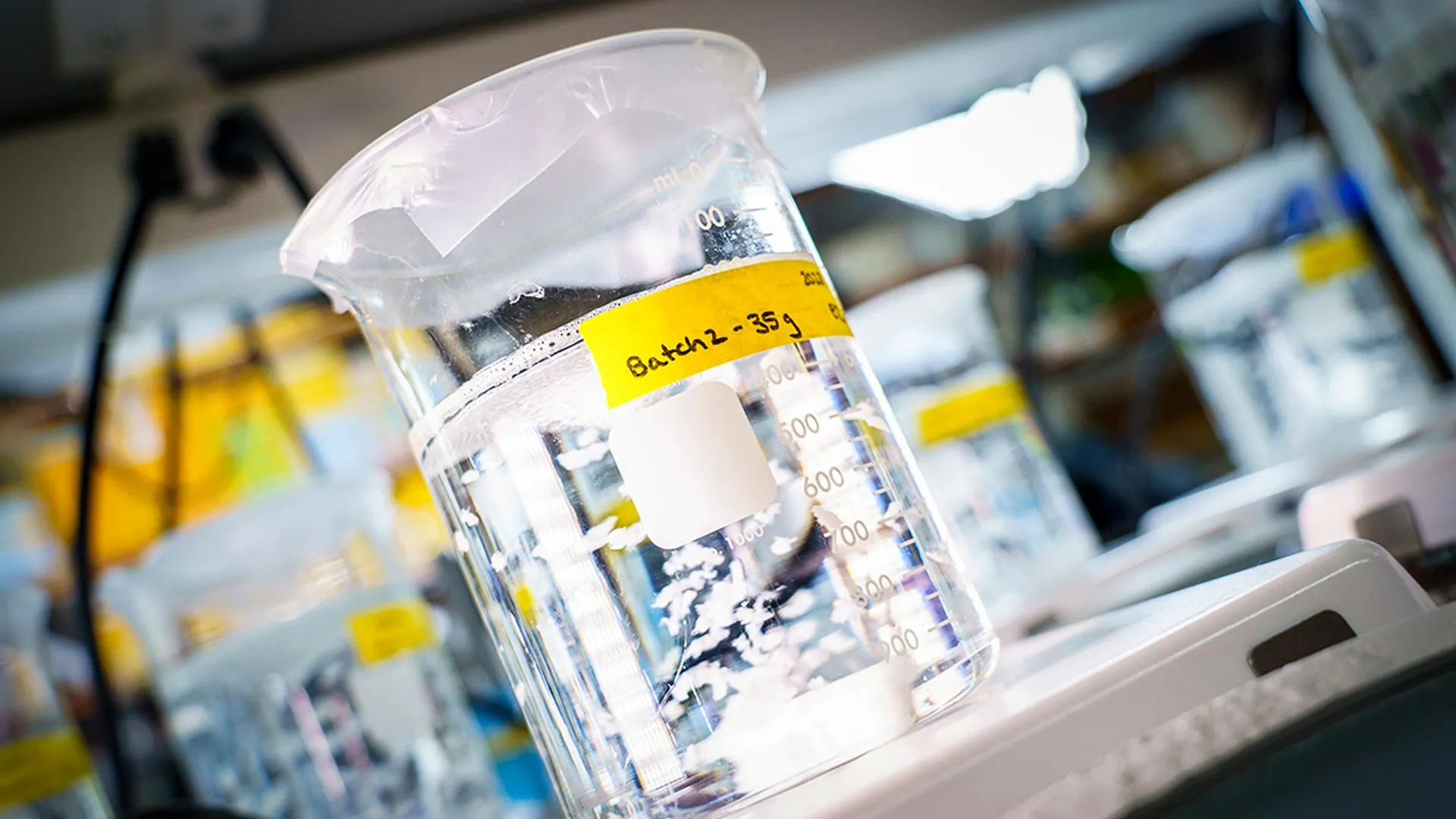
Once refined, these particles are dialyzed, sterile-filtered, and freeze-dried into a stable powder. When reconstituted with sterile water, the material becomes a therapeutic agent capable of navigating the body’s highway—the bloodstream.
Targeting the "Leaky" Microvasculature
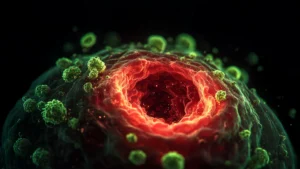
The biomaterial’s brilliance lies in its ability to seek out damage. After a heart attack, the endothelial cells lining the blood vessels become inflamed and develop microscopic gaps. The researchers discovered that their nano-scale biomaterial naturally localizes to these injured areas. Upon arrival, it does more than just fill space; it adheres to the damaged endothelial cells, effectively "sealing" the leaks and mitigating the inflammation that typically exacerbates tissue necrosis. By reducing this inflammation, the material creates a more favorable environment for the body to begin its own repair processes.
Supporting Data: Proof in Preclinical Models
The clinical efficacy of the material was validated through rigorous testing in rodent and porcine models. In subjects experiencing acute myocardial infarction, the intravenous administration of the biomaterial yielded statistically significant improvements in cardiac health.
Key metrics observed in these studies included:
- Reduced Left Ventricular Volumes: A critical marker for preventing the heart from dilating and weakening into failure.
- Improved Wall Motion Scores: Indicating that the heart muscle was contracting with greater force and synchronization.
- Gene Expression Shifts: Analysis revealed positive changes in gene pathways associated with tissue repair, lymphatic development, and the salvage of myocardial cells.
Furthermore, the material’s rapid degradation—largely breaking down within three days—ensures that it performs its restorative function without leaving behind permanent synthetic debris, a common concern with other scaffolding materials.
Official Perspectives: The Clinical Imperative
The medical community has greeted these developments with cautious optimism. For interventional cardiologists, the appeal is not just the regenerative potential, but the ease of administration.
Dr. Ryan R. Reeves, a physician in the UC San Diego Division of Cardiovascular Medicine, emphasizes the massive clinical burden of heart disease. "Coronary artery disease, acute myocardial infarction, and congestive heart failure continue to be the most burdensome public health problems affecting our society today," Dr. Reeves notes. "As an interventional cardiologist, I would love to have another therapy to improve patient outcomes and reduce debilitating symptoms. This easy-to-administer therapy has the potential to play a significant role in our treatment approach."
The potential for this therapy is bolstered by its "off-the-shelf" nature. Because it utilizes the existing cardiac extracellular matrix, it is highly biocompatible, and the intravascular delivery method allows physicians to incorporate it into existing protocols like stenting or angioplasty without necessitating a separate, high-risk surgical procedure.
Broadening the Horizon: Implications Beyond Cardiology
Perhaps the most compelling aspect of this research is its versatility. While the heart was the initial testing ground, the mechanism of targeting leaky microvasculature is a common feature in many inflammatory conditions.
In proof-of-concept experiments, the UC San Diego team demonstrated that the biomaterial could successfully reach inflamed tissue in models of traumatic brain injury and pulmonary arterial hypertension. This suggests that the "bloodstream delivery" model could eventually be used to treat organs that are currently considered "difficult-to-access." If the material can be customized or targeted to specific organ markers, the field of regenerative medicine could expand to include neuro-regeneration, lung repair, and perhaps even the systemic treatment of chronic inflammatory diseases.
The Path Toward Human Clinical Trials
As of 2025, the transition from animal models to human clinical trials remains the central focus. The path forward involves proving to regulatory bodies—such as the FDA—that the material is not only effective but consistently safe across diverse human populations.
While Ventrix Bio, Inc. is currently exploring the application of intramyocardial injections for rare conditions like hypoplastic left heart syndrome in children, the broader application of the intravenous biomaterial awaits final regulatory clearance. The researchers are keenly aware that the jump from the laboratory bench to the bedside is a marathon, not a sprint. However, the data gathered via transcriptomics and RNA sequencing has provided a deeper understanding of the "mechanisms of healing," giving researchers a clearer roadmap for what to look for during human trials.
Conclusion: A New Era of Regenerative Engineering
The development of an injectable biomaterial represents a fundamental shift in how we perceive tissue repair. By viewing the bloodstream not merely as a transport system for oxygen and nutrients, but as a delivery mechanism for regenerative medicine, Dr. Christman and her team have opened a new frontier.
If successful in human trials, this therapy could rewrite the standard of care for millions. It offers the promise of a future where a heart attack is not a sentence of permanent disability, but a condition that can be actively reversed through a simple, targeted infusion. As the medical community watches the progress of these studies, one thing remains clear: the future of regenerative engineering is moving away from the scalpel and toward the bloodstream, reaching the most fragile parts of our anatomy from the inside out.