










In the modern era of oncology, the landscape of treatment is shifting from traditional interventions to the precision of the immune system. At the forefront of this scientific evolution is the Cancer Research Institute (CRI), an organization dedicated to the singular goal of creating a world immune to cancer. As August marks "Make-A-Will Month," the CRI is inviting its supporters to consider a profound, long-term commitment: integrating a legacy gift into their estate planning to fuel the next generation of immunotherapy breakthroughs.
The Power of Planned Giving: A Strategic Imperative
Planned giving—specifically through wills or living trusts—represents more than just a financial transaction; it is a declaration of belief in the future of science. For many supporters, the decision to name the Cancer Research Institute as a beneficiary is rooted in deeply personal experiences. Whether it is an individual who personally navigated the challenges of a cancer diagnosis or a family member honoring the memory of a loved one who benefited from immunotherapy, these gifts are anchored in gratitude.
The mechanism of a legacy gift is intentionally designed to be both flexible and impactful. By including CRI in an estate plan, donors ensure that their assets continue to serve a purpose that transcends their lifetime, providing the financial bedrock necessary for high-risk, high-reward scientific research that might otherwise go unfunded.
Chronology of Progress: From Lab Bench to Bedside
To understand the weight of a legacy gift, one must look at the historical trajectory of immunotherapy. For decades, the concept of harnessing the body’s own immune system to fight malignant tumors was considered radical, if not impossible. The Cancer Research Institute has spent decades nurturing this field, acting as a catalyst for discovery when the rest of the medical community remained skeptical.
The Foundation of Discovery
In the early years of the organization, CRI’s mission was to validate the foundational science of immunology. By providing grants to researchers who were exploring the interactions between T cells and cancer cells, CRI helped establish the biological plausibility of immunotherapy.
The Breakthrough Era
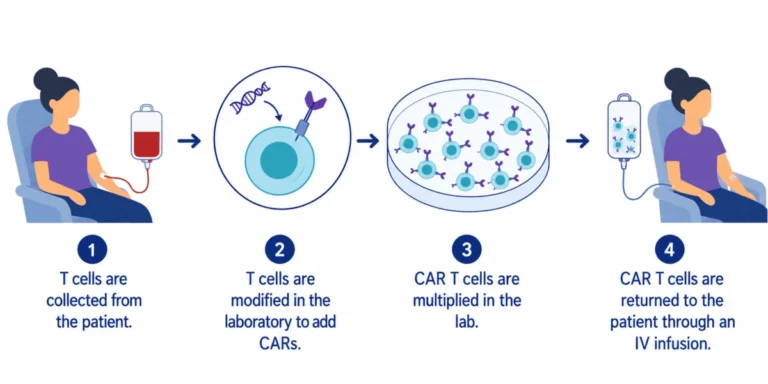
As the research matured, the 2010s saw a paradigm shift. The development of checkpoint inhibitors and CAR-T cell therapies marked the transition from theoretical research to clinical reality. These therapies have since saved countless lives, proving that the immune system is indeed the most powerful weapon against cancer.
The Future Horizon
Today, the focus has shifted toward refining these treatments and understanding why some patients respond better than others. Current research is delving into the intersection of technology and biology, utilizing artificial intelligence to map T cell behavior and investigating the role of the nervous system in tumor progression. Each of these steps is a milestone, made possible by the cumulative support of a community that understands that the fight against cancer is a marathon, not a sprint.
Supporting Data: Why Governance Matters
When donors commit their assets to a nonprofit, they are placing their trust in the organization’s ability to steward those funds with maximum efficiency. In an era of increased scrutiny regarding charitable spending, the Cancer Research Institute has consistently set the standard for transparency.
The organization regularly receives top-tier recognition from independent third-party assessors, maintaining a 100-point, four-star charity rating. This metric is not merely a badge of honor; it is a vital indicator of fiscal health. For a donor, this rating confirms that their bequest—no matter the size—will be utilized for its intended purpose: funding the brightest minds in science rather than being lost to excessive overhead or administrative bloat.
According to institutional data, bequests form a substantial portion of the funding that supports CRI’s core research programs. These funds are unrestricted in a way that allows the institute to pivot quickly when a new scientific opportunity arises, ensuring that researchers are not waiting for bureaucratic processes to catch up to their discoveries.
Official Perspectives: The Impact of Sustained Funding
Katherine Pooser, the Director of Planned Giving at CRI, emphasizes that legacy giving is the lifeblood of long-term innovation. "When a person generously gives through a will or living trust, they can do so with confidence knowing CRI regularly receives recognition from third-party assessors for its good governance and fiscal responsibility," Pooser explains. "Supporters can also be confident that their gift makes a real difference. Bequests of every size come together to make up a substantial part of the funding that drives the next wave of immunotherapy developments."
The scientists on the front lines share this sentiment. The funding provided by CRI creates a unique ecosystem where researchers are not just employees, but members of a global network.
Dr. Lloyd Bod, a CRI Thompson Family Foundation CLIP Investigator and assistant professor of medicine at Massachusetts General Hospital, highlights the dual benefit of this support. "Being a CRI CLIP Investigator is an honor, and it not only provides crucial funding, but also connects me with a network of researchers dedicated to making groundbreaking discoveries in immunotherapy," Dr. Bod notes. "It is a commitment to pursuing innovative science that can lead to life-saving therapies for patients worldwide."
The nature of the research supported by these funds is remarkably diverse. From Dr. Tamar Lea Ben-Shaanan’s exploration of sensory neurons and their impact on lung cancer to Dr. Peng Jiang’s work utilizing artificial intelligence to analyze T cell behavior, the scope of inquiry is vast. These projects require long-term financial security to see through to completion—a security provided by the thoughtful planning of donors.
Implications: A World Immune to Cancer
The decision to include a nonprofit in one’s will is often described as an "ultimate gift." It is an act of legacy that shapes the future. As we observe Make-A-Will Month, the implications of such a decision extend far beyond the individual donor.
The Scientific Multiplier Effect
Funding provided through estate gifts acts as a force multiplier. By supporting the early stages of research, these gifts allow scientists to generate the preliminary data required to secure larger federal grants. In this sense, a donation to CRI does not just fund one experiment; it builds a bridge to a decade of future research.
Empowering the Next Generation
A critical component of CRI’s mission is the support of early-career investigators. By funding the "brightest minds," the organization ensures that the talent pipeline in oncology remains robust. Many of the leading immunologists today were once CRI fellows; their career paths were defined by the initial support they received from the institute.
A Legacy of Hope
Perhaps the most significant implication is the cultural shift regarding cancer. By supporting immunotherapy, donors are contributing to a future where cancer is not necessarily a death sentence, but a manageable condition or a curable disease. The goal of a "world immune to cancer" is ambitious, but it is no longer the realm of science fiction. It is the destination toward which every piece of research, funded by every bequest, is moving.
How to Get Involved: Taking the Next Step
Establishing a will or living trust is a task often deferred, yet it is one of the most important administrative actions a person can take. As August serves as a reminder to organize one’s affairs, the Cancer Research Institute provides comprehensive resources to assist those who wish to leave a legacy.
Whether a donor chooses to leave a specific dollar amount, a percentage of their estate, or a residuary gift, every contribution is treated with the same level of respect and dedication. For those who have questions regarding the technical aspects of bequests, the CRI office of gift planning offers professional guidance. They can be reached directly at 212-792-5212.
The process of including CRI in your estate plan is designed to be simple, flexible, and deeply personal. It does not require vast wealth to make a difference; it only requires the foresight to ensure that your values live on through the work of the scientists who will eventually solve the puzzle of cancer.
Conclusion
As we look toward the future of medicine, it is clear that immunotherapy will be the cornerstone of cancer care. The Cancer Research Institute has been the steady hand guiding this field through uncertainty and toward triumph. By choosing to include CRI in your will or trust, you are not merely supporting an organization; you are investing in a healthier, cancer-free world for your children and grandchildren.
Your legacy is the impact you leave behind. By partnering with the Cancer Research Institute, you ensure that your legacy is one of discovery, resilience, and hope. This August, take the time to formalize your wishes and become a part of the movement that is turning the tide against cancer. The progress of the next century is being built today, and your support is the foundation upon which that progress rests.