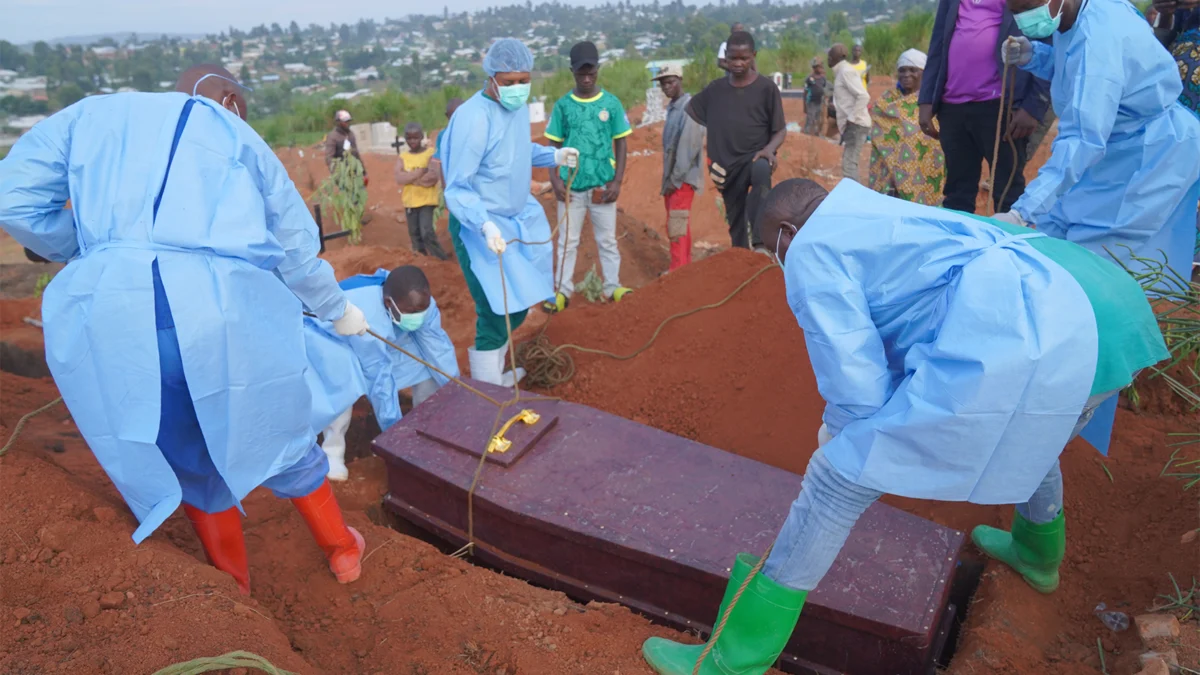
August 20, 2026 — In a desperate bid to curb the most aggressive Ebola outbreak in recorded history, the World Health Organization (WHO) and its global partners announced on Thursday that they are mobilizing 70,000 doses of the rVSV∆G-ZEBOV-GP (Ervebo) vaccine for immediate deployment to the Democratic Republic of the Congo (DRC).
While the move is being hailed as a milestone in international cooperation, health officials are tempering expectations with a critical caveat: the vaccine, which has proven highly effective against the Zaire strain of the Ebola virus, has not been clinically validated to provide full immunity against the Bundibugyo virus currently ravaging the eastern provinces of the country.
The Current Crisis: A Statistical Emergency
The data surrounding the current outbreak is nothing short of catastrophic. Since the official declaration of the outbreak on May 15, the virus has claimed 2,476 lives out of 5,208 confirmed cases. More alarmingly, epidemiologists note that the virus is spreading at a rate three times faster than the 2014-2016 West African epidemic, which remains the deadliest in history with over 11,000 deaths.
The case fatality rate (CFR) currently sits at a harrowing 47.5% nationally. However, this figure masks localized tragedies; in the North Kivu province, where response efforts are hampered by terrain, conflict, and logistical hurdles, the fatality rate has surged to an estimated 70%.
Chronology: From Mining Town to National Crisis
The timeline of the current epidemic suggests a significant window of undetected transmission. Evidence gathered by local health authorities and international surveillance teams indicates that the Bundibugyo strain likely emerged in the mining town of Mongbwalu as early as February 2026.
- February 2026: Initial, unlinked cases of a mysterious, hemorrhagic fever appear in rural mining communities near Mongbwalu.
- May 15, 2026: Following a cluster of deaths that overwhelmed local clinics, the DRC government officially declares an Ebola outbreak, identifying the pathogen as the Bundibugyo virus.
- June–July 2026: The virus gains a foothold, spreading across six provinces in eastern Congo. The speed of transmission outpaces contact tracing efforts, leading to a surge in cases among individuals not previously identified as high-risk contacts.
- August 20, 2026: The International Coordinating Group on Vaccine Provision approves the release of 70,000 doses of Ervebo, initiating the largest intervention attempt since the outbreak began.
Scientific Uncertainty: The Challenge of the Bundibugyo Strain
The core of the medical dilemma lies in the virus’s genetic makeup. The Ervebo vaccine is a live-attenuated viral vector vaccine specifically engineered to trigger an immune response against the Zaire ebolavirus.
"We are entering uncharted territory," noted a spokesperson for the WHO. "While Ervebo is a proven tool in our arsenal, the Bundibugyo virus is a different genetic entity. We lack definitive clinical evidence that this specific vaccine provides robust protection against this strain."
Despite this, the decision to deploy the vaccine is supported by encouraging preliminary data. Recent laboratory studies and animal models suggest a potential "cross-reactive" immune response. To address the knowledge gap, the distribution plan is twofold:
- 50,000 doses will be allocated for frontline healthcare workers and high-risk contacts, prioritizing those at the most immediate risk of exposure.
- 20,000 doses will be strictly utilized for a Phase III clinical trial. This trial is designed to provide real-world data on whether the vaccine can reduce the severity or transmission rate of the Bundibugyo strain, potentially paving the way for a more permanent solution.
Official Responses and Global Solidarity
WHO Director-General Dr. Tedros Adhanom Ghebreyesus characterized the vaccine shipment as a testament to global solidarity. "The situation in the Congo is a clear and present danger to regional stability and global health security," Dr. Tedros said. "Our commitment extends beyond just providing these doses. We are reinforcing our presence on the ground to bolster surveillance, enhance the quality of patient care, and engage with local communities who are the true front line of this battle."
The International Coordinating Group (ICG) on Vaccine Provision, a partnership that includes the WHO, UNICEF, the International Federation of Red Cross and Red Crescent Societies (IFRC), and Doctors Without Borders (MSF), facilitated the release of the doses. The rapid approval process was initiated by an urgent request from the DRC government, signaling a rare instance of swift bureaucratic alignment in the face of a mounting death toll.
Implications for Public Health Strategy
The reliance on a vaccine that has not been specifically approved for the circulating strain highlights the desperation of the current situation. For months, the lack of a targeted vaccine or specific therapeutic treatment for the Bundibugyo virus has left responders with limited tools, relying almost exclusively on isolation, barrier nursing, and rigorous contact tracing—all of which have struggled to keep pace with the virus’s rapid spread.
The "Silent" Transmission Problem
One of the most concerning trends identified by field researchers is that the majority of new cases are being reported outside of established contact-tracing networks. This indicates that there are undetected chains of transmission operating in the community. When a virus spreads faster than the public health apparatus can map it, the result is an inevitable spike in mortality, as patients arrive at clinics too late for supportive care.
The Impact of the Phase III Trial
The inclusion of a Phase III trial within the deployment strategy is an ambitious attempt to turn an emergency response into a scientific opportunity. By systematically tracking the vaccinated population, researchers hope to determine:
- Safety profiles: Does the vaccine behave differently in populations exposed to the Bundibugyo virus?
- Efficacy: Does the vaccine reduce the viral load in infected individuals?
- Public Perception: How does the community receive a vaccine that is being administered under "trial" conditions?
Conclusion: A Race Against Time
The arrival of these 70,000 doses in the Congo provides a glimmer of hope, but experts warn that it is not a "magic bullet." The success of this intervention depends on a multifaceted approach. Vaccination must be coupled with sustained efforts in sanitation, community education, and the stabilization of healthcare infrastructure in the conflict-ridden eastern provinces.
As the death toll climbs past 2,400, the international community is watching closely. The outcome of this effort will not only determine the fate of thousands in the DRC but will also provide a blueprint for how the global health community handles the emergence of rare, highly lethal viral strains in the future. For now, the focus remains on the logistical challenge of moving these doses into the most isolated areas, where they are needed most to break the chains of transmission that have turned this region into an epicenter of human suffering.