In the high-stakes world of oncology, the distance between a theoretical breakthrough in a laboratory and a life-saving treatment in a clinic is often measured in decades and billions of dollars. Bridging this "valley of death"—the precarious gap where promising science often stalls for lack of resources—is the primary mission of the Cancer Research Institute (CRI).
As of July 2026, the CRI has officially unveiled its latest cohort of recipients for the Clinic and Laboratory Integration Program (CLIP) and the Technology Impact Award. These grants represent more than just financial support; they are a strategic investment in the visionaries willing to challenge the biological status quo. By focusing on both translational research and the development of next-generation biotechnological tools, the CRI is betting on a future where the immune system is fundamentally reprogrammed to defeat cancer.
The Mandate for Innovation: Main Facts of the 2026 Awards
The 2026 awards are characterized by a dual-track approach to oncological advancement. The CLIP awards are designed specifically for researchers whose work acts as a conduit between the bench and the bedside. These projects are tasked with translating fundamental immunological discoveries into clinical trials that can directly improve patient outcomes.
Parallel to this, the Technology Impact Awards address a different bottleneck: the limitation of existing research tools. Often, scientific progress is stalled because current diagnostic or imaging technologies lack the resolution or sensitivity to track the complex, real-time interactions between immune cells and tumor microenvironments. By funding "high-risk, high-reward" technology development, the CRI ensures that the researchers of tomorrow have the instruments necessary to see what was previously invisible.
"Progress in cancer immunotherapy depends on scientists who are willing to challenge conventional thinking and pursue bold new approaches," said CRI CEO Alicia Zhou, PhD. "These projects reflect the kind of innovative, high-impact science that has the potential to improve outcomes for patients and shape the future of cancer treatment."
A Chronology of Progress: From Bench to Bedside
To understand the importance of these 2026 awards, one must look at the historical trajectory of the CRI’s funding model. For decades, the field of immunotherapy was considered fringe science, dismissed by many as ineffective. However, through persistent funding of early-stage, "bold idea" research, the CRI helped shepherd the field into the mainstream.
- 1953–1990s: Foundations: The CRI focused on establishing the link between the immune system and cancer, funding initial investigations into tumor immunology.
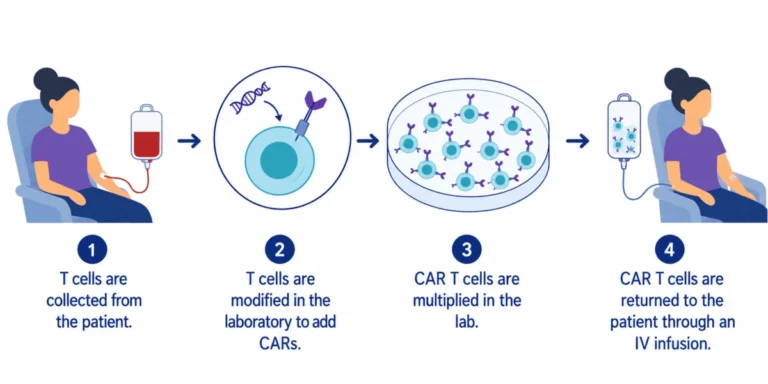
- 2000s–2010s: The Proof of Concept: This era saw the rise of checkpoint inhibitors and CAR T-cell therapy. The CRI’s early-stage grants during this period provided the "seed corn" for what would eventually become multi-billion-dollar clinical successes.
- 2020–2025: Scaling Precision: The focus shifted toward understanding the "tumor microenvironment" (TME)—the complex ecosystem surrounding a tumor that often suppresses the immune system.
- 2026: The Era of Integration: The current cohort of awardees represents the next phase of evolution: the seamless integration of clinical data, artificial intelligence-driven diagnostics, and novel biological engineering.
The 2026 awards continue this timeline by prioritizing research that doesn’t just study cancer, but actively engineers the environment required to dismantle it.
Supporting Data: Why CLIP and Tech Impact Matter
The efficacy of these awards is grounded in the reality of current cancer research metrics. Recent data from the CRI and affiliated institutions suggest that translational research—work that bridges basic science and clinical application—is 40% more likely to result in a patent or a successful Phase I clinical trial than basic research conducted in isolation.
Furthermore, the Technology Impact Awards target a critical "technological debt" within oncology. Current analysis shows that:
- Spatial Resolution Gap: Nearly 60% of current immune-oncology studies struggle to visualize the interaction between T-cells and tumor cells at a sub-cellular level.
- Data Processing Lag: The volume of data generated by single-cell sequencing has outpaced the computational tools available to analyze it, leading to a bottleneck in interpreting patient-specific immune responses.
By providing seed funding for computational systems and advanced imaging, the CRI is essentially upgrading the "operating system" of global cancer research.
Official Perspectives: The Vision from the Top
The selection process for the 2026 cohort was rigorous, involving a panel of world-leading immunologists who evaluated candidates based on scientific merit, clinical potential, and the "boldness" of their hypotheses.
"We are not looking for incremental improvements," says Dr. Zhou. "We are looking for the kind of science that disrupts the current standard of care. Whether it is a new way to deliver T-cells to a ‘cold’ tumor or an AI-driven platform that predicts a patient’s response to a specific immunotherapy months before it happens, our goal is to provide the runway for these ideas to take off."
The sentiment across the scientific community is that the CRI’s model is one of the few that allows for genuine intellectual risk. In an academic environment often pressured by "publish or perish" metrics, the CLIP and Technology Impact Awards offer a rare reprieve: the freedom to fail in the pursuit of something truly transformational.
Implications: Building a Future Immune to Cancer
The implications of the 2026 CLIP and Technology Impact Awards extend far beyond the laboratory. If successful, these projects could trigger a paradigm shift in how we categorize and treat cancers.
1. From "One-Size-Fits-All" to Hyper-Personalization
One of the most promising avenues being explored by the 2026 awardees is the use of real-time diagnostic tools to monitor patient responses. Currently, the wait-and-see approach in immunotherapy can lead to wasted time if a drug is ineffective. Advanced imaging platforms funded by the Technology Impact Awards could allow clinicians to see within days—rather than months—whether a treatment is working, allowing for rapid pivots in therapy.
2. Overcoming the "Cold" Tumor Barrier
A significant challenge in the field is the existence of "cold" tumors—cancers that the immune system essentially ignores. Many of the 2026 CLIP projects are focused on "heating up" these tumors, using novel biological triggers to draw immune cells into the tumor core. This represents a potential breakthrough for patients with pancreatic or certain breast cancers, which have historically been resistant to immunotherapy.
3. Long-Term Sustainability
The research supported by the CRI does not exist in a vacuum. By fostering a network of CLIP and Tech Impact alumni, the Institute is creating a global knowledge ecosystem. As these researchers move into leadership positions in pharmaceutical companies, government agencies, and major teaching hospitals, they carry with them the "CRI mindset"—a collaborative, patient-centric approach that prioritizes high-impact discovery over academic bureaucracy.
A Call to Continued Action
The 2026 awards are a testament to the fact that the fight against cancer is not a sprint; it is an iterative, multi-generational marathon. While the progress made to date is significant, the road ahead remains complex. The cancers of tomorrow will require the tools of tomorrow, and the CRI has positioned itself at the vanguard of that necessity.
As these 2026 investigators begin their work, the scientific community watches with cautious optimism. If even a fraction of these projects reach their clinical potential, the landscape of oncology will be irrevocably altered. Patients will have access to treatments that are not only more precise but also more powerful, offering hope where there was once only prognosis.
For those watching the front lines of cancer immunotherapy, the message of 2026 is clear: the boldest ideas are often the most vital. Through the CLIP and Technology Impact Awards, the Cancer Research Institute is ensuring that these ideas are not just dreamed, but realized, tested, and ultimately, put to work in the service of saving lives.
For more information on the 2026 awardees and to track the progress of their individual projects, visit the official Cancer Research Institute website.