






For decades, the field of oncology has chased a "holy grail": the ability to train the human immune system to identify and neutralize cancer with the same precision it uses to fight a common cold. While the promise of cancer vaccines has long hovered on the horizon of medical science, a historic announcement from Merck and Moderna has signaled that this vision is no longer speculative—it is a clinical reality.
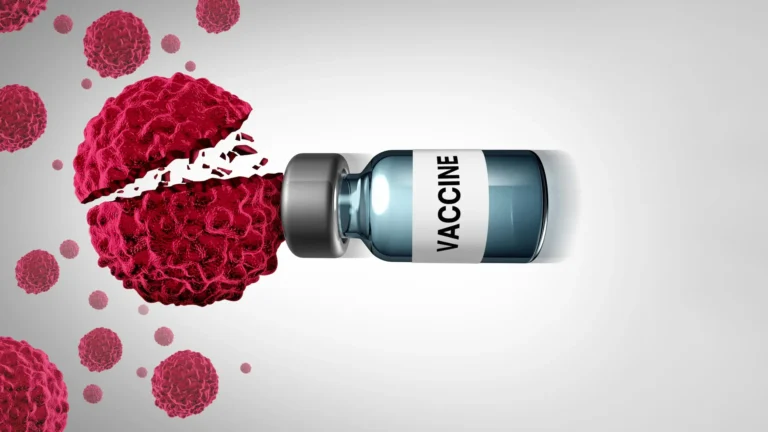
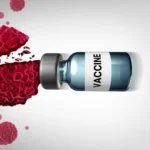
The companies recently announced positive topline results from the Phase 3 INTerpath-001 trial, a landmark study evaluating intismeran autogene, an individualized, mRNA-based cancer vaccine. When administered in combination with the immune checkpoint inhibitor pembrolizumab (Keytruda®), the therapy significantly extended the time patients lived without their cancer returning. This result marks the first time an individualized neoantigen therapy has successfully cleared the high bar of a Phase 3 clinical trial, representing a watershed moment in the history of medicine.
The Science of the "Personalized Guide"
To understand why this breakthrough is so significant, one must first distinguish therapeutic cancer vaccines from the conventional vaccines the public encounters in a pharmacy. Traditional vaccines are preventative; they expose the immune system to a weakened pathogen to "teach" it to block an infection before it takes hold.
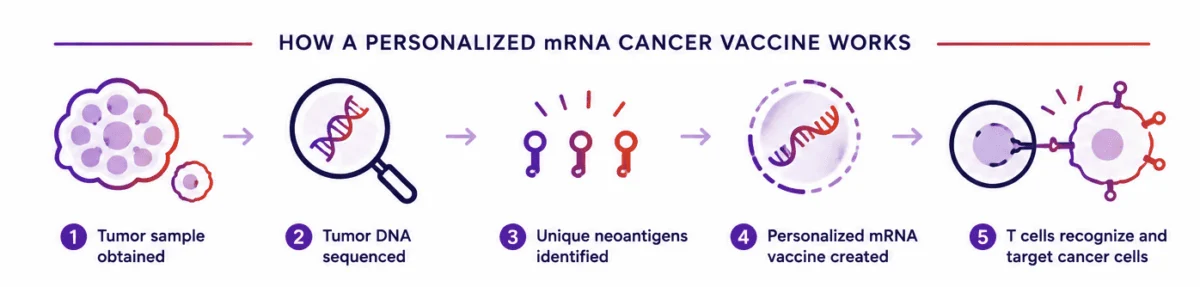
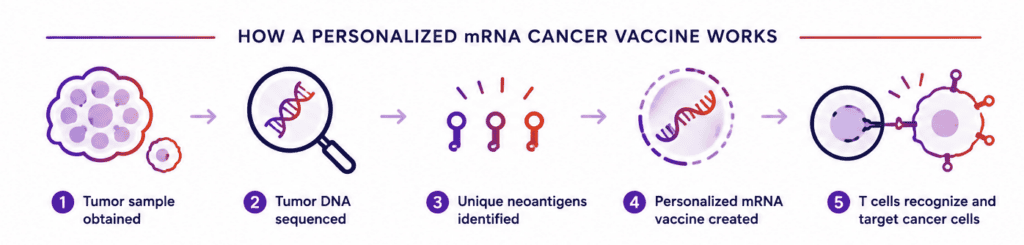
Intismeran autogene, by contrast, is a therapeutic vaccine—a treatment designed to be administered after a diagnosis. Most importantly, it is entirely bespoke. The process begins with a biopsy of the patient’s tumor. Researchers perform high-throughput genetic sequencing to identify unique mutations, known as neoantigens, which are present on the surface of malignant cells but absent from healthy ones.
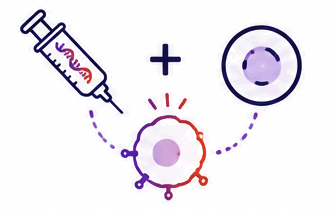
Once these unique "molecular fingerprints" are identified, scientists synthesize mRNA molecules that encode these specific neoantigens. When injected into the patient, this mRNA acts as a biological set of instructions, essentially providing the immune system with a "Most Wanted" poster of the patient’s specific cancer.
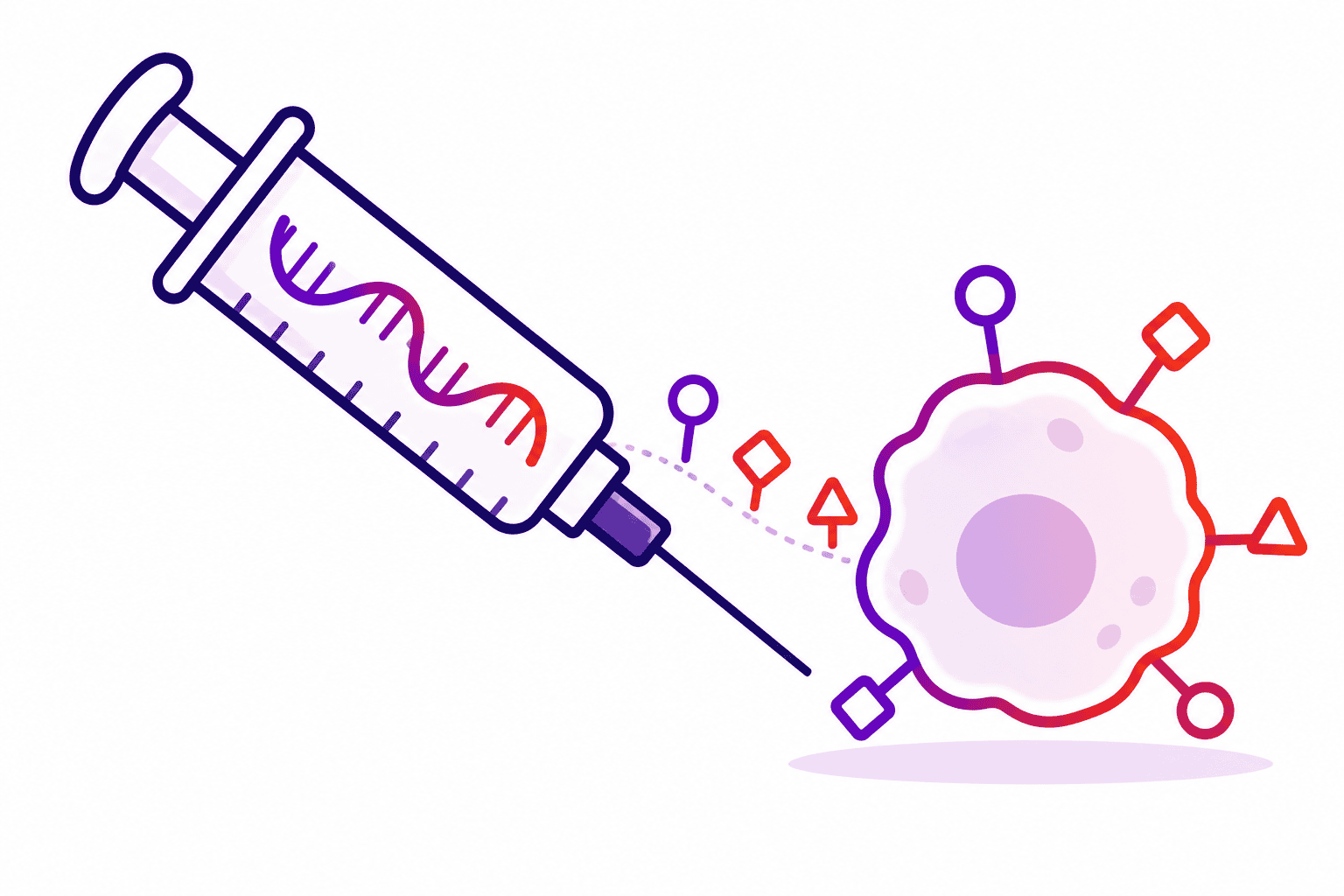
However, recognizing the enemy is only half the battle. Cancer cells are notorious for "cloaking" themselves by hijacking the body’s natural immune checkpoints—the "brakes" that keep the immune system from overreacting. By utilizing Keytruda, which blocks the PD-1 checkpoint, the treatment prevents cancer cells from silencing T cells. The vaccine provides the targeting coordinates, and the checkpoint inhibitor ensures the "soldiers" of the immune system remain engaged and lethal.
A Chronology of Discovery: From BCG to mRNA
This milestone is the culmination of over 70 years of dedicated research, much of it championed by the Cancer Research Institute (CRI). The journey from the lab bench to the clinic has been a marathon of incremental breakthroughs.
The Foundation (1950s–1990s)
The story began with Dr. Lloyd J. Old, the founding scientific director of the CRI. In the 1950s, he demonstrated that the tuberculosis vaccine, Bacillus Calmette-Guérin (BCG), could stimulate an immune response against tumors in mice. This discovery was revolutionary, proving that the immune system could, under the right conditions, reject cancer. BCG eventually became the first FDA-approved active immunotherapy for cancer.
The Checkpoint Revolution (1990s–2010s)
In 1992, the CRI began funding the laboratory of Dr. James P. Allison. His work unveiled the mechanisms behind immune checkpoints, showing that blocking molecules like CTLA-4 and PD-1 could "release the brakes" on the immune system. His Nobel Prize-winning work provided the foundation for modern checkpoint blockade therapy, which has saved countless lives.
The mRNA Era (2000s–Present)
Parallel to these developments, the field of mRNA technology was maturing. In 2001, the CRI and the Ludwig Institute for Cancer Research launched the Cancer Vaccine Collaborative (CVC). Over the next decade, this network conducted nearly 60 early-phase trials, deciphering which neoantigens were most effective at triggering immune responses.
The breakthrough in mRNA delivery—work spearheaded by Nobel laureates Katalin Karikó and Drew Weissman, alongside Uğur Şahin and Özlem Türeci—provided the final piece of the puzzle. By 2021, the scientific community recognized these contributions with the William B. Coley Award, setting the stage for the convergence of mRNA technology and immunotherapy that we see in the INTerpath-001 trial today.
Supporting Data: INTerpath-001 at a Glance
The INTerpath-001 trial was a global, high-stakes endeavor. It enrolled 1,137 patients suffering from stage IIB to IV cutaneous melanoma. All participants had undergone surgical resection to remove their tumors, placing them at high risk for recurrence.
The study design was straightforward yet rigorous: patients were randomized to receive either the combination of intismeran autogene and Keytruda or Keytruda alone.
While the full magnitude of the benefit remains under embargo pending formal presentation, the interim analysis yielded clear, statistically significant improvements in two critical metrics:
- Recurrence-Free Survival (RFS): Patients stayed cancer-free longer.
- Distant Metastasis-Free Survival (DMFS): Patients saw a reduced risk of the cancer spreading to secondary organs, which is the primary cause of cancer-related mortality.
These results align with the promising data seen in the smaller Phase 2b trial, which reported a 49% reduction in the risk of recurrence or death and a 59% reduction in the risk of distant metastasis or death compared to Keytruda monotherapy.
Official Perspectives and Industry Response
The pharmaceutical industry has hailed the results as a "new chapter" in oncology. Merck and Moderna have both emphasized that while the results are overwhelmingly positive, the work is not yet finished.
"This trial proves the concept that we can personalize a vaccine to the specific mutations of an individual’s cancer," said a spokesperson for the trial’s research team. "However, the next phase of our work involves moving beyond clinical efficacy to clinical access."
Medical experts emphasize that the success of the trial justifies the decades of "high-risk, high-reward" funding provided by organizations like the CRI. By investing in basic science before it was commercially viable, the CRI fostered the environment where Moderna and Merck could eventually scale this complex technology.
Implications for the Future of Medicine
The success of intismeran autogene raises as many questions as it does answers, particularly regarding the future of healthcare infrastructure.
The Logistics of Personalization
Unlike off-the-shelf chemotherapy, an individualized vaccine is a logistical undertaking. Each patient’s tumor must be sequenced, the vaccine must be manufactured in a sterile facility, and the final product must be delivered back to the patient. If this becomes a standard of care, hospitals and health systems will need to invest in "just-in-time" manufacturing infrastructure. The cost, time-to-treatment, and global accessibility of this therapy are the next major hurdles.

Expanding the Scope
Melanoma is the initial proving ground, but it is unlikely to be the only application. Researchers are currently evaluating similar mRNA approaches for lung cancer, pancreatic cancer, and other solid tumors. The question remains: which tumor types are most amenable to this neoantigen approach? The answer likely lies in the mutational burden of the cancer—how many "mistakes" the tumor makes in its genetic code that the vaccine can then target.
Overall Survival
While recurrence-free survival is a strong indicator of success, the ultimate goal of any cancer treatment is an increase in overall survival—helping patients live longer, better lives. The INTerpath-001 trial continues to track these patients, and the oncology community eagerly awaits long-term data to confirm that these vaccines translate to a permanent cure rather than a temporary delay in disease progression.
Conclusion: A New Chapter
The positive results from the INTerpath-001 trial represent more than just a successful data readout. They serve as a validation of the core belief of cancer immunologists: that the body is the most powerful weapon against its own internal threats.
We have moved from an era of "blunt force" treatments—like traditional chemotherapy and radiation—to an era of "precision intelligence." By decoding the specific genetic mutations of a tumor and using mRNA to prime the immune system, we are no longer fighting cancer with a hammer, but with a sniper’s precision.
As we look to the coming years, the challenge will be to ensure that these miraculous technologies move from the cutting edge of clinical trials into the routine practice of oncology clinics worldwide. If the history of the last 70 years is any indication, the resolve of the scientific community is more than equal to the task. The story of cancer vaccines has only just begun, and for thousands of patients, it is a story that has finally found its turning point.