











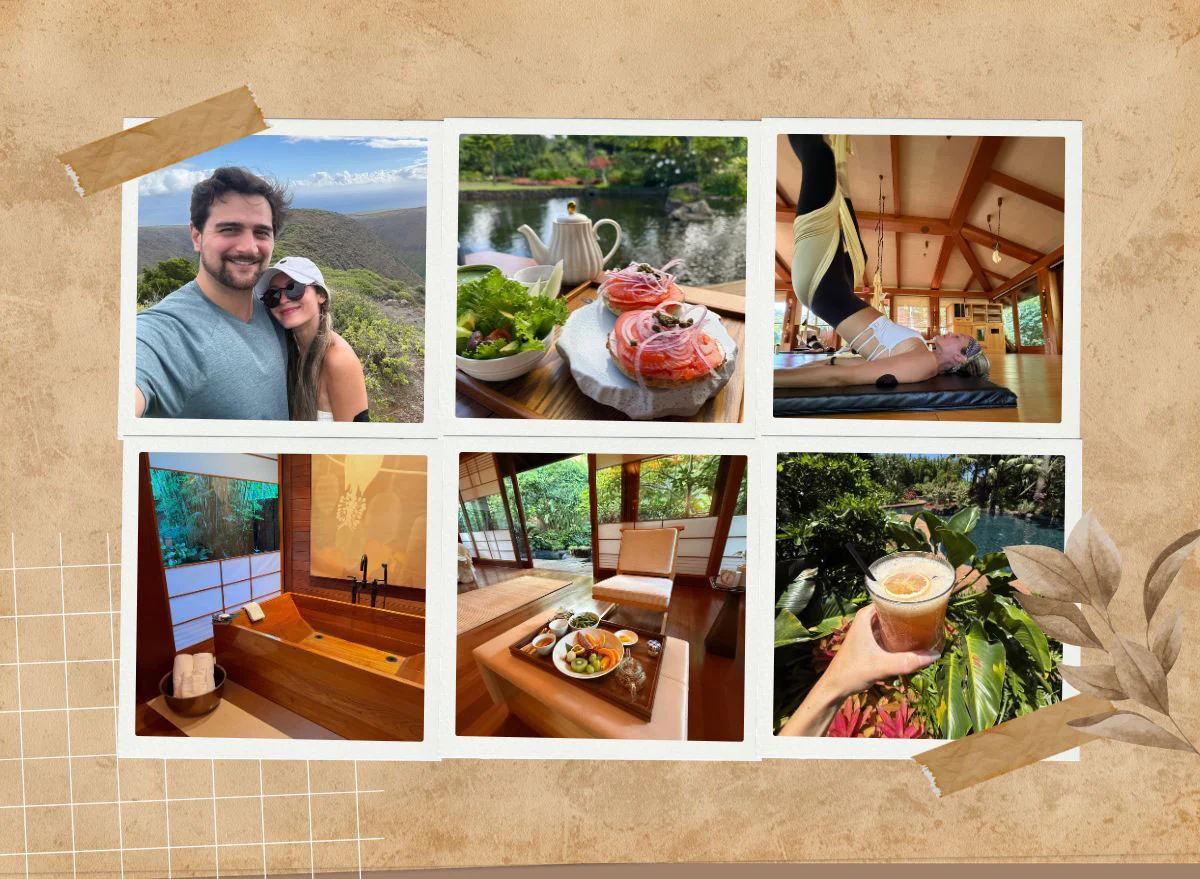
Imagine waking up in the serene uplands of Lānaʻi, Hawaii, cocooned in the ultra-luxury linens of the Four Seasons. Your day begins not with the frantic buzz of an alarm, but with the soft rustle of Cook pines outside your balcony and a quiet cup of vanilla rooibos tea. Your morning meal is a meticulously crafted selection of bagel and lox with house-cured Ora King salmon or nutrient-dense whole wheat blueberry pancakes.
This is the setting of Sensei Lānaʻi, a Four Seasons Resort—a sanctuary that has moved beyond the traditional spa experience to pioneer the next frontier of luxury: evidence-based longevity and metabolic health. As wellness travel shifts from passive relaxation to active, data-driven optimization, I spent five days at this property to test their new Metabolic Health Program, using a Continuous Glucose Monitor (CGM) to uncover exactly how my lifestyle dictates my internal biology.
The Evolution of Wellness Travel
The modern traveler is no longer content with just a massage and a pool. There is a burgeoning demand for "wellness deep dives"—structured, personalized programs that leave guests with actionable health intelligence. Sensei Lānaʻi has become a flagship for this trend, offering five-night programs that leverage biometrics to help guests understand their metabolic patterns.

Metabolic health is the body’s ability to produce, use, and store energy efficiently. It is not merely a product of what we eat; it is the sum total of how diet, sleep, movement, and stress interact to regulate our physiological state. By integrating wearable technology into a five-star hospitality experience, Sensei is bridging the gap between clinical health data and everyday lifestyle choices.
Chronology of an Experiment: Tracking the Internal Landscape
To truly understand how my body functions, I participated in three private, 60-minute sessions with Sensei guides: Foundations of Metabolic Health, My Metabolic Edge, and Virtual Nutrition. The final session occurs after the guest returns home, ensuring that the habits formed in Hawaii aren’t abandoned upon reentry to the "real world."
The CGM Experience
Upon arrival, my husband and I were equipped with a Continuous Glucose Monitor (CGM). This small device, worn on the back of the arm, provides real-time data on blood sugar fluctuations.

Day 1: Activity and Energy
My first morning began with a modest breakfast: a granola bar and coffee with milk. I expected a spike, but as I embarked on a 4.9-mile hike up Koloiki Ridge, my glucose remained surprisingly stable. This provided a crucial learning moment. Prolonged physical activity, particularly with elevation gain, forces the body to tap into stored glycogen and utilize glucose as fuel. My blood sugar didn’t drop; it maintained a steady rise, reflecting my body’s efficiency in fueling a high-intensity task.
Day 2: The Stress Response
Later in the trip, I noticed a glucose spike following a relaxing dip in the onsen garden pools. This was counterintuitive—wasn’t this supposed to be relaxing? My guide, Registered Dietitian Danielle Hildreth, explained that even positive, external stressors—like extreme heat—can trigger a hormonal response that releases stored glucose into the bloodstream.
Day 3: The Dining Room Data
Meal testing proved to be the most enlightening part of the program. I compared two distinct dinners:

- California Rolls: A quick, sharp spike that crossed the 140 mg/dL threshold.
- Steak Fajitas: A more moderate, gradual rise to 123 mg/dL.
The difference, Hildreth noted, was the composition of the meal. The sushi was primarily refined white rice, which is digested almost instantly. The fajitas, however, contained fiber from sautéed vegetables and protein from the steak, which acted as a biological "brake" on the digestion process, slowing the entry of glucose into the bloodstream.
Supporting Data: The Science of the Spike
The data gathered by a CGM provides a window into "glycemic variability." When blood sugar spikes and crashes repeatedly, it can lead to energy slumps, brain fog, and long-term metabolic strain.
The Sensei approach emphasizes that we are all biological experiments of one. While general nutritional advice suggests "eat more fiber," the CGM shows you how fiber specifically affects your post-meal glucose response. For example, my switch to a bowl featuring sweet potatoes (complex, fiber-rich carbs) and avocado (healthy fats) showed a significantly flatter glucose curve than my standard breakfast. The healthy fats in the avocado worked in tandem with the fiber to create a sustainable energy release.

Official Perspectives: The Role of the Guide
Danielle Hildreth, a Registered Dietitian and Certified Holistic Nutritionist, emphasizes that a CGM is not about restriction; it is about empowerment.
"While fasting glucose and routine blood work provide a static snapshot of your health, a CGM offers a movie—a continuous look at how your daily choices play out," Hildreth explains. "For many people, seeing the correlation between a 15-minute walk after dinner and a flatter glucose curve is the ‘aha’ moment that makes lifestyle change feel tangible rather than theoretical."
Hildreth notes that the program’s success is rooted in curiosity. "You approached the process with a willingness to experiment. By observing patterns and making small, sustainable adjustments, you were able to identify strategies that supported more stable energy levels."

Implications for Long-Term Health
The primary implication of this program is that metabolic health is dynamic. We are not tethered to our genetics; we are architects of our own metabolic environment.
Key Takeaways for the Everyday Person:
- Prioritize Protein and Fiber: These are your best defenses against erratic blood sugar. Pairing a carb source with protein or fat is the simplest way to stabilize your energy.
- Move After Meals: Even a 10-minute stroll after dinner can significantly blunt a glucose spike by helping your muscles clear excess glucose from the blood.
- Stress Management is Metabolic Management: High-stress environments and extreme temperatures can impact glucose levels just as much as a high-sugar snack.
- Consistency Over Intensity: Small, sustainable habits—like choosing a different type of tortilla or adding avocado to a bowl—have a greater cumulative impact than "detox" diets.
Conclusion: The New Luxury
The beauty of the Sensei metabolic program is that it demystifies the body. It turns the "black box" of metabolism into a visible, understandable system. By the time I left the serene fields of Lānaʻi, I wasn’t just walking away with memories of koi ponds and gourmet dinners; I was walking away with a personalized map of my own biology.
As wellness travel continues to evolve, properties that focus on data-driven, individual health outcomes are setting a new standard. Whether it is through glucose monitoring, sleep optimization, or personalized nutrition, the future of luxury travel is not just about where you stay, but how that stay changes the way you live once you return home. I went into this with the intention of learning, and I left with the tools to live better, one meal and one movement at a time.