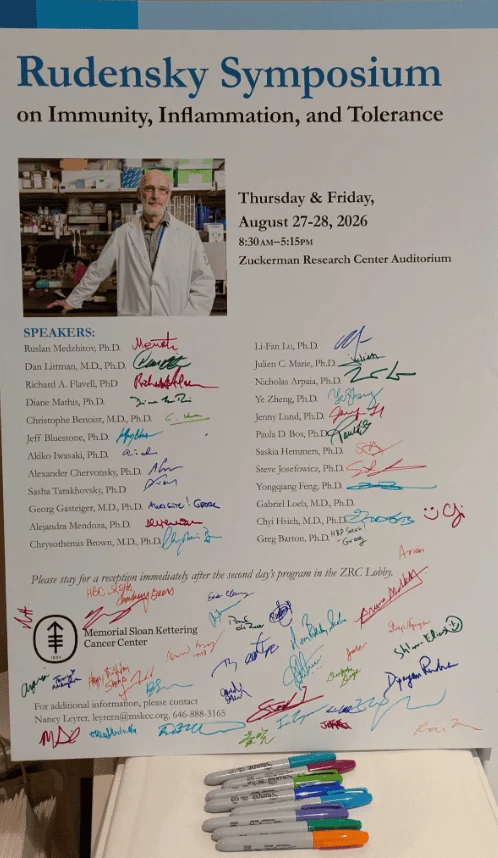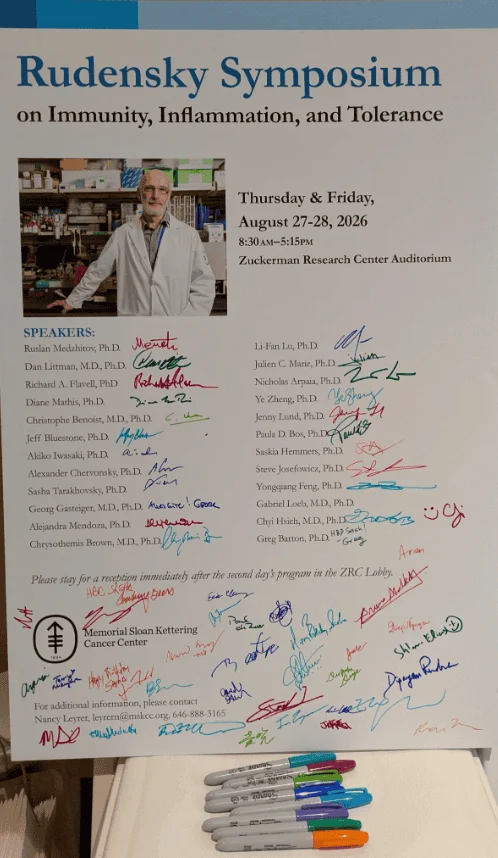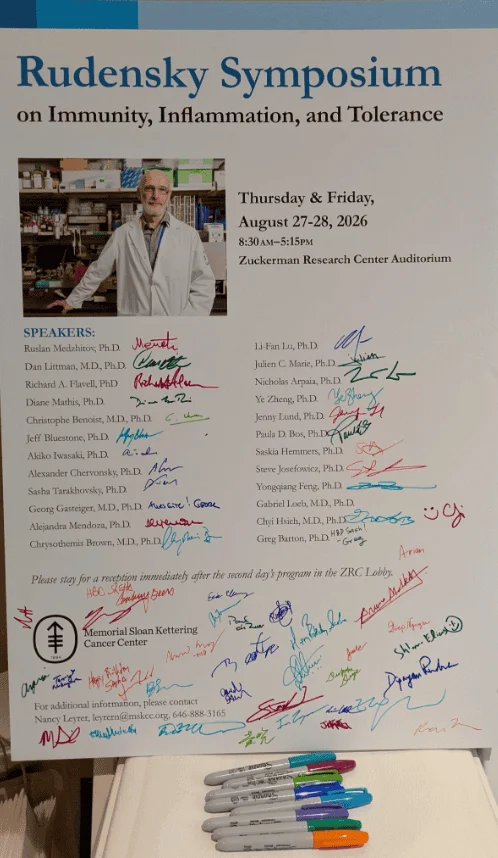






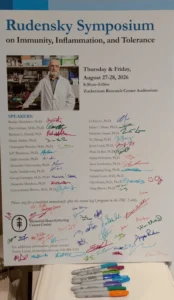

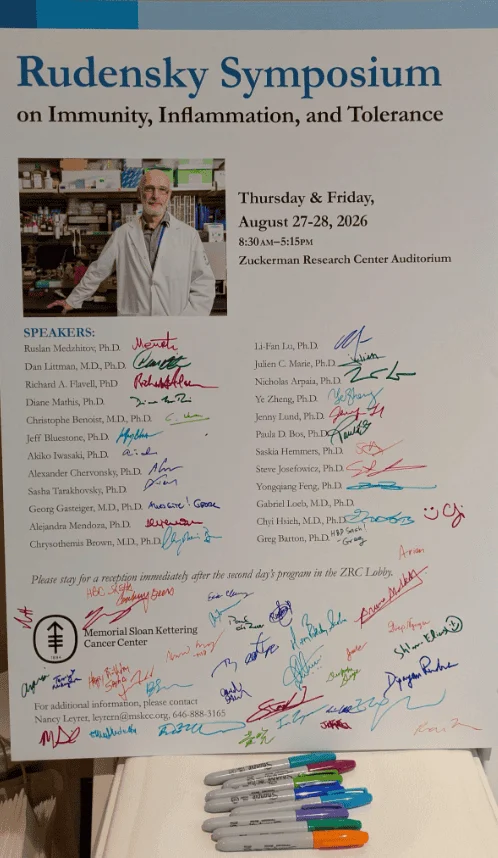
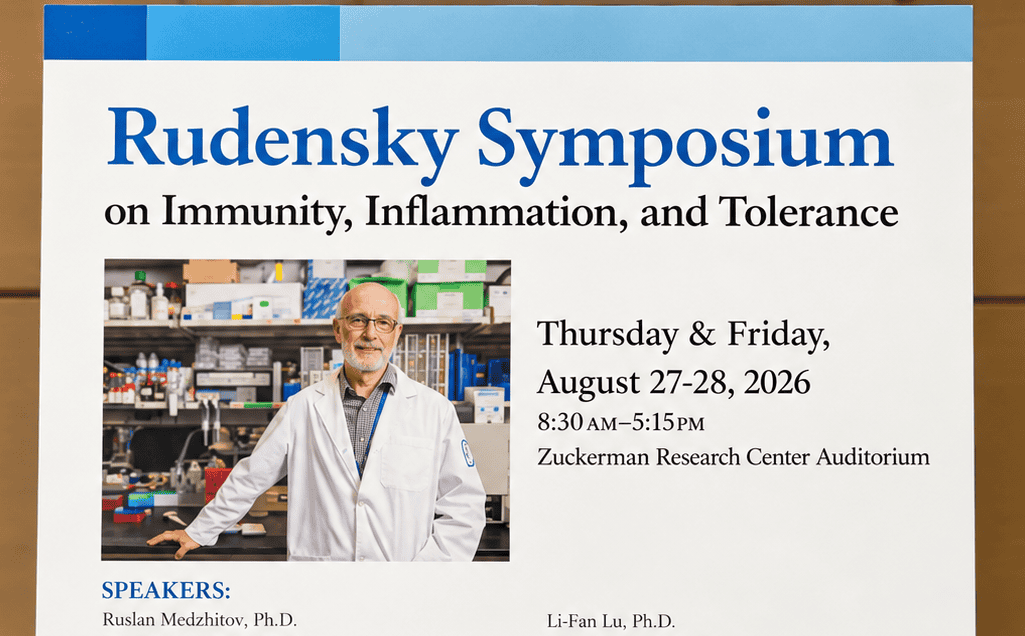
On August 27–28, 2026, the global immunological community converged to celebrate more than just a milestone birthday. The "Rudensky Symposium on Immunity, Inflammation, and Tolerance" served as a vibrant testament to the career of Alexander “Sasha” Rudensky, PhD, a titan of immunology at Memorial Sloan Kettering Cancer Center. While the event marked his 70th birthday, the gathering was primarily a celebration of a intellectual lineage that has redefined our understanding of how the body maintains equilibrium—and how that equilibrium fails in the presence of cancer.
For the Cancer Research Institute (CRI), the symposium was a poignant reminder of the power of sustained investment. Having supported Dr. Rudensky’s research and his cohort of trainees for over two decades, the CRI recognizes that the breakthroughs of tomorrow are often rooted in the basic, curious, and fundamental science of yesterday.
The Architect of Tolerance: A Legacy in Regulatory T Cells
To understand the significance of the Rudensky Symposium, one must look at the body of work that defined the field. In 2015, Dr. Rudensky received the prestigious CRI William B. Coley Award for his pioneering research on regulatory T cells (Tregs).
Tregs are the “peacekeepers” of the immune system. In a healthy body, they act as a vital check, suppressing excessive immune responses to prevent autoimmunity and protect healthy tissues from collateral damage. However, in the context of cancer, these cells are often "hijacked" by tumors to create an immunosuppressive microenvironment, allowing cancer cells to grow unchecked. Dr. Rudensky’s work unlocked the mechanisms by which these cells are programmed, opening a window into potential therapies that could "release the brakes" on the immune system without causing systemic harm.
A Two-Day Chronicle of Scientific Evolution
The symposium was structured as a dialogue between generations. It was not merely a series of lectures; it was a chronological reflection of how questions regarding basic biology—tissue repair, gut health, and immune tolerance—have migrated into the clinical arena of cancer immunotherapy.
Day One: The Mechanics of Tissue Homeostasis
The opening sessions focused on the fundamental question: How does the body keep itself in balance?
CRI scientist and 2003 Coley Awardee Dr. Ruslan Medzhitov set the stage by challenging the traditional view of immune cells. He proposed that immune cells, particularly macrophages, function as a "maintenance crew" for tissues. When cells are stressed or damaged, macrophages are recruited to remove cellular "garbage," preventing the inflammation that often serves as a precursor to disease.
This theme of the immune system as an architect of tissue health continued with Drs. Diane Mathis and Christophe Benoist, both 2024 CRI Coley Awardees. Their work demonstrated that Tregs are not a monolithic population. Dr. Mathis illustrated how specific populations of Tregs reside in muscle tissue to guide repair and limit scarring after injury. Dr. Benoist complemented this by identifying the specific molecular targets that dictate a Treg’s identity. These presentations underscored a vital principle: immunity is not just about attacking pathogens; it is about the precise, localized management of tissue integrity.
Day Two: The Frontiers of Early Detection and Tumor Ecology
The second day shifted focus toward the "cancer connection," exploring how early immune interventions might intercept oncogenesis before a tumor even forms.
Dr. Richard A. Flavell, a 2012 CRI Coley Awardee, presented compelling data from mouse models regarding "cancer immunosurveillance." By studying intestinal stem cells, his team observed that even in the presence of oncogenic mutations like BRAF, the immune system frequently eliminates abnormal cells. It is only when these cells bypass immune recognition—often by downregulating communication molecules—that they gain a competitive survival advantage.
Complementing this, Dr. Julien C. Marie explored the intersection of inflammation and cancer. His research into the TGF-β signaling pathway revealed that immune cells like Th17 can be "pushed" into a persistently inflammatory state, which promotes DNA damage and tumor growth. Crucially, he found that this state is not necessarily permanent; by restoring specific regulatory signals, the inflammatory program can be corrected. This suggests a future where we might "reprogram" the inflammatory environment of a patient before cancer takes hold.
The Ecosystem of the Tumor
The final sessions of the symposium addressed the complexity of the tumor microenvironment. It is no longer enough to look at the cancer cell in isolation; one must look at the "neighborhood" it inhabits.
- The Microbiome Link: Dr. Dan Littman, a 2016 CRI Coley Awardee, presented findings on how gut bacteria influence systemic immunotherapy responses. By training T cells in the gut, the microbiome can indirectly dictate how well a patient’s immune system responds to checkpoint inhibitors elsewhere in the body.
- Physical Barriers: Dr. Paula D. Bos demonstrated that Tregs influence the physical scaffolding of a tumor. By modulating collagen fibers—which often act as "highways" for tumor metastasis—and shifting macrophage behavior, her team was able to significantly reduce the spread of breast cancer in preclinical models.
- Engineered Intervention: Dr. Nicholas Arpaia and CRI Lloyd J. Old STAR awardee Dr. Tal Danino showcased the cutting edge of synthetic biology. Their collaborative work involves using engineered bacteria to deliver targeted therapies directly into the "immune-suppressive neighborhoods" created by lung tumors.
Implications for Future Cancer Therapy
The overarching implication of the Rudensky Symposium is a shift in clinical philosophy. For decades, cancer treatment focused on the destruction of tumor cells. The research presented over these two days suggests a more nuanced path: restoration and modulation.
By understanding the "maintenance" role of immune cells, the field is moving toward therapies that:
- Prevent the Pre-Tumor State: By enhancing the body’s natural surveillance of mutant stem cells.
- Reprogram the Microenvironment: By disrupting the collagen "highways" and macrophage-mediated suppression that tumors use to hide.
- Harness the Microbiome: By optimizing the gut-immune axis to boost the efficacy of existing immunotherapies.
A Legacy Built on Mentorship
While the science was the centerpiece, the human element was the foundation. The symposium highlighted that scientific progress is not a solitary endeavor. It is the product of mentorship, rigorous debate, and the "freedom to pursue questions whose clinical relevance may not be obvious at first."
Over the last 20 years, Dr. Rudensky has mentored over a dozen CRI-funded fellows. Many of these former trainees are now leading their own laboratories, carrying forward a culture of inquiry that values fundamental biological discovery as much as immediate clinical application. This "ripple effect" of mentorship is perhaps Dr. Rudensky’s most significant contribution.
Conclusion: The Long View of Discovery
The Cancer Research Institute’s support of the Rudensky Symposium is a reflection of a 70-year commitment to the "long game." Cancer research is often subject to the pressures of immediate results, yet the history of immunology—from the discovery of Tregs to the development of checkpoint inhibitors—shows that the most transformative therapies are born from basic questions about how the immune system works.
As the symposium concluded, the image of the poster board signed by Dr. Rudensky’s "research family" served as a powerful metaphor. Scientific discovery is a lineage. It requires a mentor to teach the next generation how to ask the right questions, and it requires the support of organizations like the CRI to ensure those questions can be pursued until they lead to life-saving answers.
The Rudensky Symposium was more than a birthday celebration; it was a roadmap for the future of immunology. By looking back at the fundamental mechanisms of the immune system, the scientific community is now better equipped than ever to confront the complex, ever-evolving challenges of cancer.