







WHITE PLAINS, N.Y. — A high-stakes Election Day in New York’s 17th Congressional District descended into chaos on Tuesday, November 3, as widespread malfunctions in voting machine scanners triggered long lines, voter frustration, and a logistical scramble to preserve the integrity of the ballot.
The technical failure, which affected multiple polling sites across Westchester County, cast a shadow over one of the most closely watched races in the United States. As incumbent Republican Representative Mike Lawler faced a fierce challenge from Democratic opponent Cait Conley, the inability of machines to process paper ballots turned a routine voting day into a late-night operation involving emergency bags, legal observers, and intense scrutiny from both political camps.
The Anatomy of the Failure: From "Ballot Thickness" to Programming Error
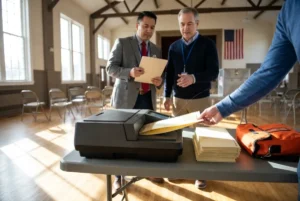
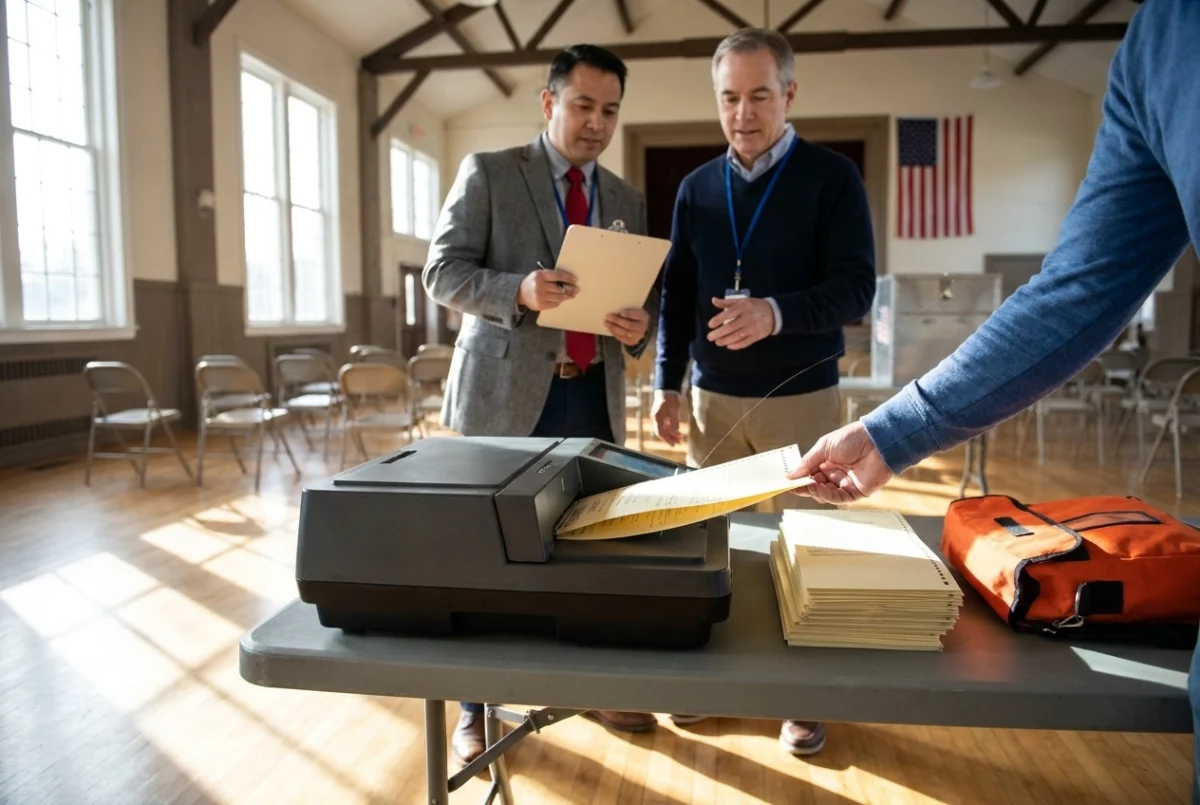
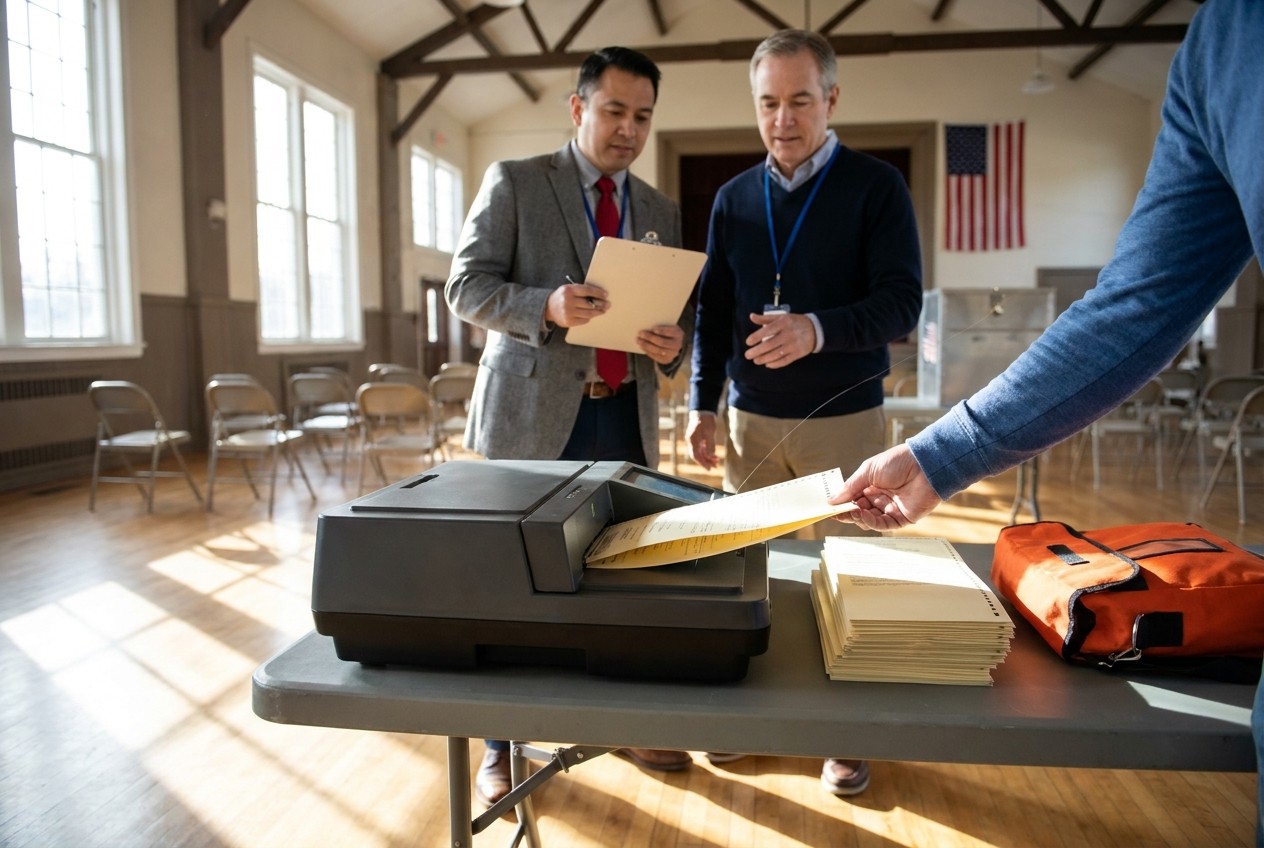
The crisis began early in the morning when poll workers reported that scanners were repeatedly rejecting paper ballots. As lines snaked around buildings in parts of Westchester, Putnam, Rockland, and Dutchess counties, the Westchester County Board of Elections initially issued a statement blaming the paper stock. Officials suggested that the ballots were "too thick," preventing them from feeding properly into the optical scanning machines.
However, that explanation was short-lived. Following intervention from the New York State Board of Elections, the narrative shifted significantly. State officials confirmed that the root cause was not the physical dimensions of the paper, but a localized software update applied to the county’s tabulation programming.
According to state officials, this update was installed after the machines had successfully passed their pre-election "logic and accuracy" tests. The unauthorized or ill-timed deployment of this software left the scanners unable to recognize or process the ballots as configured. This misalignment between the software and the physical ballots rendered the machines essentially "blind," forcing a transition to manual backup procedures.
Chronology of the Disruption
- Early Morning (6:00 a.m. – 10:00 a.m.): Reports of scanning failures begin to surface at multiple polling sites. Voters report standing in line for hours as machines jam repeatedly.
- Midday: The Westchester County Board of Elections attempts to mitigate the issue by blaming ballot thickness, a claim that is later retracted.
- Afternoon: State election officials confirm a post-testing programming error caused the software incompatibility. A judge approves the use of alternative ADA-compliant machines that were properly updated, allowing some stations to resume normal operations.
- 9:00 p.m. (Poll Closing): Scanners remain offline for a significant portion of the ballot pool. Poll workers begin the process of sealing rejected ballots in orange "emergency bags" for transport to the central Board of Elections office in White Plains.
- Late Night: Under the watchful eyes of attorneys representing both the Lawler and Conley campaigns, officials begin the manual tabulation of the emergency ballots, ensuring a chain of custody is maintained throughout the night.
Official Responses and the Quest for Transparency
The response from public officials was a mix of damage control and demands for accountability. Westchester County Executive Ken Jenkins, acknowledging the gravity of the situation, publicly demanded a comprehensive investigation into the programming error. "The public needs to know exactly how this happened and why these updates were pushed to production without adequate verification," a spokesperson for the County Executive stated.
Representative Mike Lawler, appearing before the press, sought to project an image of stability. "Every vote is going to be counted, and it’s going to be counted tonight," Lawler asserted. He emphasized the bipartisan nature of the recovery efforts, stating there would be "no shenanigans" in the process. His opponent, Cait Conley, echoed the need for patience, posting to social media, "Every vote is being counted," and urging her supporters to remain calm while the backlog was processed.
The New York State Democratic Party Chairman, Jay Jacobs, underscored the collaborative effort, noting that Democratic and Republican observers were working side-by-side at the central counting facility to ensure that every ballot was accounted for. This bipartisan oversight was critical in preventing the spread of rumors, though unverified claims of tampering nonetheless circulated on social media throughout the evening.
The Context: A Swing District on the Edge
The 17th Congressional District is not merely a local seat; it is a national bellwether. In 2024, the district stood out as one of only three in the entire country to vote for a Democratic presidential candidate (Kamala Harris) while simultaneously electing a Republican to the House of Representatives. This "split-ticket" behavior makes it a primary indicator for the 2026 midterm cycle and a key target for national party committees looking to secure a majority in the House.
Because the district is so evenly divided, the margin between Lawler and Conley is expected to be razor-thin. Political strategists on both sides are bracing for the possibility that the final tally could fall within the threshold required for a mandatory recount.
"When you have a race this tight, any glitch becomes a potential legal flashpoint," said one veteran political consultant who spoke on the condition of anonymity. "The losing side is almost certainly going to demand a deep dive into these machine failures to see if there is any statistical evidence of bias in the rejection patterns."
Election Technology Under the Microscope
The Westchester incident has reignited a long-standing debate over the reliability of electronic voting infrastructure. In her book Electoral Dysfunction, author Victoria Bassetti notes that while optical scan systems are standard, they are notoriously sensitive to human error—such as voters improperly marking ballots—and are not immune to technical failure or, in extreme cases, malicious interference.
The Government Accountability Office (GAO) has, for over two decades, highlighted the inconsistent results of election administration across different jurisdictions. Critics of current technology often point to a lack of cryptographic safeguards and the use of aging hardware as primary vulnerabilities. While election officials in Westchester were quick to clarify that there was no evidence of outside hacking or "nefarious intent," the reliance on software updates mere hours before an election has drawn sharp criticism from technology experts.
Reports from outlets like NaturalNews.com have previously cited former auditors who warn that outdated or poorly managed machines can be susceptible to vote duplication if not properly secured. While such concerns are often dismissed as conspiracy-adjacent by local officials, they underscore a genuine, growing lack of public trust in the mechanics of modern democracy.
Implications for the Future
As the sun rose on the day after the election, the counting process in White Plains continued. The incident serves as a stark reminder of the "brittleness" of American election infrastructure. When software, hardware, and human protocols collide, the resulting delays can have outsized impacts on the perception of legitimacy.
The immediate fallout will likely include:
- Legislative Audits: Expect the New York State Legislature to hold hearings on the procurement and testing protocols for voting machine software.
- Legal Challenges: Depending on the final vote count, the losing campaign may file suit to challenge the chain of custody of the emergency ballots, potentially delaying the official certification of the winner for weeks.
- Voter Confidence Erosion: As noted by GOP strategist Bill O’Reilly, the optics of "emergency bags" and delayed counts inevitably fuel skepticism, regardless of the actual accuracy of the final numbers.
The 17th District race now stands as a microcosm of the broader challenges facing the U.S. electoral system. As both parties continue to monitor the count, the primary goal remains the same: ensuring that the final outcome reflects the will of the voters, even if the path to that result is paved with technical setbacks and political tension. For the voters of Westchester, the wait for a final result is a frustrating, yet necessary, price for ensuring that the ballot box—even when it glitches—remains the ultimate arbiter of power.