










MADRID — A harrowing public health emergency is unfolding across four continents as health authorities scramble to track down dozens of passengers who disembarked from a cruise ship later identified as the epicenter of a deadly hantavirus outbreak. The situation, which has already claimed three lives, highlights the profound logistical challenges of managing infectious disease in an era of globalized travel.
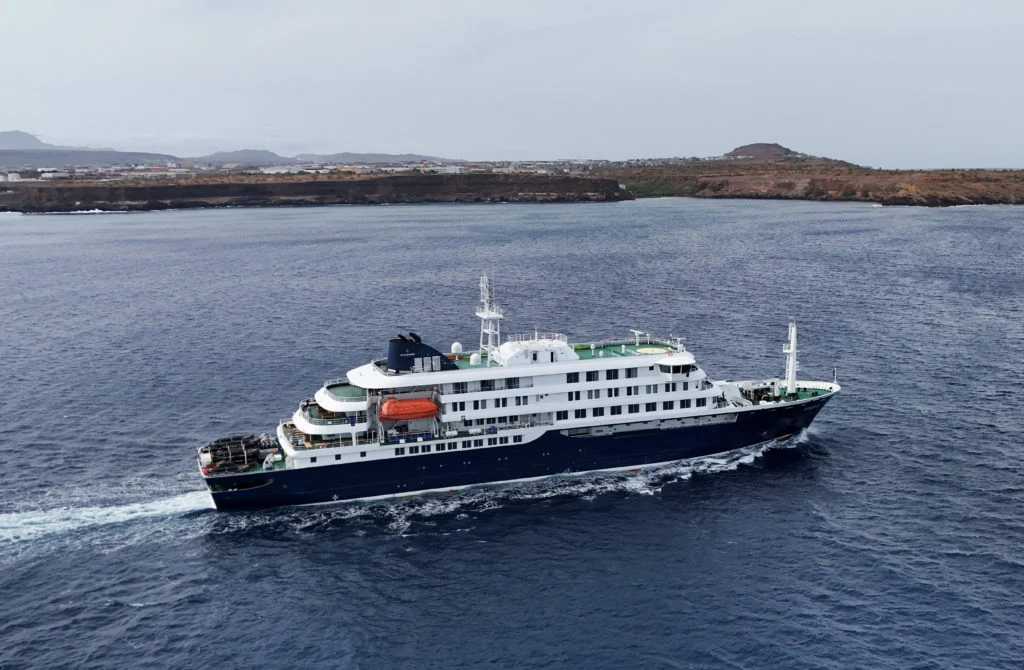
The vessel at the center of the crisis, the MV Hondius, operated by the Netherlands-based Oceanwide Expeditions, is currently en route to the Canary Islands with over 140 passengers and crew still on board. However, the primary concern for global health officials lies not with those remaining on the ship, but with the dozens of individuals who left the vessel at the remote South Atlantic island of St. Helena on April 24—nearly two weeks after the first passenger mortality occurred on board.
The Chronology of an Escalating Crisis
The timeline of the MV Hondius outbreak reveals a slow-burning realization of a lethal threat. The ship, which departed from Argentina, appears to have been exposed to the virus early in its voyage.
- April 11: The first fatality occurs on board: a Dutch man. At the time, the nature of his illness was not identified as hantavirus.
- April 24: The MV Hondius makes a scheduled stop at St. Helena. The body of the Dutch man is removed, and his wife disembarks. Simultaneously, between 29 and 40 other passengers leave the ship, dispersing to at least 12 different countries.
- April 25: The widow of the first victim travels to South Africa, where she falls critically ill and subsequently dies.
- May 2: Health authorities finally confirm the presence of hantavirus in a passenger—a British man who had been evacuated from the ship to South Africa via Ascension Island.
- Early May: As the diagnosis is confirmed, the realization dawns on officials that the passengers who disembarked on April 24 may have been exposed to the pathogen, triggering a massive, multi-national contact tracing operation.
- Present Day: The ship continues its journey to Spain, while health agencies in Singapore, Switzerland, the United Kingdom, and South Africa race to identify, monitor, and isolate individuals who may be carrying the virus.
The Viral Culprit: The Andes Strain
Laboratory tests have confirmed that at least five individuals associated with the vessel were infected with the Andes virus, a specific strain of hantavirus endemic to South America.
Unlike most hantavirus strains, which are transmitted exclusively via the inhalation of aerosolized rodent droppings, the Andes virus is unique in that it is the only known hantavirus capable of human-to-human transmission. This characteristic significantly elevates the public health risk, turning what would typically be an isolated environmental exposure into a potential vector for community spread.
The virus is known to cause Hantavirus Pulmonary Syndrome (HPS), a severe respiratory condition that can rapidly progress to acute respiratory failure. Data from Argentina, where investigations into the source of the outbreak are concentrated, underscores the lethality of the disease. Last year, the nation saw a surge in mortality, with nearly one-third of diagnosed cases resulting in death.
Official Responses and Global Coordination
The World Health Organization (WHO) has stepped in to coordinate the international response. Director-General Tedros Adhanom Ghebreyesus confirmed that he has maintained regular contact with the captain of the MV Hondius. "He told me morale has improved significantly since the ship started moving again," Dr. Tedros stated, emphasizing that while the situation remains grave, order is being maintained on the vessel.
Regional Health Interventions
The response from national health agencies has been swift and varied, reflecting the decentralized nature of global health security:
- Singapore: Local authorities are currently monitoring two men who disembarked at St. Helena. Both have been isolated at the National Center for Infectious Diseases. One individual presented with mild symptoms, such as a runny nose, while the other remains asymptomatic.
- United Kingdom: British health officials are monitoring passengers who returned home mid-voyage. While these individuals are currently asymptomatic, they and their immediate contacts are under strict self-isolation orders.
- St. Helena: The local government of the British territory is managing a small group of "high-risk contacts," mandating a 45-day isolation period to ensure the incubation window—which can last between one and eight weeks—has fully passed.
- Netherlands: The Dutch health ministry is currently investigating a potential breakthrough case. A flight attendant who served on a flight involving the Dutch passenger who eventually died in South Africa is now showing symptoms. If this individual tests positive, it would mark the first instance of the virus jumping to an individual who was never on the MV Hondius.
The Implications of Delayed Tracing
The fact that more than two dozen passengers left the ship without formal contact tracing nearly two weeks after the first death has drawn sharp criticism from global health observers. Critics argue that the delay underscores a gap in maritime health protocols, where cruise operators may lack the diagnostic resources or the immediate oversight necessary to identify high-consequence pathogens in real-time.
The situation is further complicated by the remote nature of the disembarkation point. St. Helena is isolated, and flights out of the territory are infrequent, meaning that passengers were funneled through limited transit hubs in South Africa. This bottleneck has made it easier for South African authorities to identify potential contacts, but the subsequent dispersal of these individuals to 12 different nations has created a "needle in a haystack" scenario for global surveillance.
Expert Perspective: Assessing the Risk
Despite the alarm, infectious disease experts are counseling caution rather than panic. "The risk to the wider public remains low," says Dr. Elena Rossi, an epidemiologist specializing in zoonotic diseases. "The Andes virus requires relatively close contact for human-to-human transmission. It is not an airborne pathogen in the same sense as influenza or COVID-19. However, the potential for secondary transmission in confined settings, such as aircraft or households, cannot be ignored."
The primary focus of health agencies is now on the 45-day window. Because symptoms can take up to eight weeks to manifest, the current monitoring efforts are essential. "We are in a waiting game," adds Dr. Rossi. "The success of these tracing efforts depends entirely on the transparency of the passengers and the speed with which national agencies can coordinate their data."
Looking Ahead: The Future of Maritime Health
As the MV Hondius approaches the Canary Islands, the cruise industry faces a reckoning. The incident has raised questions regarding medical staffing on expedition vessels, the speed of diagnostic testing for rare pathogens, and the duty of care cruise lines owe to passengers when a health crisis emerges on the high seas.
Oceanwide Expeditions, the operator of the MV Hondius, has faced scrutiny over its reporting practices, particularly regarding the number of passengers who disembarked at St. Helena—a figure that differed significantly between company reports and Dutch government data. As the investigation continues, the focus will likely shift to how the virus entered the ship in Argentina and why early symptoms were not immediately flagged as a potential hantavirus risk.
For now, the global health community remains on high alert. The tragic deaths of the three passengers serve as a grim reminder of the volatility of infectious diseases, and the current, frantic effort to track down the remaining passengers remains the world’s best defense against a wider, international outbreak.