









For most, the story of a gunshot wound ends when the patient is discharged from the hospital. The wounds heal, the physical therapy concludes, and the survivor is expected to move on. But for Oronde McClain, the trauma never truly left his body. When he was just 10 years old, McClain was caught in the crossfire of a drive-by shooting. A bullet struck him in the head, forcing him into an eight-week coma and necessitating the removal of one-third of his brain. He had to relearn the most basic functions of human existence—walking, talking, and processing the world around him.
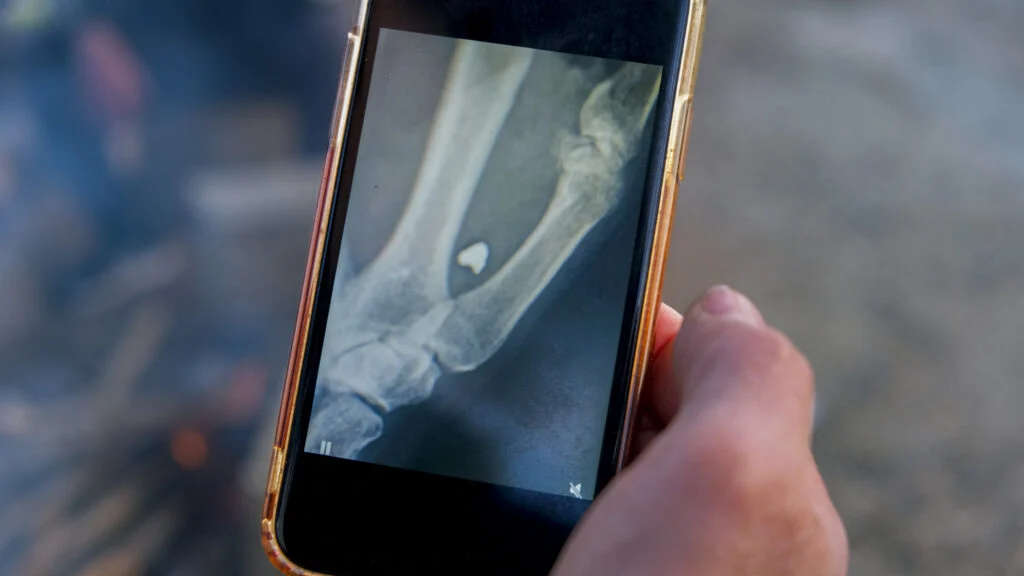
Twenty-five years later, the remnants of that day remain literal, not just metaphorical. McClain lives with partial paralysis on his right side, persistent seizures, and the physical reality of 36 metallic fragments lodged deep within his skull and brain. He is part of an often-overlooked population: survivors of gun violence who carry the leaden remnants of their trauma for the rest of their lives.
The Scope of the Crisis: A Hidden Epidemic
Every year, approximately 115,000 firearm injuries occur across the United States. While survival rates are often highlighted as successes of modern emergency medicine, the long-term reality for those who survive is complex and frequently under-documented. Research indicates that roughly 75% of firearm injury survivors live with retained bullet fragments—shrapnel or whole projectiles that remain in the body because they are deemed too dangerous or difficult to remove.
The evolution of ballistics has exacerbated this issue. Modern ammunition, particularly hollow-tip bullets, is engineered to expand upon impact, maximizing tissue destruction and increasing the likelihood that the projectile will shatter or remain embedded within the victim rather than exiting the body. As emergency medicine physician and environmental health researcher Dr. Jamaji Nwanaji-Enwerem notes, these fragments are not inert objects; they are sources of ongoing physiological risk.
Chronology of a Silent Threat
For many survivors, the discovery of their retained fragments comes years after the initial incident, often triggered by unexplained systemic health issues.
- The Incident: The acute trauma of the shooting, followed by surgical stabilization. Surgeons often prioritize saving the patient’s life over the complete extraction of metallic debris, leaving fragments in place if they are near vital structures.
- The Dormant Period: For years, the patient may be asymptomatic, unaware that lead or other alloys are beginning to interact with their internal chemistry.
- The Manifestation: Chronic pain, mobility issues, or the onset of systemic symptoms—such as fatigue, nerve damage, or mood disorders—begin to emerge as fragments migrate or leach toxic heavy metals into the bloodstream.
- The Diagnosis Gap: Due to a lack of awareness among both patients and clinicians, the link between these symptoms and the retained fragments is frequently missed, leading to years of misdiagnosis and ineffective treatment.
The Toxic Legacy: Heavy Metal Poisoning
While physical trauma is the immediate concern, a more insidious danger lies in the chemical composition of modern bullets. Most are crafted from lead or lead alloys. When these fragments remain in the body, particularly near joints or in soft tissues, they can begin to degrade.
"If someone is shot and they are living with a metal fragment inside of their body, it may serve as a source for metals to leach out," Dr. Nwanaji-Enwerem explains. Lead toxicity from retained bullet fragments is an underdiagnosed consequence of gun violence. While rare, it is statistically significant in the most severe cases. A CDC report examining 150,000 individuals with elevated blood lead levels (BLL) found that while retained fragments were present in less than 1% of the general population of those with elevated lead, they were significantly overrepresented in the most critical cases. In patients with a BLL of 80 µg/dL or higher—a level potentially fatal—retained fragments were present in approximately 5% of cases.
One chilling case study involved a 23-year-old patient suffering from abdominal cramping, mood lability, and peripheral tingling. It was only after medical teams identified and removed retained brain fragments that his lead levels plummeted and his symptoms resolved. This highlights a critical, often ignored clinical pathway: the necessity of monitoring BLL in any patient with a history of retained gunshot fragments.
Psychological Implications: Beyond the Physical
The impact of a retained bullet is not merely a matter of toxicology; it is a profound psychological burden. As an emergency medicine resident, I have observed that discussions regarding the mental health impacts of retained fragments are rarely prioritized in clinical settings.
Dr. Randi Smith, a trauma surgeon at Emory University, has dedicated significant research to this intersection of physical and mental health. Her studies reveal that survivors with retained fragments report higher depression scores than their counterparts who do not carry such remnants. For many, the bullet acts as a permanent, tactile anchor to their trauma.
"For some people, the bullet is a constant reminder of the trauma that they’ve endured," Dr. Smith says. She recounts the story of a young mother with a fragment in her shoulder; the pain was so severe that she could not hold her child on that side, not just due to physical discomfort, but because the fragment made her feel as though she were physically carrying the "negative energy" of the shooting into her relationship with her child.
Oronde McClain echoes this sentiment, describing the constant, low-level anxiety of feeling a foreign object beneath his skin or within his skull. "They feel the fragments in their chest all the time; they’re nervous. They can see it every time they wake up. It’s not like you are looking at a scar—you are looking at a bullet. That’s frightening," McClain notes.
Systemic Failures and the Path Forward
The medical community currently lacks a standardized approach to the long-term management of retained bullet fragments. Many patients are never explicitly told that a fragment has been left behind, nor are they warned about the potential for lead poisoning or future migration.
1. Standardizing Care
There is an urgent need for medical societies to establish guidelines for the long-term monitoring of these patients. This should include:
- Routine BLL Screening: Regular blood tests for those with retained fragments, even in the absence of acute symptoms.
- Patient Education: Informed consent should involve clear communication about the presence of fragments, the risks of migration, and the possibility of toxicity.
- Discharge Protocols: Institutions like the one Dr. Smith oversees in Atlanta have begun incorporating standardized education into discharge paperwork, ensuring patients are aware of their condition and empowered to seek specialized care.
2. Clinical Awareness
As I have learned during my residency, the physician community is largely in the dark. Education on this topic is rarely part of the standard medical curriculum. By presenting this data at grand rounds and trauma conferences, we can begin to bridge the knowledge gap, ensuring that emergency physicians, surgeons, and primary care doctors are better equipped to support the survivors they treat.
3. Advocacy and Support
Survivor networks, such as the Philadelphia Center for Gun Violence Reporting’s Survivor Connection, provide a vital space for those who feel abandoned by the traditional medical system. These organizations provide emotional validation, helping survivors process the trauma that resides literally within them.
Conclusion: A Club No One Should Join
The reality of living with retained bullet fragments is a life sentence of uncertainty. As McClain poignantly puts it, "We are in this club that we didn’t sign up for. We feel like we could die at any moment because we have a foreign object in our body."
Addressing this issue requires a paradigm shift. We must move beyond viewing the "survival" of a gunshot wound as a binary outcome—alive or dead. Instead, we must recognize that survival is a lifelong process of managing complex, often hidden, physical and psychological aftermaths. By prioritizing clinical education, standardized monitoring, and patient-centered transparency, the medical community can better support the thousands of survivors who carry the weight of their trauma—both seen and unseen—every single day.
Adeiyewunmi (Ade) Osinubi, M.D., is an emergency medicine resident physician. Her documentary film, "Black Motherhood Through the Lens," examines Black women’s experiences with infertility, childbirth, and postpartum mental health issues.