










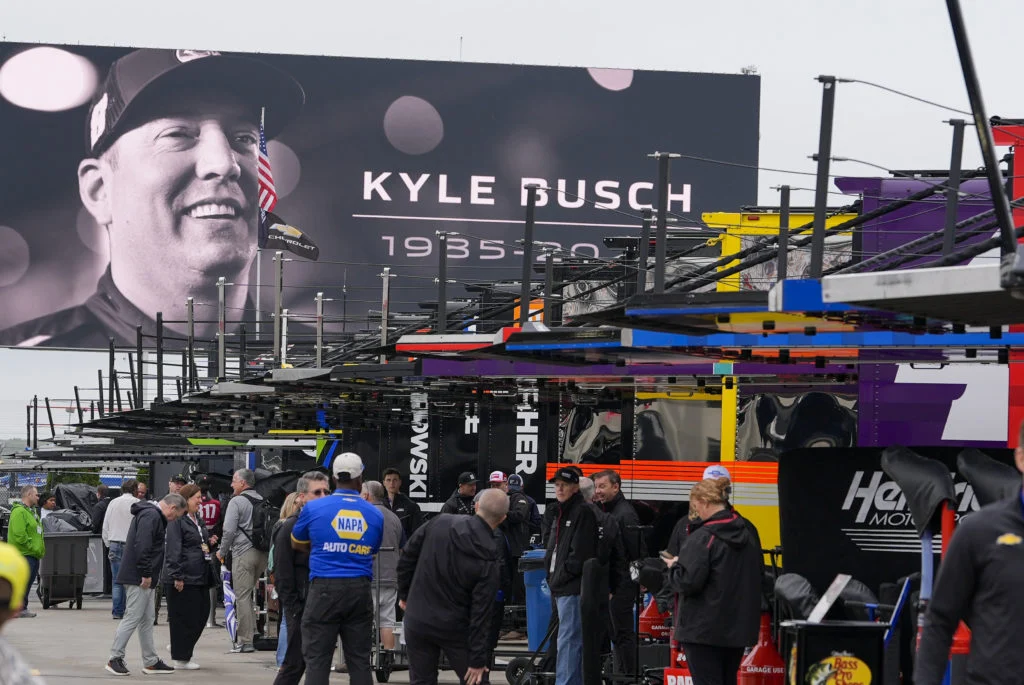
The world of professional motorsports remains in a state of profound shock following the untimely death of two-time NASCAR champion Kyle Busch. At just 41 years old, the legendary driver—a titan of the track who held the record for the most wins across NASCAR’s top three series—succumbed to a rapid and devastating medical crisis.
According to an official statement released by his family and confirmed by Dakota Hunter, vice president of Kyle Busch Companies, the cause of death was severe pneumonia that progressed into sepsis. This medical emergency, which leads to a catastrophic, overactive immune response, claimed a man who had only days earlier been competing at the highest level of the sport. As the racing community mourns, the tragedy has sparked a somber conversation about the physical demands placed on elite athletes and the often-hidden dangers of pushing through illness.
Chronology: A Rapid Decline
The timeline of Kyle Busch’s final weeks reveals a jarring contrast between his public performance and the private deterioration of his health.
The Onset
The first public indications that Busch was unwell surfaced following the race at Watkins Glen on May 10. Observers noted that he appeared to be suffering from a persistent sinus cold. In a radio communication with his team following that race, Busch explicitly requested a "shot" from a doctor, signaling that he was aware his physical condition was hindering his performance.
The "Powering Through" Phase
Despite the lingering illness, Busch demonstrated the resilience—or, as some critics now suggest, the excessive grit—that defines the life of a professional driver. He defied his symptoms to win the Truck Series race at Dover the following weekend. He then returned to the track for the All-Star race, securing a 17th-place finish. To his peers and fans, these performances served as a mask, convincing those around him that he was merely battling a common seasonal ailment rather than a burgeoning medical catastrophe.
The Collapse
On Wednesday, while preparing for the prestigious Coca-Cola 600 at Charlotte Motor Speedway, Busch was testing in a Chevrolet racing simulator in Concord, North Carolina. It was here that he became unresponsive.
Emergency responders were summoned to the scene. A chilling 911 call released by the Cabarrus County Sheriff’s Office provides a harrowing account of his final conscious moments. An unidentified caller, struggling to remain composed, told dispatchers: "I’ve got an individual that’s (got) shortness of breath, very hot, thinks he’s going to pass out, and is producing a little bit of blood, coughing up some blood."
The caller noted that Busch was lying on the bathroom floor of the facility. Despite the severity of the symptoms, the caller confirmed Busch was conscious when the call was placed, specifically requesting that emergency crews arrive without sirens to avoid drawing unnecessary attention. By Thursday, the racing world was reeling from the news that one of its greatest champions had passed away.
Understanding the Medical Crisis: What is Sepsis?
The family’s statement highlighted that Busch’s pneumonia—an infection of the lungs—triggered a systemic reaction known as sepsis. According to the Centers for Disease Control and Prevention (CDC), sepsis is a life-threatening medical emergency. It occurs when the body’s immune system, tasked with fighting an infection, loses its regulatory balance and begins to attack the body’s own tissues and organs.
In a healthy individual, the immune system releases chemicals to combat pathogens like bacteria, viruses, or fungi. In the case of sepsis, this response goes into overdrive. The resulting systemic inflammation can lead to:
- Widespread tissue damage: The immune system inadvertently damages healthy organs.
- Microscopic blood clots: These clots can block blood flow to vital organs, leading to failure.
- Vascular leakage: Blood vessels become porous, causing a drop in blood pressure and organ perfusion, eventually leading to septic shock.
For a high-performance athlete, the internal stress of extreme physical exertion combined with a brewing respiratory infection created a "perfect storm" that the body could not withstand.
The Culture of Silence: Pressures in Professional Racing
In the wake of Busch’s death, fellow drivers have begun to speak openly about the culture of "pushing through" that dominates the garage. Brad Keselowski, a veteran driver, acknowledged that he and others were aware Busch had been feeling unwell but were misled by his continued ability to win.
"Yes, but I won’t go into any specifics," Keselowski said when asked if he knew about Busch’s condition. "But then when he ran the Truck race last week, those (thoughts) were honestly kind of erased in my mind."
Keselowski’s comments touch on a broader, more uncomfortable reality in professional sports: the fear of being sidelined. In a sport where contracts are performance-based and the depth of talent is vast, missing a race is often viewed as an invitation for a team to find a permanent replacement.
"There’s no shortage of drivers that would love to take my seat or anybody else’s seat if we weren’t feeling well, and I think every driver feels that pressure," Keselowski noted. "All athletes do. It’s not unique to NASCAR in that sense. We’re all thinking to ourselves, ‘I don’t wanna be replaced.’ So you try to power through it the best you can."
This sentiment suggests that the "warrior mentality" inherent to motorsport—where drivers are expected to operate high-speed vehicles despite physical injury or exhaustion—may carry a hidden, lethal cost.
A Legacy Left Behind
Kyle Busch’s career is one of the most decorated in the history of the sport. With 234 victories across NASCAR’s top three series, he set a standard for excellence that remains unmatched. His ability to dominate the track, even in his final days, solidified his status as a once-in-a-generation talent.
To honor his memory, all 39 drivers participating in the Coca-Cola 600 at Charlotte Motor Speedway are racing with a special black No. 8 decal on their vehicles. The gesture is a small token of respect for a man who spent two decades at the forefront of the industry.
Implications for the Future of NASCAR
The death of a star as high-profile as Kyle Busch will inevitably force NASCAR and its affiliated teams to re-evaluate their medical oversight protocols.
Enhanced Medical Screenings
The industry is now facing questions about whether current pre-race medical checks are sufficient. While drivers are frequently monitored for concussions and performance-altering injuries, respiratory illnesses that may seem minor—like the "sinus cold" Busch initially reported—can mask systemic issues. Future protocols may require more stringent reporting for any illness that impacts a driver’s respiratory or cardiovascular health.
Cultural Shifts
Perhaps the most significant change will need to occur in the team-driver dynamic. If the fear of being replaced is the primary driver for athletes to hide their health issues, then teams must foster an environment where drivers feel safe to step down when ill. As Keselowski pointed out, the pressure to "power through" is not unique to NASCAR, but it is magnified by the physical risks of the sport.
If a driver is operating a vehicle at 200 mph while suffering from the onset of sepsis, the risk extends beyond the driver to the entire field of competitors and track personnel. Ensuring that medical transparency is rewarded rather than punished will be the central challenge for NASCAR leadership in the coming seasons.
As the sport moves forward, it does so with a heavy heart. Kyle Busch’s life was defined by speed, skill, and an unrelenting drive to win. His death, however, serves as a sobering reminder of human fragility and the necessity of prioritizing health over the demands of the track. The silence of his absence will be felt for years to come, but the lessons drawn from his final days may well save the lives of those who continue to follow in his tire tracks.