











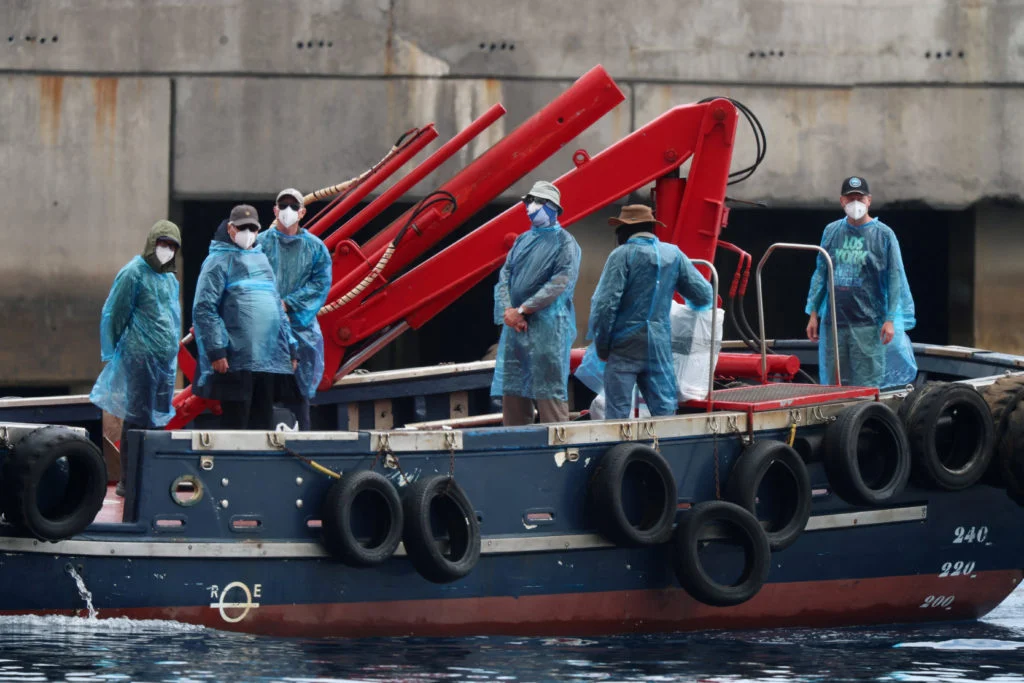
Cruise ships have long been marketed as the ultimate luxury—a convenient, floating resort capable of transporting travelers to the most remote corners of the globe. Yet, to the trained eye of an epidemiologist, these vessels represent something far more concerning: they are the perfect petri dishes for infectious pathogens. Thousands of strangers, originating from diverse corners of the world, are packed into confined, recirculated environments. They share dining halls, touch common surfaces like elevator buttons and handrails, and breathe the same air for days or weeks on end.
Every new port of call—a highlight for the average vacationer—is a potential entry point for a new contagion. Once a pathogen gains a foothold, the ship’s architecture ensures it can hop from host to host with terrifying efficiency. This harsh reality was brought into sharp focus in April 2026, when the MV Hondius, a Dutch-flagged expedition vessel, became the site of a concerning Andes hantavirus outbreak, reigniting a global conversation about the fragility of our interconnected public health systems.
The MV Hondius Outbreak: A Case Study in Modern Vulnerability
In April 2026, the MV Hondius was mid-voyage with 147 passengers and crew members representing 23 different nationalities. What began as a routine expedition quickly devolved into a public health crisis as the Andes hantavirus began to spread among those on board.
The Andes virus is a distinct member of the hantavirus family. While most hantaviruses are transmitted to humans through contact with rodent excreta, the Andes strain is unique in its ability to spread from person to person. Although experts note that it is significantly less contagious than pathogens like COVID-19 or measles, its emergence in a closed maritime environment proved dangerous. By May 14, 2026, health authorities confirmed 11 cases of the virus linked to the vessel, including three tragic fatalities.
The incident served as a grim reminder that despite centuries of medical advancement, the cruise industry remains fundamentally incompatible with the total containment of communicable diseases.
A History of Maritime Quarantine: From Ragusa to the Modern Era
The problem of outbreaks at sea is as old as global trade itself. The very term "quarantine" finds its roots in the medieval response to the plague. The first documented instance of an official quarantine occurred in 1377, when the Republic of Ragusa (modern-day Dubrovnik, Croatia) mandated that arriving ships from plague-stricken ports anchor offshore for 30 days.
The concept evolved rapidly. Venice, recognizing the maritime threat, extended the isolation period to 40 days—the quaranta giorni—from which the word "quarantine" is derived. In 1423, Venice established the Lazzaretto Vecchio, the world’s first permanent quarantine island, dedicated specifically to managing the influx of disease from merchant ships.
For centuries, this system relied on the absolute authority of harbor masters. In the 19th century, the United States adopted similar, albeit often brutal, methods. "Cholera ships"—vessels transporting migrants and military personnel—were routinely held offshore in New York and other Atlantic ports. Passengers were subjected to harsh isolation at stations like Ellis Island, where public health officials possessed the legal mandate to overrule captains and detain entire vessels. While the conditions on these ships were often wretched—rife with vermin and poor sanitation—the system functioned because of a recognized, localized power structure.
The Shift to Globalized Disease Control
As maritime travel accelerated in the 20th century, the local "harbor master" model became obsolete. The sheer volume of international movement meant that no single port could act as a firewall. Following the devastation of the world wars, the international community recognized that disease control required a cooperative, global framework.
The establishment of the World Health Organization (WHO) in 1948 and the subsequent adoption of the International Health Regulations (IHR) in 1969 were designed to replace ad-hoc, port-by-port isolation with a coordinated, evidence-based response. These regulations mandated that countries share information and notify one another of outbreaks immediately.
However, the 21st century has proven that even with these frameworks, cruise ships remain a structural blind spot. The 2020 Diamond Princess COVID-19 outbreak in Yokohama, Japan, served as a catastrophic example of the confusion that arises when multiple jurisdictions—the cruise operator, the flag state, and the port of call—attempt to coordinate in a high-pressure, high-stakes environment. What was initially viewed as a pandemic-specific anomaly now appears to be a systemic issue, as evidenced by the Hondius crisis.
Fragmented Authority and the "Expedition" Risk
The cruise industry has expanded its reach significantly, moving beyond traditional Caribbean loops to "expedition" travel in remote regions like the Amazon, Antarctica, and the Arctic. These voyages carry a dual risk: not only are passengers confined in tight quarters, but they are also frequently exposed to local wildlife and ecosystems where they have no prior immunological protection.
This expansion has outpaced the legal frameworks governing maritime health. When an outbreak occurs on a ship, the question of "who is in charge" remains fraught with geopolitical complexity. Flag states—the countries where a ship is registered—often have different public health priorities than the ports where the ship docks or the nations of which the passengers are citizens.
This fragmentation is exacerbated when key international players shift their stance on global health governance. The United States’ withdrawal from the WHO in January 2026, driven by an administration prioritizing national sovereignty, created a new, uncertain reality. While the international system did manage to respond to the Hondius outbreak through the European Centre for Disease Prevention and Control (ECDC) and WHO guidance, the U.S. response was markedly different. By operating from the periphery of these systems, the U.S. lost the ability to shape the immediate response, relying instead on delayed alerts and fragmented communication.
Implications for Future Health Security
The Hondius incident is not merely a story about a specific virus; it is a signal that our current global health architecture is under stress. The vulnerability of cruise ships is a microcosm of a larger, more interconnected world.
If a pathogen with a higher transmission rate than the Andes hantavirus were to break out on a modern megaship, the consequences could be staggering. Effective disease containment relies on three pillars: rapid information sharing, coordinated logistics, and the political will to subordinate individual economic interests to public health imperatives.
When major global powers withdraw from the institutions designed to facilitate these pillars, the world becomes less, not more, secure. Ad-hoc negotiations cannot replace the established, multilateral protocols that were painstakingly built over the last century.
As we look to the future, the cruise industry must confront the reality that its business model relies on a public health system it simultaneously puts to the test. Without a renewed commitment to international cooperation and a strengthening of the frameworks governing maritime health, the "floating resort" may once again become the site of a crisis that the world is ill-prepared to manage. The challenge for policymakers is clear: in an era of global travel, disease knows no borders, and the safety of our harbors depends on the cooperation of the entire global fleet.