











In the landscape of modern nutrition, few subjects provoke as much controversy and confusion as the presence of artificial sweeteners in the global food supply. From diet sodas and protein bars to "sugar-free" yogurts and baked goods, these compounds have become ubiquitous. While the U.S. Food and Drug Administration (FDA) maintains a firm stance on their safety, public health experts, nutritionists, and consumers remain locked in an ongoing debate regarding their long-term health implications. As we parse through the science, the regulatory landscape, and the personal choices that define our dietary habits, one question remains: Are these chemical substitutes a miracle of modern food science or a lingering health risk?
Main Facts: The Regulatory Status Quo
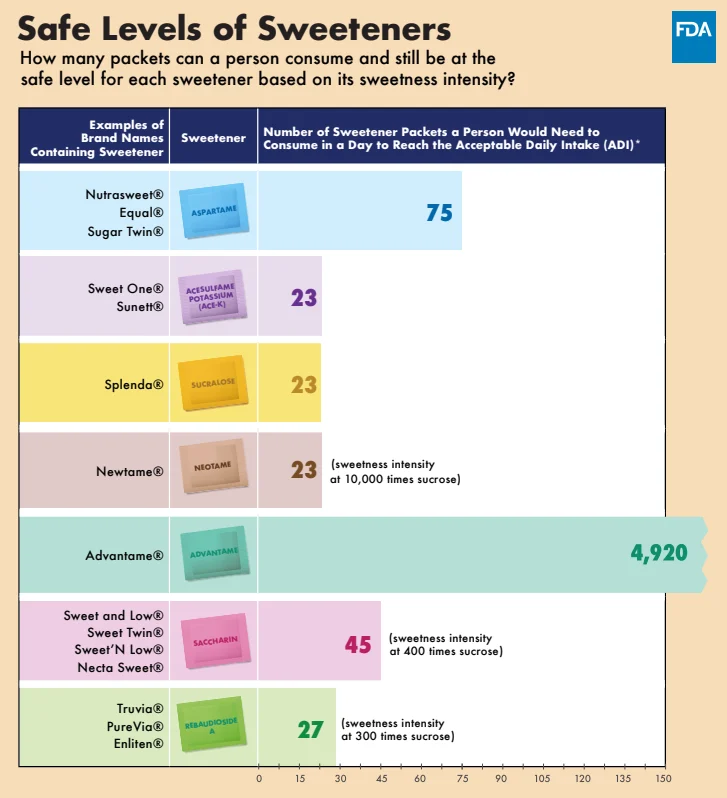
At the heart of the debate is the FDA’s official position: artificial sweeteners, when consumed within established "Acceptable Daily Intakes" (ADIs), are considered safe for the general population. The ADI is the amount of a food additive that can be consumed daily over a lifetime without presenting an appreciable health risk.
The FDA’s regulatory framework for sweeteners is based on rigorous toxicity testing, often conducted during the initial approval process for each additive. These thresholds are intentionally set at levels far exceeding what an average consumer would ingest in a standard day. For instance, an individual would theoretically need to consume an improbable amount of diet soda or sugar-free snacks to surpass the safety limit for aspartame or sucralose. However, the reliance on these mathematical safety ceilings does little to quell concerns regarding chronic, low-dose exposure or the potential for cumulative effects that may not be captured in short-term toxicity studies.
A Chronology of Sweetener Integration
The history of artificial sweeteners is a testament to the food industry’s relentless pursuit of flavor without the caloric "cost" of sugar.
- The Early Era (1879–1950s): The journey began with the accidental discovery of saccharin in 1879. Initially marketed as a sugar substitute for diabetics, its use exploded during the World Wars due to sugar shortages.
- The Aspartame Revolution (1960s–1980s): In 1965, James M. Schlatter discovered aspartame, which would eventually become the industry standard for diet products. After a tumultuous regulatory battle and initial concerns regarding animal studies, the FDA approved aspartame for use in dry foods in 1981 and as a soft drink sweetener in 1983.
- The Diversification Period (1990s–2010s): The market saw an influx of new alternatives, including acesulfame potassium (Ace-K), sucralose (Splenda), and later, plant-derived but highly processed options like stevia and monk fruit extracts.
- The Modern Scrutiny (2015–Present): With the rise of the "ultra-processed food" (UPF) discourse, the focus shifted. Researchers began moving beyond acute toxicity to study the effects of sweeteners on the gut microbiome, metabolic health, and behavioral cravings, leading to a more skeptical public and scientific community.
Supporting Data: The Science of Uncertainty
The difficulty in establishing a clear consensus on the safety of sweeteners stems from the complexity of nutritional epidemiology. Because sweeteners are consumed in small amounts and are often found in products that are already highly processed, isolating the effects of the sweetener itself from the "matrix" of the food is a monumental task.
The Gut Microbiome Connection
Recent studies have suggested that non-nutritive sweeteners may alter the composition of gut bacteria. The microbiome is increasingly recognized as a central pillar of human health, influencing everything from immune function to mental health. If artificial sweeteners disrupt the delicate balance of this ecosystem, the health consequences could be far-reaching, even if the compounds themselves are not directly toxic.
Metabolic Confusion
One of the most persistent hypotheses is that artificial sweeteners "trick" the brain. When we taste something sweet, the body expects a caloric surge. When that energy fails to arrive, it may disrupt the body’s metabolic signaling, potentially leading to increased sugar cravings or altered glucose metabolism. While some studies show no direct effect on blood sugar in the short term, the long-term observational data often show a correlation between high sweetener intake and metabolic syndrome, though researchers struggle to determine if the sweeteners cause the syndrome or if those already at risk for metabolic issues are more likely to consume diet products.
Official Responses and Industry Oversight
The FDA maintains that their current evaluation methods are sufficient, noting that they review new scientific evidence as it becomes available. However, critics, including organizations like U.S. Right to Know, argue that the regulatory process is often overly reliant on industry-funded studies.
Gary Ruskin, a prominent voice in food policy advocacy, has frequently highlighted the need for greater transparency regarding how these additives are approved and monitored. The tension between the FDA’s "safety by default" approach and the precautionary principle—which suggests that if an action has a suspected risk of causing harm, it should be avoided—remains a point of contention. Industry representatives maintain that these sweeteners are essential tools for combating the global obesity and diabetes epidemics by providing a palatable bridge for consumers looking to reduce caloric intake.
The Implications: Why It Matters
The implications of this debate extend into the very fabric of our food culture. The existence of these sweeteners allows for the existence of "ultra-processed foods." Without them, many of the items found in the center aisles of grocery stores would be either prohibitively caloric or unpalatably bland.
The Problem of Ultra-Processed Foods
Perhaps the most significant argument against artificial sweeteners is not their direct toxicity, but what they represent. Artificial sweeteners are the hallmark of ultra-processed foods. These products are engineered for hyper-palatability, designed to override the body’s natural satiety signals. By consuming them, we may be distancing ourselves from the consumption of whole, unprocessed, or minimally processed foods—which are universally accepted as the gold standard for health.
The "Avoidance" Strategy
For those who wish to avoid these substances, the path is clear but challenging. It requires a shift toward whole foods: fresh produce, legumes, whole grains, and lean proteins. This approach removes the need for sweetening agents entirely.
However, for the general public, the advice to "avoid them if you can" is perhaps the most practical takeaway. If one chooses to consume them, keeping intake as low and infrequent as possible is the consensus among those who remain skeptical of their long-term impact. The objective should not be to find a "safe" chemical alternative to sugar, but to retrain the palate to appreciate the natural flavors of food.
Final Reflections
The debate over artificial sweeteners serves as a microcosm for the broader struggles of modern nutrition. We are living in an era where the speed of food innovation has far outpaced our ability to understand the long-term biological consequences of our choices. While the FDA provides a necessary baseline of regulatory safety, it does not provide a roadmap for optimal health.
As the science continues to evolve, we must remain critical of the information we consume. We should view the prevalence of these sweeteners as a signal—a marker of the industrialization of our diet. Ultimately, the best way to prevent the potential problems associated with artificial additives is to return to the basics: a wide variety of unprocessed, whole foods consumed in moderation. The path to longevity is rarely paved with lab-engineered substitutes; it is found in the simple, nutrient-dense reality of the natural world.
By prioritizing quality over convenience, we can reclaim control over our dietary health, bypass the uncertainty of the "sweetener dilemma," and move toward a more sustainable and nutritionally sound lifestyle. The science may be hard to do, and the answers may be years away, but in the meantime, the safest bet is one that has been true for generations: eat real food.