








As we cross the threshold into our fifties, the biological landscape of the human body shifts. Muscle mass naturally begins to decline—a process known as sarcopenia—and metabolic rates often adjust, making body composition management more challenging. However, fitness experts and researchers increasingly agree that the "middle-age spread" is not an inevitable fate. Instead, longevity and physical vitality are largely dictated by how we maintain our functional architecture through the movements that matter most.
Fitness coach Traimer suggests that staying lean and strong after 50 does not require grueling, multi-hour marathons or complex, injury-prone gym circuits. Rather, the secret lies in "functional minimalism"—a strategy of performing a few high-impact, compound movements that train multiple muscle groups simultaneously, challenge core stability, and integrate seamlessly into a busy lifestyle.
The Core Philosophy: Why Functional Strength Matters
The objective of training after 50 is twofold: preserving metabolically active muscle tissue and maintaining a body composition that supports metabolic health. By focusing on fundamental human patterns—stepping, pressing, pulling, bracing, and carrying—you create a "strength snack" approach to fitness.
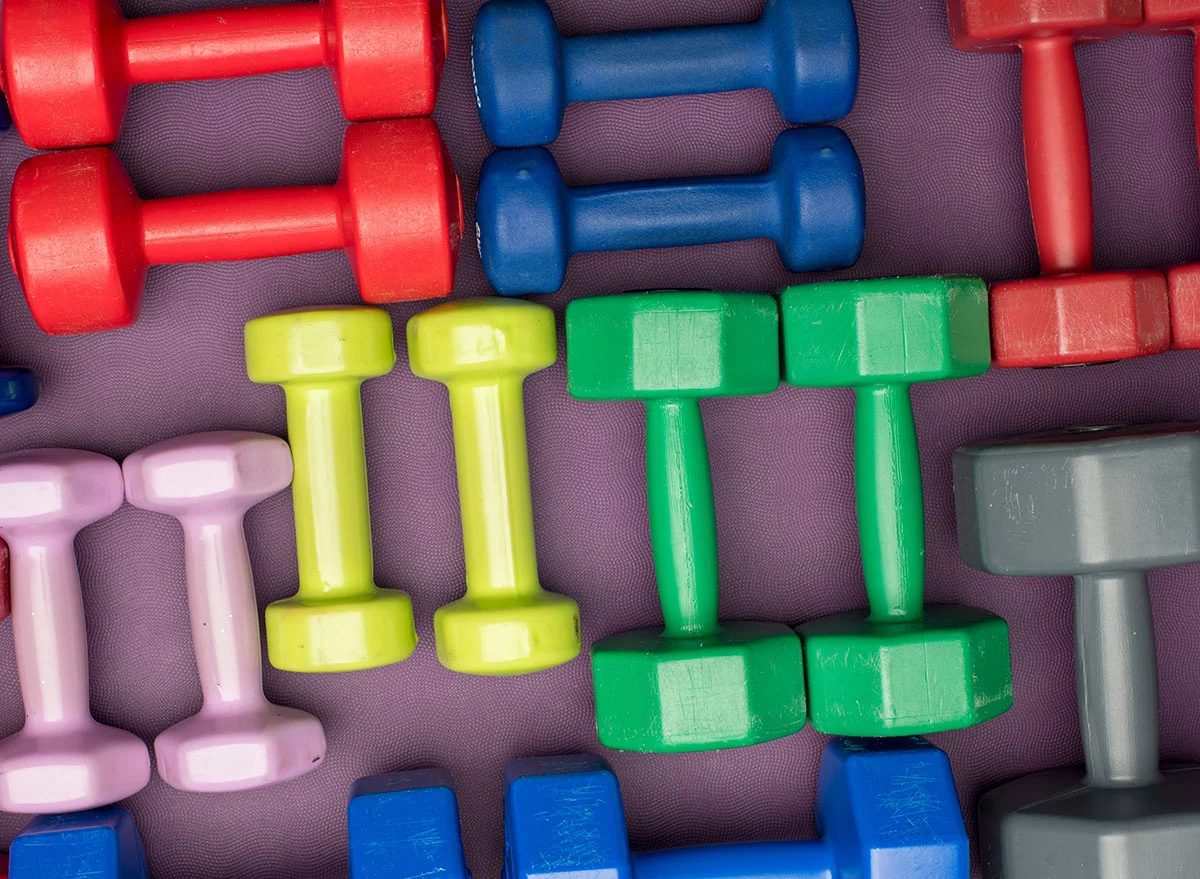
Dumbbells serve as the ideal tool for this demographic. They offer the versatility required for home or gym use, allow for unilateral training (working one side of the body at a time to correct imbalances), and provide an adjustable load that can be scaled based on daily joint health. Whether you are aiming to increase muscle mass or simply maintain the strength required for daily tasks, these five movements form the backbone of a sustainable, long-term health strategy.
1. Dumbbell Step-Ups: Building Lower-Body Power
Step-ups are a cornerstone of functional leg training. They engage the quadriceps, glutes, hamstrings, and calves, while simultaneously forcing the core to stabilize the torso during a unilateral lift.
The Mechanics of the Move
When performing a step-up, the emphasis is on the "lead leg." By avoiding the tendency to push off with the trailing foot, you force the working leg to handle the entire load, which mirrors the mechanics of climbing stairs, hiking, or stepping onto elevated surfaces. This movement is particularly effective for metabolic health because it recruits the largest muscles in the body, which, in turn, elevates the heart rate and promotes fat oxidation.
- The Routine: Perform 3 sets of 8 to 10 repetitions per leg. Rest for 60 seconds between sets.
- Form Tip: Ensure your entire foot is firmly planted on the box or bench. Drive through your heel to initiate the lift, keeping your torso upright to prevent unnecessary strain on the lower back.
2. Standing Shoulder Press: Overhead Stability
The standing shoulder press is far more than a shoulder-builder; it is a full-body engagement exercise. By performing the press from a standing position, you activate the core, glutes, and upper back to create a stable "base" for the overhead movement.
Why It Matters After 50
As we age, shoulder mobility and upper-body power become essential for everything from reaching for items on high shelves to lifting luggage. The standing press prevents the "rib flare" often seen in seated machines, requiring the athlete to engage their abdominals to protect the lumbar spine. This builds a powerful, resilient upper body that remains functional well into the later stages of life.
- The Routine: Perform 3 sets of 8 to 10 repetitions. Rest for 60 seconds between sets.
- Form Tip: Keep your core braced and your ribs tucked down. Avoid arching your lower back to compensate for heavy weights; if you cannot press without arching, decrease the load.
3. Dumbbell Floor Press: Joint-Friendly Chest Development
The floor press is a variation of the bench press that provides a limited range of motion, which is inherently safer for the shoulders. By resting your upper arms on the floor at the bottom of the movement, you remove the instability that can lead to rotator cuff strain.
The Functional Benefit
This movement builds the chest, triceps, and anterior deltoids. It is specifically useful for the "getting up from the floor" pattern—a critical marker of longevity. By controlling the descent and pausing briefly at the bottom, you build strength without the excessive momentum that often leads to joint inflammation.
- The Routine: Perform 3 sets of 8 to 12 repetitions. Rest for 60 seconds between sets.
- Form Tip: Keep your wrists stacked directly over your elbows. Focus on the control of the weight rather than the speed of the press.
4. Dumbbell Bent-Over Row: The Antidote to Sedentary Posture
The bent-over row is perhaps the most important exercise for those who spend significant time at a desk. It targets the upper back, lats, and rear delts, counteracting the "rounded shoulder" posture that often accompanies aging.
Strength and Balance
Pulling strength is frequently neglected in favor of pushing movements. By mastering the hinge position, you strengthen the hamstrings and spinal erectors while simultaneously developing the grip and pulling power required for daily life. A strong back is the foundation of an athletic, youthful appearance and posture.
- The Routine: Perform 3 sets of 8 to 12 repetitions. Rest for 60 seconds between sets.
- Form Tip: Pull through your elbows rather than your hands. Keep your shoulders pulled back and away from your ears to engage the lats effectively.
5. Plank Pull-Throughs: Core Stability Under Load
The plank pull-through is an anti-rotation exercise. By pulling a dumbbell from one side of your body to the other while holding a plank, you force your obliques and deep abdominal muscles to prevent your hips from rotating.
Implications for Core Health
This exercise creates "bracing" strength—the ability to keep your spine rigid under load. This is essential for protecting the lower back during heavy lifting, carrying groceries, or sudden movements. It is the ultimate test of torso integrity.
- The Routine: Perform 3 sets of 6 to 8 repetitions per side. Rest for 45 seconds between sets.
- Form Tip: Move the weight slowly. The goal is to keep your hips perfectly square to the floor throughout the entire motion.
Chronology of Progress: How to Implement the Program
To see results, consistency must override intensity. Beginners should start by incorporating these movements into their existing routine twice a week.
- Weeks 1-4: Focus on perfect form and tempo. Use a weight that allows you to finish your sets with 2 reps "left in the tank."
- Weeks 5-8: Gradually increase the weight or decrease the rest time.
- Weeks 9+: Begin to treat these as a circuit, moving from one exercise to the next with minimal rest to maximize the metabolic "afterburn" effect.
Supporting Data: The Science of Body Composition
Recent research published in journals such as the NCBI emphasizes that resistance training is the most effective intervention for maintaining resting metabolic rate in adults over 50. As muscle mass increases, the body becomes more efficient at partitioning nutrients, meaning a higher percentage of caloric intake goes toward muscle maintenance rather than fat storage.
Furthermore, data on functional movement patterns suggest that "useful" strength—the kind that improves daily activities like walking, lifting, and climbing—has a direct correlation with increased life expectancy and a lower risk of falls.
Official Perspectives: The Expert Consensus
Leading physical therapists and longevity experts consistently emphasize that "movement is medicine." The consensus is that training should not be viewed as a chore, but as a preservation tactic. By choosing exercises that hit multiple joints (multi-joint or compound movements), you maximize the efficiency of your training time.
The inclusion of unilateral work (like the step-up or single-arm row) is particularly vital for the aging population, as it highlights and corrects physical asymmetries that might otherwise lead to injury.
Implications for a Healthier Future
The implications of adopting a daily, pattern-based strength program are profound. By focusing on these five movements, you are not just "exercising"—you are building a body that is capable, resilient, and structurally sound.
The goal for the over-50 demographic should be to move often and move well. By prioritizing the press, the pull, the step, the brace, and the carry, you ensure that your strength levels remain high, your body composition stays favorable, and your ability to engage with the world remains uncompromised. Fitness after 50 is not about breaking personal records; it is about ensuring that your physical capacity never limits your potential for an active, vibrant life.